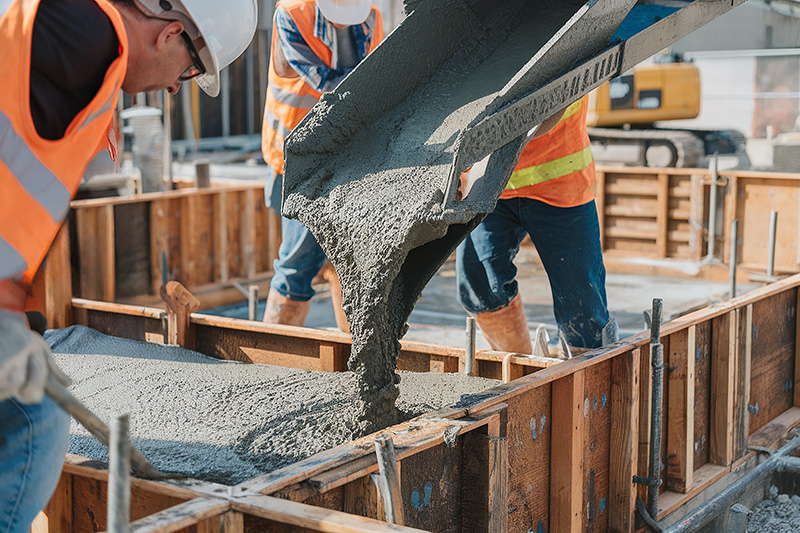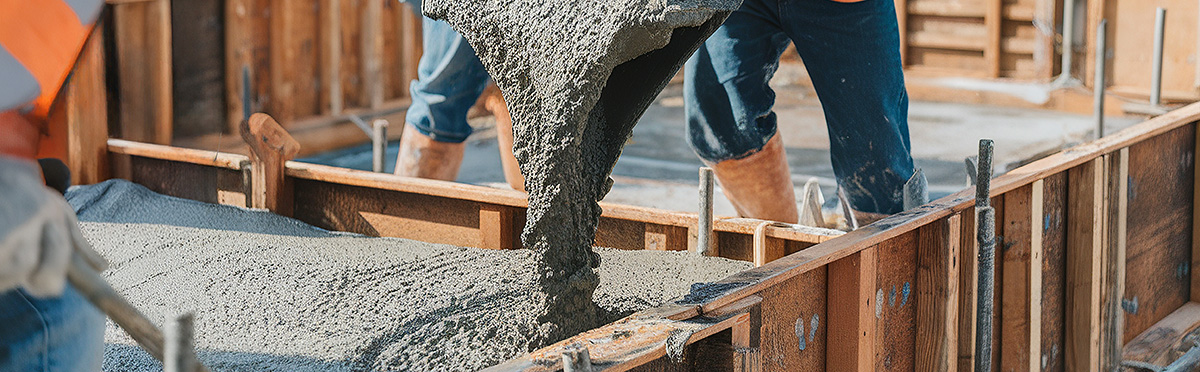
Durable lots that handle traffic and drain right.
A parking lot is the part of your property that takes the most punishment and gets the least credit. Cars and delivery trucks turn, brake, and idle on the same spots day after day, dropping oil and heat onto a surface that has to stay flat, drain clean, and not turn into a liability. Concrete handles that load better than asphalt. It does not soften and rut in the August sun the way blacktop does, and it does not need resealing every couple of years to stay intact. For a business on the Front Range, the lot is the first thing a customer drives across and the first impression they form.
We build commercial lots with the base, slab thickness, jointing, and drainage worked out before a single truck shows up. Get those right and the lot carries traffic for decades with little fuss. Get them wrong and you are patching potholes and chasing standing water within a few seasons. We pour for the way our soil and weather actually behave here, not for a flat day in a mild climate.
A parking lot fails from the bottom up. The surface you see is only as good as the compacted base under it, and the base is only as good as the subgrade prep below that. We strip the soft material, compact in lifts, and build a base that spreads the load instead of letting it punch through. Slab thickness then gets matched to the traffic. The stalls where passenger cars sit can be thinner than the drive lanes and the entrances where loaded trucks turn and brake. We thicken those high-load zones and add reinforcement so the concrete carries concentrated wheel loads without spider-cracking. This is also where expansive clay matters: a slab built straight on untreated clay will move with the moisture, so the base and reinforcement have to account for it.
Water is what kills a lot, and on the Front Range that means snowmelt and freeze as much as rain. A flat lot ponds, and ponded water finds joints, freezes, and pries the slab apart over the winter. We set the lot to drain. That means consistent slope toward inlets, valley pans where sheets of water need to be collected, and tie-ins to the storm system or detention your site plan calls for. We grade so there are no low spots where water sits, because a puddle that refreezes every night turns into ice that scales the surface and a slip hazard for anyone walking from their car. Good drainage is not glamorous, but it is the single biggest reason one lot lasts and another fails early.
Here is the honest part, because every business owner asks it: will the concrete crack? Concrete shrinks as it cures, and a large lot will relieve that stress somewhere. The job is not to promise it never moves. The job is to control where it cracks so you never see it. We cut control joints on a planned grid, sized to the slab thickness, so the slab cracks cleanly along the bottom of those cut lines instead of wandering across a stall. We also place isolation joints around inlets, light bases, and curb tie-ins where the slab needs room to move independently. Done this way, the cracking happens where it is supposed to and stays invisible. The lots that crack badly are almost always the ones where joints were skipped, spaced too far apart, or cut too late.
A commercial lot is not just paving. It has to be accessible and it has to pass inspection. We lay out ADA stalls with the correct width, the adjacent access aisle, and the slope tolerances that the standard holds you to, because a stall that is even slightly too steep fails. From there we build the accessible route from the parking to the entrance, pour the curb and gutter that defines the edges and moves water, and tie the approach into the street or drive. With a structural engineer on staff and permit handling when the project calls for it, we keep the whole package coordinated so the lot, the curbs, the ramps, and the drainage all work together instead of being fought out in the field.
From homes to commercial sites across the Front Range, here is where parking lots earns its place.
Customer lots that take constant in-and-out traffic and need to look sharp at the storefront.
Daily commuter parking with clean ADA routes from the stall to the door.
Yards and lots that carry loaded trucks and concentrated turning loads without rutting.
High-turnover lots where braking, idling, and oil drips would chew up asphalt.
Resident and visitor parking built to last across a whole community on one schedule.
Adding stalls or replacing failed sections and tying them cleanly into existing pavement.
Concrete behaves differently at altitude. Our expansive clay soils swell with moisture and shrink when they dry, and the freeze and thaw cycle works on any surface that takes on water. Every parking lots project we pour accounts for both, from base preparation and drainage to air-entrained mixes, proper reinforcement, and control joints cut on time. That is how the work holds its shape and finish through Colorado winters instead of failing by spring.
You also get a written estimate before anything starts, a structural engineer on staff for the jobs that need one, and a crew that pulls and manages permits when the project calls for them. Licensed, bonded, and insured, with finishes that range from a clean broom texture to stamped, colored, and sealed.
Commercial work is judged on tolerances, schedule, and inspections. Here is what shapes a Parking Lots project.
Commercial surfaces earn their keep through maintenance. Sealing, prompt joint repair, and keeping de-icing chemicals managed all extend the life of a parking lots and protect your investment in it. And whatever the project, the same rule applies across the Front Range: keep water from sitting on or soaking into the surface, and the concrete will reward you with decades of service.
You always know what is happening and what it costs before we mix a single yard. Here is the path from first call to final walkthrough.
We visit the site, measure, check drainage and soil, and hand you a clear written quote. No charge, no pressure.
We set the grade, thickness, reinforcement, and finish. Structural work gets engineered and permitted.
Forms, rebar, and a clean pour. We screed, float, and finish to the texture you picked, then cut control joints.
You can walk it in 24 to 48 hours. We walk the job with you and explain how to care for it through the first winter.
Still unsure about something?
Call the crew at (303) 569-4046 and we will talk it through.

Get a free, no-obligation estimate from a crew that knows Colorado soil, Colorado weather, and how to finish concrete that lasts.
Accessibility
Adjust the site to fit how you read and browse. Your choices are saved on this device.