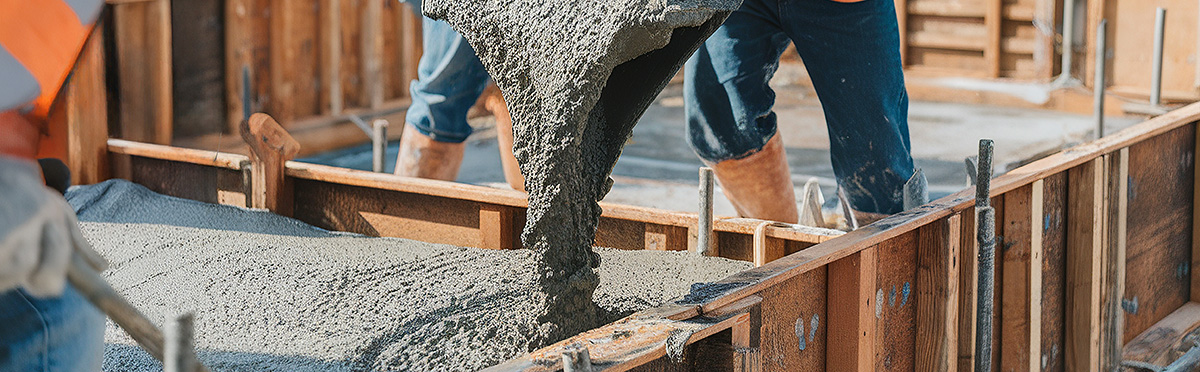
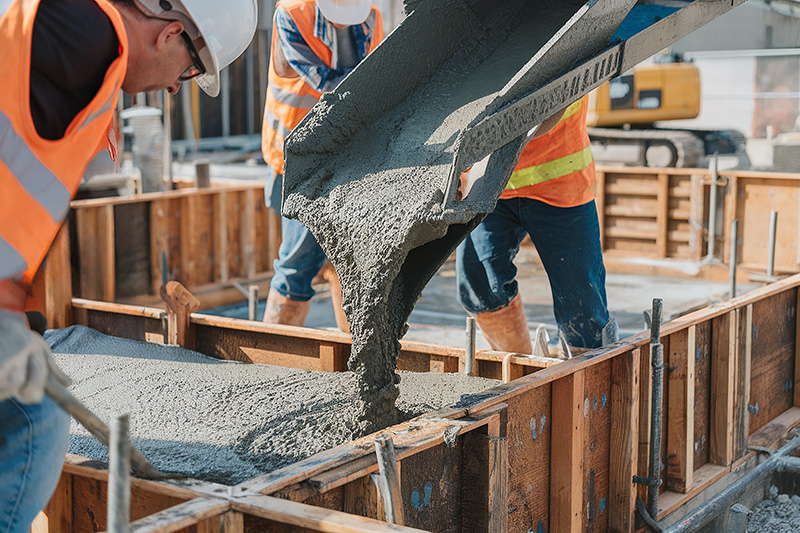
Precision linework that moves water and defines edges.
Curb and gutter is the linework that quietly runs a site. It catches the sheet of water coming off a parking lot, road, or drive aisle and carries it to the inlets instead of letting it pond, undercut pavement, or run where it does not belong. It also draws the hard edge that holds asphalt in place and tells everyone where the driving surface ends. None of that works unless the line is true and the grade is exact, which is why this is precision work and not just another pour.
On the Front Range, getting the flow right matters even more than the look. Water that sits or sheets the wrong way turns into ice in October and stays ice for months, and every freeze and thaw cycle works at any low spot or birdbath you left behind. We pour curb and gutter for developments, HOAs, and municipal-grade projects to the line and grade the plans call for, so the drainage actually drains and the inspector signs off the first time through.
Curb and gutter lives and dies on geometry. The flowline has to follow the plan profile within a tight tolerance, because a gutter that is even a fraction off can flatten out a run and leave water standing. We set string line or run machine-poured stringless work to the surveyed grade, hold the gutter pan flat and the curb face plumb, and check elevations as we go rather than after the concrete is down. Transitions through drive cuts, low points, and curves are where most runs go wrong, so we slow down at those spots and pour them to match the design, not to eyeball them. When the grade is right, the water finds the inlet on its own.
A curb on the Front Range takes more abuse than people expect. It holds meltwater all winter, gets hit by plow blades and salt, and rides through dozens of freeze and thaw cycles a season. We pour with an air-entrained mix so the concrete can shed the internal pressure that freezing water creates, set it on a compacted base so it does not settle out of grade, and place control joints at the right spacing so the run cracks where we tell it to instead of randomly. The gutter pan gets a clean finish that sheds water fast and gives plows a smooth surface to ride. Build it for the climate up front and the line still reads straight years later.
The honest worry with any curb and gutter job is water that will not move. A gutter that ponds, holds birdbaths after a rain, or drains backward is the single most common failure, and on a commercial site it is the one the inspector catches and the one that ices over and gets someone hurt. It almost always comes from a flowline that drifted off grade during the pour. We protect against it by shooting grades before, during, and after, keeping a consistent fall toward the inlets, and checking the finished pan with water or a level rather than assuming it is right. If a low spot shows up, we would rather find it and fix it than leave you with a puddle that freezes every November. Flow is the whole job, and we treat it that way.
Curb and gutter rarely stands alone. It has to meet valley pans at the low points, hand off to drainage inlets cleanly, break for every drive cut, and tie into ADA ramps where the walk crosses. Each of those connections has its own grade and detail, and a sloppy transition is where water backs up or a ramp slope falls out of compliance. We form and pour drive cuts, valley pans, and ramp tie-ins as part of the run so the whole system reads as one continuous, working drainage path. Where a job needs a structural engineer or a permit, we have an engineer on staff and we pull and manage the permits, so the connections are designed and inspected rather than improvised.
From homes to commercial sites across the Front Range, here is where curb & gutter earns its place.
New curb and gutter for parking lots, drive aisles, and site entrances on retail, office, and mixed-use builds.
Replacing failed curb and gutter and trip-prone sections across neighborhood roads and common areas.
Public-standard runs poured to the line, grade, and tolerances the agency plans require.
Forming the breaks and slope changes where driveways and aisles cross the curb line.
Pouring concrete pans that carry water across intersections and aisles to the inlets.
Matching curb and gutter into accessible ramps so the slopes meet the standard.
Cutting out cracked, heaved, or ponding sections and re-pouring them to grade.
Concrete behaves differently at altitude. Our expansive clay soils swell with moisture and shrink when they dry, and the freeze and thaw cycle works on any surface that takes on water. Every curb & gutter project we pour accounts for both, from base preparation and drainage to air-entrained mixes, proper reinforcement, and control joints cut on time. That is how the work holds its shape and finish through Colorado winters instead of failing by spring.
You also get a written estimate before anything starts, a structural engineer on staff for the jobs that need one, and a crew that pulls and manages permits when the project calls for them. Licensed, bonded, and insured, with finishes that range from a clean broom texture to stamped, colored, and sealed.
Commercial work is judged on tolerances, schedule, and inspections. Here is what shapes a Curb & Gutter project.
Commercial surfaces earn their keep through maintenance. Sealing, prompt joint repair, and keeping de-icing chemicals managed all extend the life of a curb & gutter and protect your investment in it. And whatever the project, the same rule applies across the Front Range: keep water from sitting on or soaking into the surface, and the concrete will reward you with decades of service.
You always know what is happening and what it costs before we mix a single yard. Here is the path from first call to final walkthrough.
We visit the site, measure, check drainage and soil, and hand you a clear written quote. No charge, no pressure.
We set the grade, thickness, reinforcement, and finish. Structural work gets engineered and permitted.
Forms, rebar, and a clean pour. We screed, float, and finish to the texture you picked, then cut control joints.
You can walk it in 24 to 48 hours. We walk the job with you and explain how to care for it through the first winter.
Still unsure about something?
Call the crew at (303) 569-4046 and we will talk it through.

Get a free, no-obligation estimate from a crew that knows Colorado soil, Colorado weather, and how to finish concrete that lasts.
Accessibility
Adjust the site to fit how you read and browse. Your choices are saved on this device.