
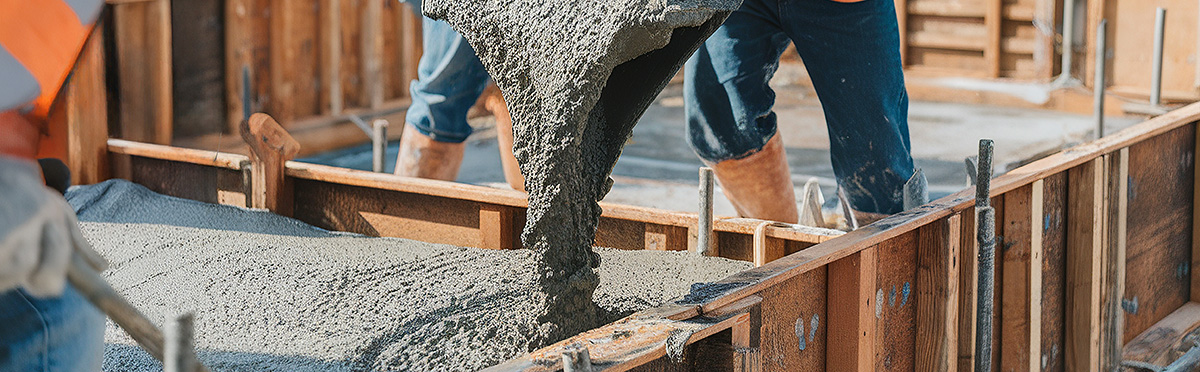
Flatwork, foundations, and site concrete poured to spec, phased around an operating property.
Six scopes, every line self-performed. Open a scope for specifications, sequencing, inspection hold points, and the questions worth asking any bidder before award.
| Scope | What it covers | Line items |
|---|---|---|
| Site Flatwork & Paving | Lots, drive aisles, and walks built for delivery loads instead of passenger cars. |
Commercial Flatwork Parking Lots Access Roads Sidewalks |
| Curb, Gutter & ADA | Flowline grades that actually drain, and accessible routes that survive an inspection. |
Curb & Gutter ADA Ramps Landscape Curbing |
| Foundations & Structural | Engineered bearing, inspection hold points, and coordination with steel and framing. |
Building Foundations Footings & Piers Stem Walls Slab-on-Grade Tilt-Up Panels |
| Industrial Floors & Docks | Flatness, joint filling, and approach slabs sized for forklifts and trailer landing gear. |
Warehouse Floors Loading Docks Dumpster Pads Equipment Pads |
| HOA & Property Programs | Multi-year replacement packages priced per foot and phased around residents. |
HOA Bulk Concrete Sidewalks Retaining Walls Pickleball Courts |
| Repair & Maintenance | Trip-hazard correction, slab lifting, and sealing that keeps a property out of a claim. |
Concrete Repair Mudjacking Foam Leveling Resurfacing Sealing Tear-Out & Removal Foundation Repair |
Every commercial concrete bid is really two bids. There's the concrete, which is close to a commodity, and there's the schedule, which isn't. One contractor rebuilds your drive aisle in two mobilizations over nine days. Another subs out the demolition, waits on a curb crew borrowed from another job, and turns the same scope into five weeks of cones in front of your tenants.
We self-perform commercial concrete across the Front Range, which is the short answer to most scheduling questions. The longer answer is below, along with how a scope gets priced per unit, where commercial work departs from residential work sitting on identical clay, and what to ask anyone you invite to bid.
A contractor who subs out concrete has to sequence around somebody else's crew calendar, and that crew is sequencing around three other jobs. Every handoff between a demolition sub, a grading sub, and a placing crew is a dead day on your property and one more chance for the grade to get read wrong.
We run demolition, excavation, base, forming, steel, placement, and finishing with our own people. That matters less for the total hours of work than for the gaps between them. Saw-cutting control joints has to happen the same day as the pour, in a window two hours wide on a hot August afternoon. A crew that owns the whole task is standing there with the saw running.
It settles accountability too. When base fails two winters out, nobody argues about which sub caused it.
Residential work comes as a lump sum. Commercial work should come as units, because units are the only honest way to compare two contractors and the only sane way to handle the change that always arrives once demolition opens up the subgrade.
Flatwork prices per square foot at a stated thickness and mix. Curb and gutter prices per linear foot by section type. Ramps price each, by configuration. Excavation and haul-off price per cubic yard; base prices per ton placed and compacted. Mobilization gets its own line, because a job you split into four phases for tenant access costs four mobilizations rather than one. Hand somebody one figure for a whole lot and they can't tell whether the low price came from a thinner slab, less base, lighter steel, or a plan to write change orders once the lot is torn out.
So ask for the unit sheet. Ask what quantity assumption sits behind each unit.
| Detail | At a house | On a commercial site |
|---|---|---|
| Design load | One or two passenger cars daily | Delivery trucks, trash trucks, fire apparatus, and trailer landing gear concentrating tons on a dinner-plate footprint |
| Thickness | 4" under cars, 5" to 6" for an RV pad | 6" and up in drive lanes and at dumpster approaches, set against the actual vehicle |
| Reinforcement | Mesh for light duty, #4 rebar where a vehicle parks | #4 or heavier on a tighter grid, with dowels across joints so adjoining panels move together |
| Tolerance | Drains away from the house and reads flat | Written flatness and levelness numbers on interior floors, and a flowline held to hundredths of a foot |
| Inspection | Often nothing past a final walk | Pre-pour hold points, third-party compaction reports, cylinder breaks at 7 and 28 days |
| People on site | Owner parks on the street for a week | Property stays open, so work gets phased, fenced, signed, and detoured |
Send drawings, or walk the property with us. We'll price it per unit and put the phasing plan in writing. The estimate is free.
Almost none of this work happens on an empty site. A grocery anchor still takes deliveries at five in the morning. A medical office has to keep an accessible route open to its door. An HOA still has residents who need to reach their garages before work.
So the phasing plan is part of the concrete scope, not a courtesy bolted onto it. We break lots into pours that keep drive aisles connected end to end, sequence dumpster enclosures so trash pickup never misses a week, and hold temporary accessible routes with signage while the permanent ones cure. Concrete takes vehicle traffic around seven days and reaches design strength at twenty-eight, and those two dates drive a phasing plan harder than anything else. All of it belongs in the bid.
These pages are grouped by scope rather than by product, because a scope of work is how the problem reaches you. Site flatwork and paving covers lots, drive aisles, and site walks built for delivery weight. Curb, gutter, and ADA covers drainage at the flowline and accessible routes that survive inspection. Foundations and structural covers engineered bearing, hold points, and coordination with steel. Industrial floors and docks covers flatness, joint filling, and approach slabs. HOA and property programs covers multi-year packages phased around residents. Repair and maintenance covers trip hazards, lifting, and sealing. Pick the closest one. If your project spans three, call (303) 569-4046 and we'll sort it into one schedule.
Still unsure about something?
Call the crew at (303) 569-4046 and we will talk it through.
Driveways, patios, decorative finishes, foundations, and repair for single-family homes across the Front Range.
See residential concreteYou are here. Site flatwork, curb and gutter, ADA compliance, industrial floors, and community replacement programs.

Send drawings or a site address. We walk it, mark the scope, and return a written per-unit breakdown you can hand to your board or your GC.
Accessibility
Adjust the site to fit how you read and browse. Your choices are saved on this device.