A new surface over a sound slab.
Concrete does not always have to come out to look new again. If your slab is worn, pitted, or just dated on top but still solid underneath, resurfacing bonds a fresh layer right over the existing concrete and finishes it the way you want. You skip the demolition, the haul-off, and the days of waiting on a fresh pour to cure. What you get back is a surface that reads as new, in a finish that fits the house. We resurface patios, walkways, pool decks, and garage floors, and we can take that new layer smooth, textured, or fully decorative.
For Front Range homes and businesses, resurfacing earns its keep because so much of our surface damage is cosmetic, not structural. Sun at altitude fades and chalks the top. Freeze and thaw flakes the surface in thin layers while the slab beneath stays sound. Resurfacing renews that worn face and adds a protective, better-wearing top, which matters when the next winter is never far off. The catch is honest: the slab underneath has to be solid first, and that is the part we check before we quote anything.
Resurfacing is a surface fix, not a structural one. It shines when the concrete below is sound but the top has gone bad: spalling and flaking, surface pitting, old discoloration, a finish you never liked, or general wear from years of traffic and weather. In those cases a bonded overlay gives you a brand new face for a fraction of a tear-out. What resurfacing cannot do is rescue a slab that is failing underneath. If the concrete has heaved on our clay, settled and gone hollow, or cracked clean through from movement, a new top layer will eventually mirror that movement and crack again. We look at the slab before we promise anything, and if replacement or lifting is the smarter call, we will tell you that straight rather than sell you a coat of overlay that will not last.
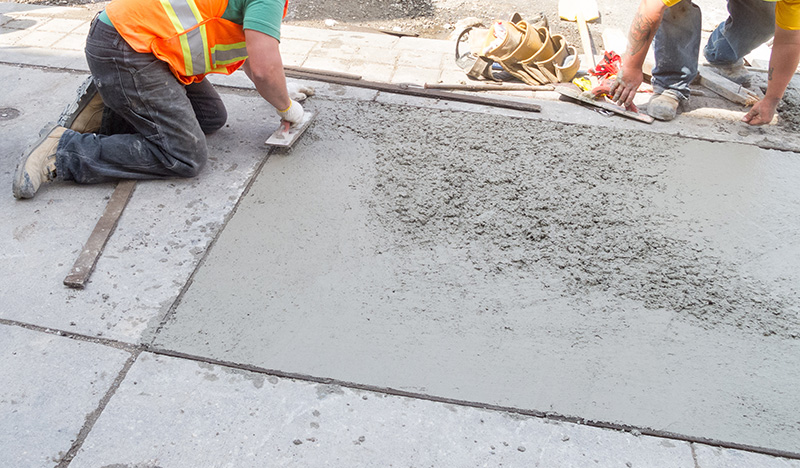
A resurfacing job lives or dies on the bond between the old slab and the new layer. We start by cleaning the surface down to sound concrete, grinding or profiling it so the overlay has real tooth to grab, and cutting out any loose or spalled material so we are not bonding to something that is already letting go. Cracks and low spots get addressed first. Then we apply a bonding agent and place the overlay at the thickness the finish calls for, working it flat and true. We respect the existing control joints and honor them in the new surface so the slab can still move where it is supposed to. Done in this order, the new layer behaves like part of the slab instead of a skin sitting on top of it.
This is the honest concern with any resurfaced surface that gets wet, and a pool deck is where it matters most. A smooth, sealed overlay can absolutely be slick under bare feet when there is splash-out or a wet afternoon, and around a pool that is a safety problem, not a small one. So we match the finish to where the surface lives. For pool decks, walkways, and any wet-prone area, we build in traction with a broom finish, a textured or knock-down overlay, or a slip-aware additive in the topcoat, so the surface grips when it counts. Indoor garage floors and covered patios can take a smoother, cleaner finish. The point is that grip is a choice we make on purpose for each surface, not an afterthought we hope works out.
An overlay on the Front Range has to survive the same punishment as a fresh pour: intense UV at altitude, hot afternoons, and a freeze and thaw cycle that can run dozens of times in a single shoulder season. A thin layer that traps water or never bonded right is exactly what flakes off the first hard winter. We work to keep water out of and off the overlay, which is what drives most surface freeze damage here, and we finish with a quality sealer suited to the surface and the sun. We will also tell you what upkeep keeps it looking right, because a resurfaced patio or deck that gets resealed on schedule holds its color and its surface far longer than one left to chalk in the sun.
From homes to commercial sites across the Front Range, here is where concrete resurfacing earns its place.
Renew a tired, pitted patio surface with a smooth, textured, or decorative overlay instead of tearing it out.
Give worn front walks and garden paths a fresh, even surface with grip for icy mornings.
Resurface a faded or rough deck with a textured, slip-aware finish that stays safer underfoot when wet.
Cover a stained, spalled garage slab with a tougher, cleaner surface that wipes down and resists wear.
Add stamped, troweled, or colored character to a plain sound slab without the cost of a full replacement.
Restore spalled and surface-damaged concrete to a uniform, finished face across the whole slab.
Concrete behaves differently at altitude. Our expansive clay soils swell with moisture and shrink when they dry, and the freeze and thaw cycle works on any surface that takes on water. Every concrete resurfacing project we pour accounts for both, from base preparation and drainage to air-entrained mixes, proper reinforcement, and control joints cut on time. That is how the work holds its shape and finish through Colorado winters instead of failing by spring.
You also get a written estimate before anything starts, a structural engineer on staff for the jobs that need one, and a crew that pulls and manages permits when the project calls for them. Licensed, bonded, and insured, with finishes that range from a clean broom texture to stamped, colored, and sealed.
A good repair starts with an honest read of what failed and why. Here is what shapes a Resurfacing project.
After a concrete resurfacing, the best protection is keeping water managed around the slab so the problem does not return. Reseal repaired surfaces, keep drainage flowing away, and address new cracks early before they spread. And whatever the project, the same rule applies across the Front Range: keep water from sitting on or soaking into the surface, and the concrete will reward you with decades of service.
You always know what is happening and what it costs before we mix a single yard. Here is the path from first call to final walkthrough.
We visit the site, measure, check drainage and soil, and hand you a clear written quote. No charge, no pressure.
We set the grade, thickness, reinforcement, and finish. Structural work gets engineered and permitted.
Forms, rebar, and a clean pour. We screed, float, and finish to the texture you picked, then cut control joints.
You can walk it in 24 to 48 hours. We walk the job with you and explain how to care for it through the first winter.
Still unsure about something?
Call the crew at (303) 569-4046 and we will talk it through.

Get a free, no-obligation estimate from a crew that knows Colorado soil, Colorado weather, and how to finish concrete that lasts.
Accessibility
Adjust the site to fit how you read and browse. Your choices are saved on this device.