
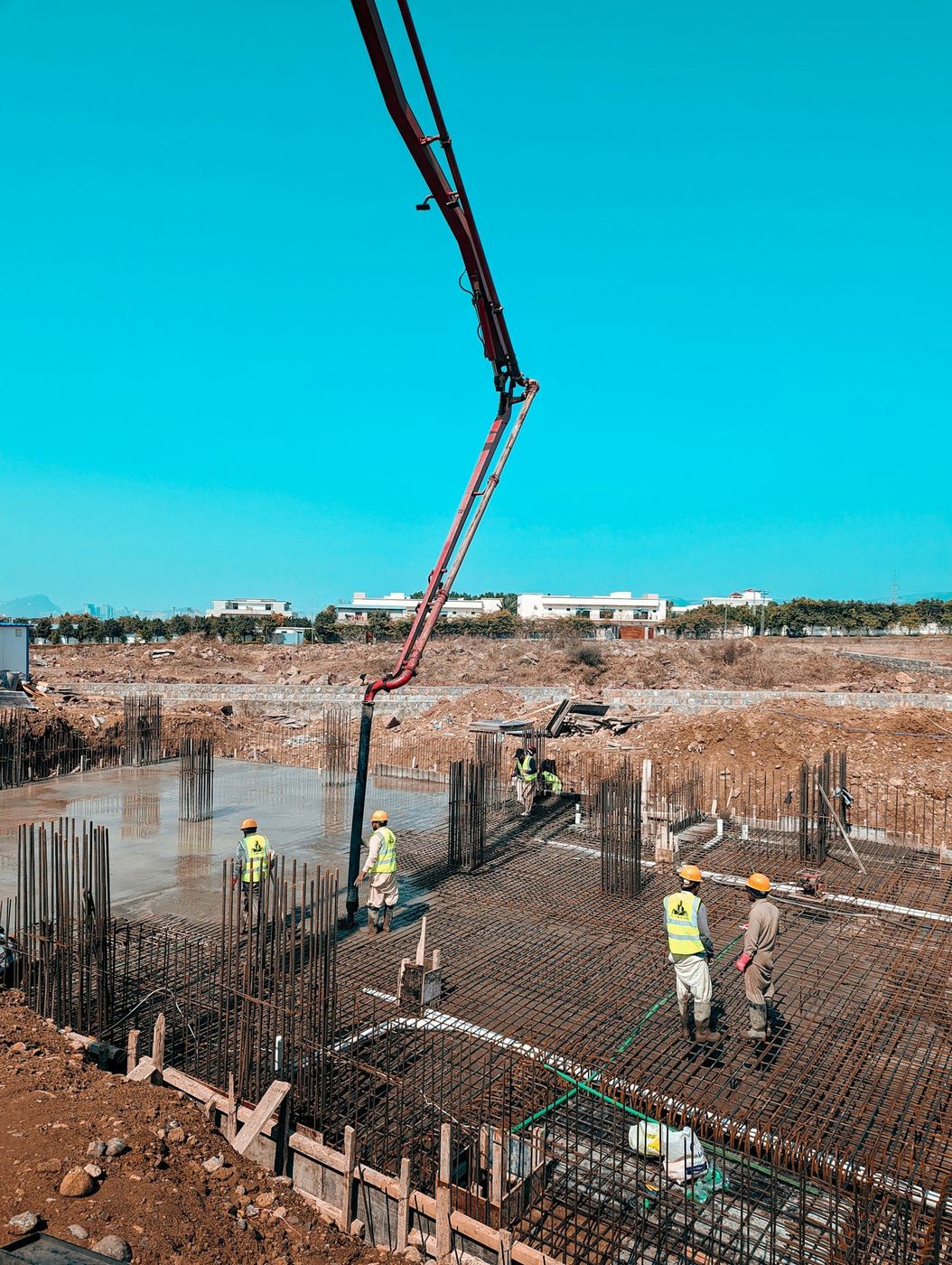
Every February a Denver lot tells you exactly where it was built wrong. We read that, then pour so the next February is boring.
Walk your lot the Monday after a real storm. The picture is honest in a way no inspection report gets. You'll see where meltwater pooled and refroze, which panels the plow blade caught, and which cracks widened over the weekend. That's not bad luck. That's drainage, thickness, and joint layout showing their work.
We build and rebuild concrete lots for retail, office, medical, and light industrial property around Denver. Cherry Creek means tight urban lots with heavy turnover and no room to stage. Sloan's Lake and Berkeley bring older mixed-use parcels patched twice already. University Hills runs to larger surface lots that need the failing quadrant handled first. We price all three the same way: by what's under the surface and where the water goes.
Our freeze-thaw pattern is unusual, and it's why surfaces here age faster than owners expect. A December day can start at 12 degrees and hit 50 by two in the afternoon. Snow melts, water runs into every crack and joint, the sun drops behind the foothills, and by seven that evening that water is ice pushing outward. Repeat it dozens of times a season. A colder, steadier climate leaves the lot frozen and quiet all winter. Here it gets worked on daily.
Air entrainment is the answer, and it isn't optional outdoors. Roughly six percent air gives freezing water somewhere to expand into instead of blowing the paste apart from inside. A lot poured without it looks fine for two seasons, then sheds its surface in sheets.
| Winter event | What it does to the concrete | What we build in against it |
|---|---|---|
| Daily freeze and thaw | Water in joints and cracks expands, spalls edges, and lifts panel corners | Air-entrained mix, joints sealed and maintained, positive fall so water leaves instead of sitting |
| Magnesium chloride and ice melt | Chemically attacks the surface paste, scaling the top layer off first-year concrete | No deicer at all the first winter, sand only, then a penetrating sealer before the second season |
| Plow blades and skid loaders | Chips joint edges, catches lipped panels, gouges soft or green surfaces | Flush panel transitions, dowelled construction joints, and shoes or skids specified for the operator |
| Meltwater ponding at low spots | Saturates the base, then freezes under the slab and heaves the panel | Drainage laid out to inlets first, slab thickness sized to load, base that drains rather than holds |
Grade before thickness. That's the order we think in. A lot that sheds water cleanly into inlets survives a decade of abuse that would wreck a thicker slab sitting in its own puddles. So we shoot the whole surface, find the flat spots the old lot inherited from a previous patch job, and rebuild the fall instead of chasing it with topping.
Under the slab, base does the quiet work. Compacted road base, tested, at a depth that matches the traffic overhead. Saturated clay under a lot is what turns a hairline into a settled panel over one wet spring. Where subgrade tests soft we over-excavate or stabilize with geotextile. Skipping that step is the most common reason a five-year-old lot already has a bad quadrant.
We'll walk it, shoot the grade, and tell you honestly whether it's a rebuild or a phased repair. Free, and no pressure attached.
Late April through mid-October is the working season, and September is the prize. Warm slabs, cool nights, low storm risk, and runway enough to reach design strength before the first hard freeze. May and June pours are fine, but we watch the afternoon build over the foothills daily and we'll scrub a placement rather than let a cell rain into fresh paste.
Winter is a different job, not an impossible one. Heated mix water, non-chloride accelerators, insulated blankets, and a tight watch on the forecast between fronts. What we won't do is place concrete on frozen subgrade, because a base that thaws under a cured slab drops it. If your lot fails in January, call anyway. Often we can stabilize the worst panels, keep your traffic safe, and put you at the front of the spring calendar with the phasing already drawn.
Still unsure about something?
Call the crew at (303) 569-4046 and we will talk it through.
Get a free, no-obligation estimate from a crew that knows Colorado soil, Colorado weather, and how to finish concrete that lasts.
Accessibility
Adjust the site to fit how you read and browse. Your choices are saved on this device.