
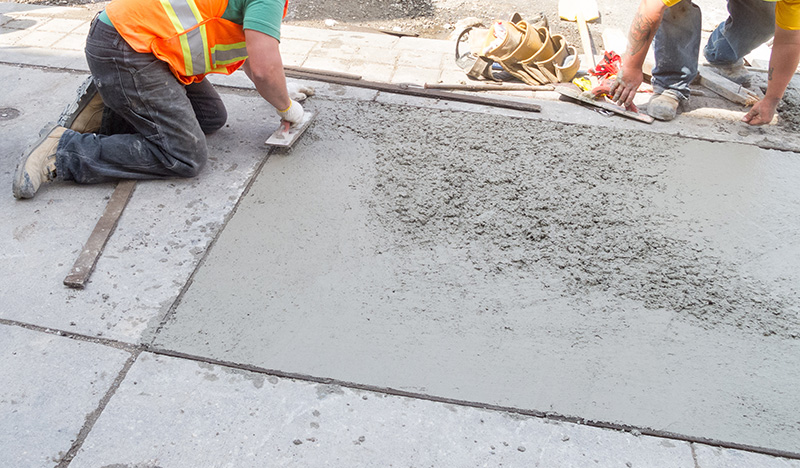
Lifting, resurfacing, and sealing when the slab is worth saving instead of replacing.
Pick the project closest to yours. Each page covers what it costs to build right, how long it takes, and what it needs from you afterward.
Almost every repair call opens with the same question, and it's the right one. Is this fixable, or am I about to pay for a whole new slab? Usually we can answer that inside fifteen minutes of walking the concrete with you.
The trade comes down to separating what's wrong with the top of a slab from what's wrong underneath it. Two problems, two very different bills, and they get mixed up constantly. A flaking surface on concrete that's still flat and solid is a good repair candidate. A smooth slab that has dropped an inch at one corner is a soil problem wearing a concrete costume.
Spalling, scaling, pitting, crazing: all of it lives in the top half inch. It comes from freeze and thaw driving water into the surface, from deicing salt attacking a young or unsealed finish, or from a pour that caught rain while it was still being worked. The slab underneath can be perfectly sound.
Base trouble reads differently. Panels tip instead of staying in plane. A crack opens wider one season and closes the next, because the clay under it swells when wet and shrinks when dry. Tap an edge with something hard and you get a dull hollow note where soil has pulled away. Nothing you put on top fixes that.
So the first thing we do is work out which one you have, and whether the cause is still going on. A downspout dumping at the same corner, a grade that fell away, a leaking irrigation line: fix the water first or you'll buy the same repair twice.
| Mudjacking | Polyurethane foam | |
|---|---|---|
| What goes in the hole | Pumped slurry of cement, sand, and soil | Two-part polyurethane that expands as it reacts |
| Hole size | An inch and a half to two inches | Roughly five eighths of an inch |
| Weight added | Heavy. You're loading the soil that already gave out | Almost none. Cured foam is very light |
| Set time | Cures over hours. Traffic off overnight | Reacts in minutes. Usually drivable same day |
| Ground conditions | Needs unfrozen, workable ground | Works through cold weather |
| Where it fits best | Big slabs, big open voids, warm season work | Weak soils, tight seams, interior slabs, winter |
If a slab is flat, solid, and structurally fine but the surface is worn out, a bonded topping is the best value on the property. A resurfacer goes on thin and brings back a clean broom finish. An overlay goes thicker and takes stamp, color, or a saw-cut pattern, so a tired patio comes back looking like new work with no demolition bill.
The whole thing lives or dies on bond preparation. The old surface gets profiled, usually by grinding or shot blasting, so the topping has something mechanical to grab. It has to be clean: no dirt, no oil, no leftover curing compound, no old film sealer. Then a polymer-modified mix goes down and gets worked into that profile rather than floated across it. Skip a step and the topping lets go in sheets.
Now the limits. An overlay won't bridge a crack that's still moving. Whatever's underneath telegraphs through, usually inside a year, so the right move is to carry that crack up as a joint in the new surface. It won't stiffen a slab that rocks, and it adds no structural thickness.
We'll come look, tell you which category it falls into, and put the options in writing. Free visit, no obligation. Call (303) 569-4046.
Plenty of the slabs we get sent out to lift don't need lifting. They need the downspout moved. If water keeps loading the same corner, we'll just be back in two years lifting it again.
Lead operator, slab lifting crew
Two families, two different jobs. A penetrating sealer, silane or siloxane based, soaks in and reacts inside the pore structure. No film, no change in how the concrete looks, no slick surface, nothing on top that can peel. That's what belongs on a driveway or a walk, anything that meets a snow shovel and road salt.
A film-forming acrylic sits on the surface and gives you the wet look that makes stamped work and exposed aggregate read the way it did the day it was placed. It wears, hazes, and wants reapplication every two to three years up here, because sunlight at five to six thousand feet is harder on it than at sea level. If people walk on it wet, put grit in it.
And through the first winter, skip deicer entirely on new or repaired surfaces. Magnesium chloride is the worst of them.
We'd rather lose a repair job than sell one we know will fail. The line is usually obvious once you're standing on it.
If most of the panels are broken rather than one or two, the slab is the problem and the damage is the symptom. If we've lifted the same panel twice and it keeps settling, the soil won't behave on the third try. If a driveway is three inches thick and cars park on it, no topping changes that. If steel is rusting and pushing the concrete apart from inside, any repair is temporary by definition.
Replacement costs more the day you sign and less over ten years in every one of those cases. When it's a coin flip we'll say so and give you both prices.
Still unsure about something?
Call the crew at (303) 569-4046 and we will talk it through.
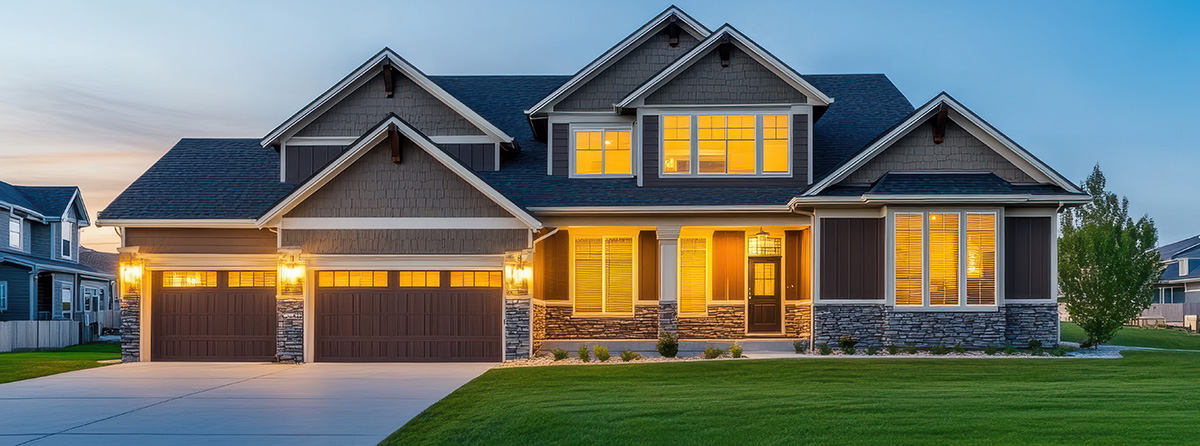
We measure, check drainage and soil, and hand you a written number. No charge and no pressure to book.
Accessibility
Adjust the site to fit how you read and browse. Your choices are saved on this device.