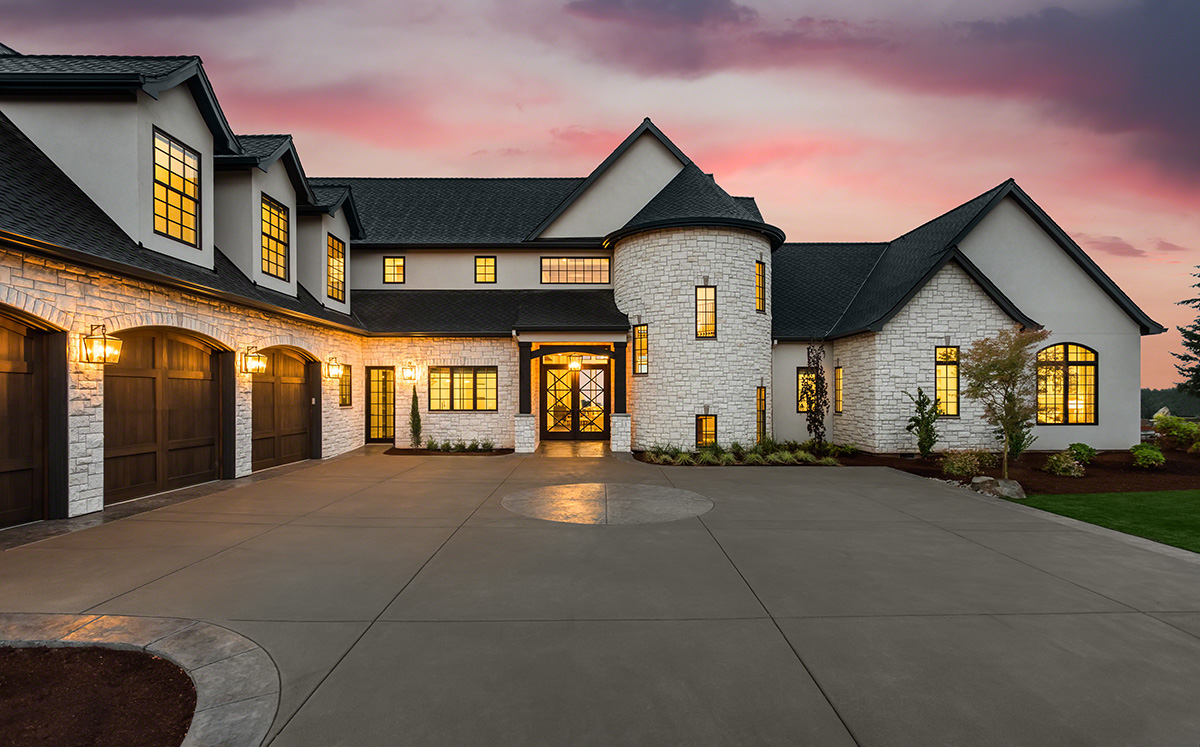
Graded for drainage, reinforced for our soil, finished clean.
Your driveway is the first thing anyone sees when they pull up, and it is the last thing you want to tear out and redo a few years after paying for it. A driveway is not just a slab of concrete poured on dirt. It is grading, base prep, reinforcement, control jointing, and real curing all working together. Get any one of those wrong and the slab tells on you within a couple of winters. Get them all right and it stays flat, sheds water, and looks sharp for decades.
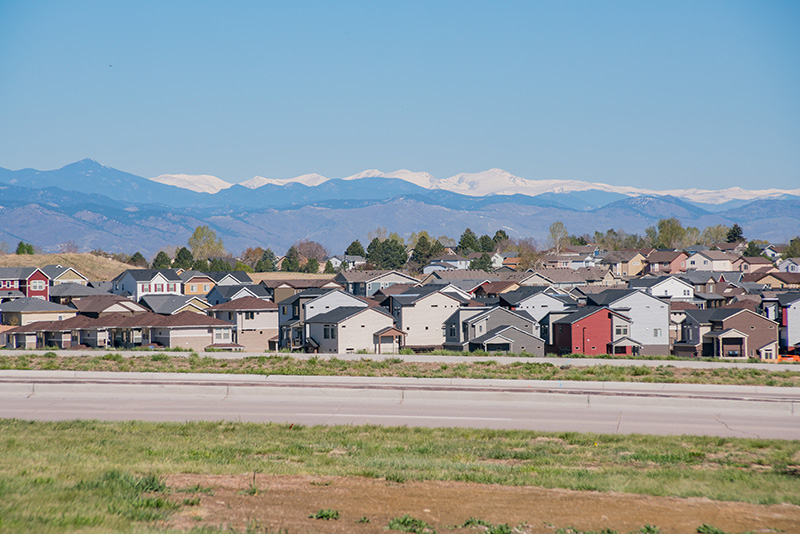
On the Front Range that margin for error is thinner than most homeowners expect. The expansive clay under much of the metro swells when it gets wet and shrinks when it dries, and the freeze and thaw cycle works on the surface every single winter. We build for both. That means an air-entrained mix, a compacted base that does not skip thickness, drainage that moves water away from the slab, steel where it earns its keep, and joints cut where the concrete wants to crack anyway.
This is the concern nobody wants to gloss over, so we will say it plainly. Concrete cracks. What you actually care about is whether the crack is a hairline you will never notice or a wide, heaved separation that catches the snow shovel and gets worse every spring. Most failed driveways around the metro went bad for the same two reasons: a base that was too thin or skipped entirely, and joints that were placed wrong or not placed at all. We control cracking instead of pretending we can prevent it. We compact a proper base, reinforce the slab, and saw or tool control joints at the right spacing so the concrete cracks down clean lines you barely see, not across the open field where it looks like failure.
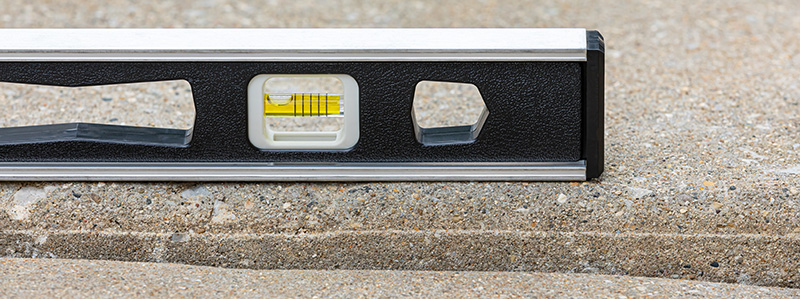
Everything that lasts about a driveway happens before the concrete shows up. We strip the soft topsoil, bring the subgrade to a consistent grade, and compact a base course so the slab sits on something that will not pump and settle under load. On expansive clay we pay extra attention to moisture, because clay that gets wet under one corner of the slab and stays dry under another is exactly what lifts a driveway out of level. Grading is part of that same job. We pitch the surface so water runs off and away from the garage and the foundation instead of pooling, soaking into the soil, and freezing under the slab. A driveway that drains is a driveway that lasts.
For a Colorado driveway we use an air-entrained mix, which builds microscopic air pockets into the concrete that give freezing water somewhere to go instead of spalling the surface off. We reinforce the slab so that when it does crack along the joints, the two sides stay tied together and level rather than drifting apart. Then we cure it for real. Concrete does not dry, it cures, and rushing that step is how surfaces end up dusty and weak. You can usually walk on a new driveway in 24 to 48 hours, but it keeps gaining strength for weeks and reaches full strength around 28 days. We tell you when it is safe to park on it, and we mean the date we give you.
A driveway finish has to earn its grip in winter and still look right in July. A broom finish is the workhorse for driveways because the light texture gives tires and feet traction when there is ice or snow on the surface. If you want something with more character, exposed aggregate shows the natural stone in the mix, hides dirt, and grips well, which makes it a strong choice up here. We also offer stamped, decorative, colored, and sealed finishes if you want the driveway to tie into the house. Sealing in particular pays off on the Front Range, because it keeps road salt and meltwater out of the surface, and that is what drives the scaling you see on unprotected slabs.
From homes to commercial sites across the Front Range, here is where concrete driveways earns its place.
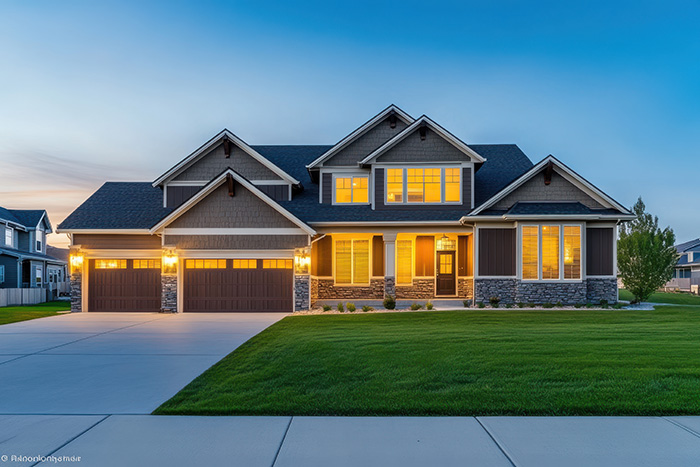
A fresh driveway on new construction or a property that never had a poured drive.
Pulling a cracked, heaved, or sunken driveway and pouring a new slab engineered for the soil under it.
Adding width to an existing drive for a third car, a trailer, or easier turning room.
Lengthening a driveway toward the street or back toward a garage, shop, or parking area.
Pouring the apron where the driveway meets the street or alley so the transition is smooth and holds up.
Setting the base and slab to accept a snow-melt system so you are not shoveling the drive every storm.
Concrete behaves differently at altitude. Our expansive clay soils swell with moisture and shrink when they dry, and the freeze and thaw cycle works on any surface that takes on water. Every concrete driveways project we pour accounts for both, from base preparation and drainage to air-entrained mixes, proper reinforcement, and control joints cut on time. That is how the work holds its shape and finish through Colorado winters instead of failing by spring.
You also get a written estimate before anything starts, a structural engineer on staff for the jobs that need one, and a crew that pulls and manages permits when the project calls for them. Licensed, bonded, and insured, with finishes that range from a clean broom texture to stamped, colored, and sealed.
A flatwork quote comes down to a few things working together, and the cheapest bid almost always skips one of them. Here is what actually shapes a Driveways project.
Keeping water out of the surface is everything here. A reseal every few years, snow cleared before it melts and refreezes, and a quick rinse of de-icing salt off the slab will add years to your concrete driveways. Avoid rock salt and harsh ice melt, which accelerate surface scaling at altitude. And whatever the project, the same rule applies across the Front Range: keep water from sitting on or soaking into the surface, and the concrete will reward you with decades of service.
You always know what is happening and what it costs before we mix a single yard. Here is the path from first call to final walkthrough.
We visit the site, measure, check drainage and soil, and hand you a clear written quote. No charge, no pressure.
We set the grade, thickness, reinforcement, and finish. Structural work gets engineered and permitted.
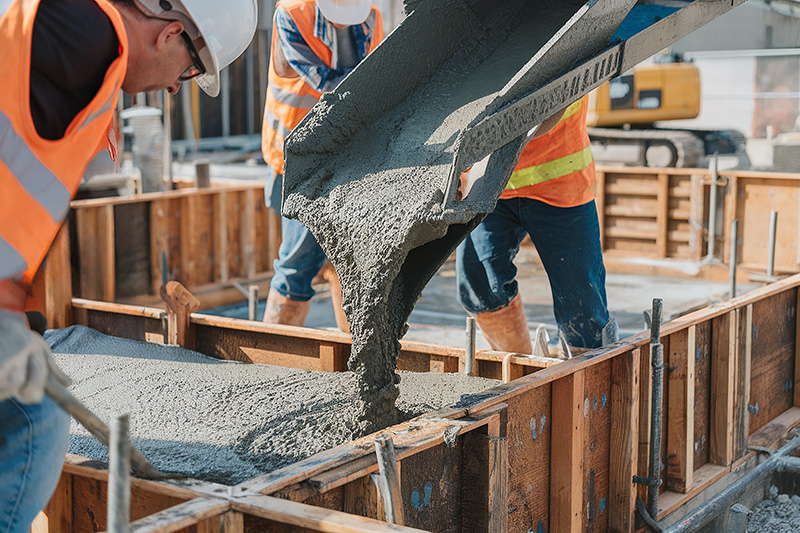
Forms, rebar, and a clean pour. We screed, float, and finish to the texture you picked, then cut control joints.
You can walk it in 24 to 48 hours. We walk the job with you and explain how to care for it through the first winter.
Still unsure about something?
Call the crew at (303) 569-4046 and we will talk it through.
Get a free, no-obligation estimate from a crew that knows Colorado soil, Colorado weather, and how to finish concrete that lasts.
Accessibility
Adjust the site to fit how you read and browse. Your choices are saved on this device.