
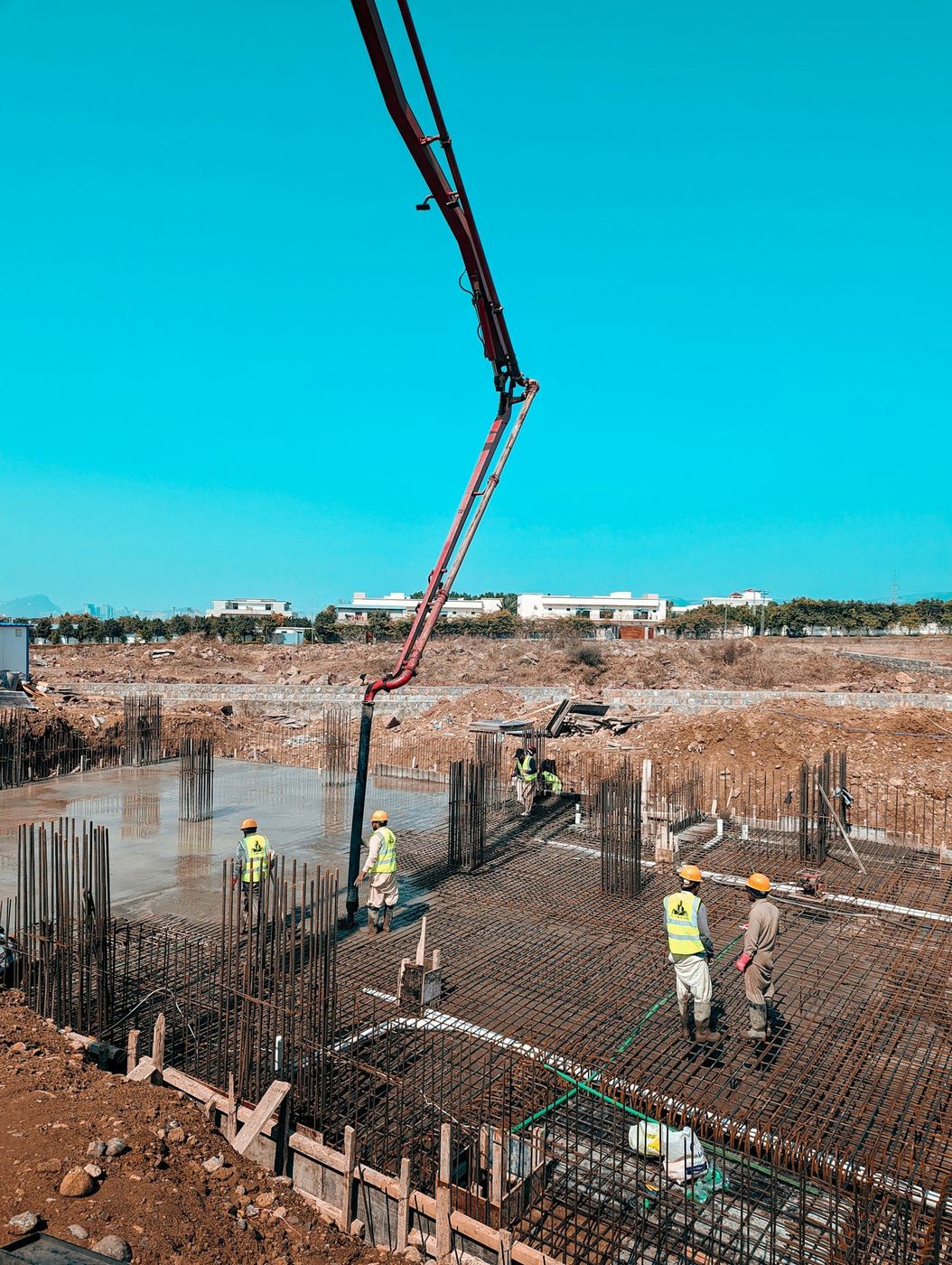
Designed around the trash truck, the delivery van, and the plow, because those three write the failure story.
Watch a lot for one week and it tells you where it will fail. The trash truck comes Tuesday and Friday, sets its forks in the same two spots, and lifts several tons over the same patch of pavement. The linen delivery backs into the same corner. Every visitor parks in the same eight stalls near the door and leaves the far row empty. Snow gets pushed to the same island all winter and melts across the same drive lane.
A lot isn't one surface with one job. It's four or five zones carrying completely different loads, and pricing the whole thing at a single thickness is how owners end up with ruts at the enclosure and perfect pavement forty feet away. We build lots zone by zone: heavy where trucks track, lighter where cars sit, and graded so meltwater reaches an inlet instead of your building.
Split a lot into the parts that live different lives. Car stalls hold static weight and rarely see steering force, so they're the lightest thing on the property. Drive aisles take every vehicle plus the twisting load of turned wheels, which is what really grinds a surface apart. Then the heavy handful: the enclosure approach, the delivery lane, and the fire lane that sits idle for years before it holds a loaded apparatus.
Commercial parcels here sit at the edges of the residential ranches, so the traffic is retail and service rather than industrial. Plenty of light vehicles, a few very heavy repeat visitors, and a rhythm set by school runs and the evening commute. A lot serving Southridge or Eastridge fills at three in the afternoon and clears by seven. One out near BackCountry or The Hearth runs quiet midweek and jams on Saturday. Those patterns set our work windows more than the drawing does.
| Zone | What uses it | How we build it |
|---|---|---|
| Passenger stalls | Cars parked, almost no turning force | Five inches, mesh acceptable, joints laid out on the stall grid |
| Drive aisles | Everything on the property, turning under load | Six inches with bar steel, panels kept small and square |
| Enclosure approach | Front-load truck setting forks and lifting | Eight inches, heavy steel, no saw cut under the wheel path |
| Delivery lane | Loaded box trucks tracing the same line daily | Seven to eight inches with thickened edges, laid out to the turning radius |
| Accessible stalls and aisles | Wheelchairs, walkers, transfers at the door | Held flat in every direction, broom finish, zero ponding tolerated |
| Fire lane | Idle for years, then extremely heavy | Sized to the apparatus load, never to the cars it sees daily |
Winter does the damage, and it does it in a sequence. Water works into a joint, freezes overnight, expands, and opens the gap a hair. Repeat that thirty or forty times between November and March and a tight joint becomes a spall. Chloride ice melt speeds the whole process up. A steel plow edge catching a raised lip finishes it, and now you have a chunk missing.
So we design for water leaving. Positive fall to every inlet, no birdbaths, sealed joints where salt exposure is heaviest, and snow storage planned for ground that drains away from the pavement rather than across it. Summer brings the opposite problem. A big placement on a ninety-degree afternoon at this altitude loses surface moisture fast, and a slab that dries before it cures is a slab that dusts under traffic. We start at daylight, keep evaporation retarder on the truck, and watch radar hard between one and five.
Our window opens in late April and holds through October, with September into early October the prize weeks. Phased winter work is possible using blankets and heated water. We still won't place on frozen sub-grade for anybody's schedule.
We'll walk the property, mark the zones that are failing, and separate what needs replacing now from what needs joints sealed and five more years.
Every lot we tear out has the same tell. The stalls look decent and the aisle right in front of them is spidered and dished. Owners blame the concrete. What really happened is the aisle got poured at parking thickness, on parking base, and then took thousands of turning tires a month for fifteen years.What the crew sees on site
Still unsure about something?
Call the crew at (303) 569-4046 and we will talk it through.
Get a free, no-obligation estimate from a crew that knows Colorado soil, Colorado weather, and how to finish concrete that lasts.
Accessibility
Adjust the site to fit how you read and browse. Your choices are saved on this device.