
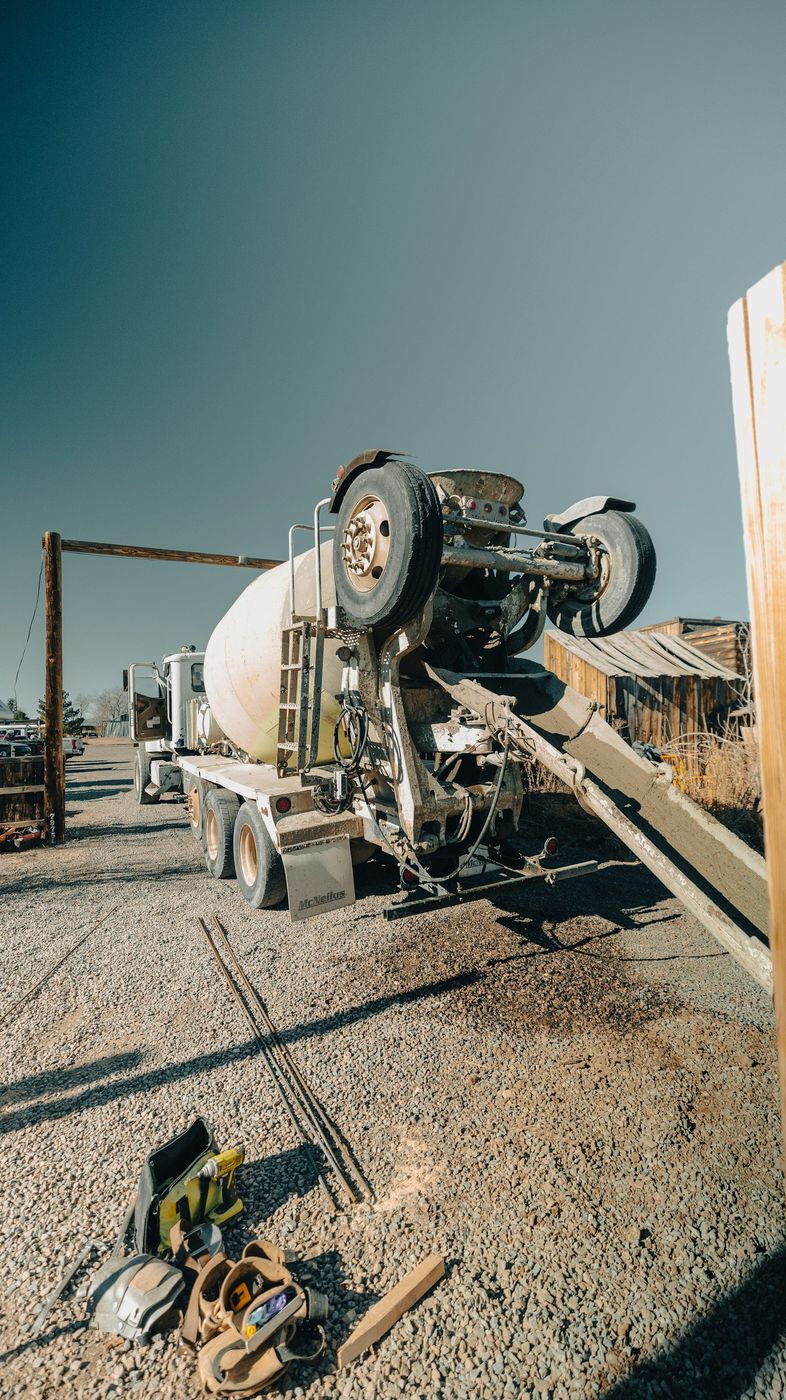
A lot tells you it is failing about three years before a panel actually breaks.
Pull into your own lot, stop just past the apron, and look down the drive aisle at a low angle instead of straight at your feet. Failure shows itself long before anything breaks. Dark stains where water sat after Sunday's storm. Hairlines that have opened up with crumbling shoulders. A corner dropped just enough to grab a cart wheel. None of that is cosmetic, and all of it is a message from the dirt.
We rebuild concrete lots for retail centers, medical buildings, offices, churches, and community amenity sites around Lone Tree. Most owners call after a tenant complains or an insurance walk flags a trip hazard, which means the surface had been reporting the problem for two or three seasons already. Here is the part that saves money: a lot almost never fails all at once. Read it right and you pull the panels that are done, correct whatever put them there, and keep the rest for another decade.
Ponding is first and it is the most useful. Water still sitting hours after the sky clears means fall toward your inlets is gone, either because that panel settled or because the grade never got there in the first place. From November through March a puddle in Lone Tree turns into a freeze-thaw machine, prying at every hairline within reach.
Second, joint edges. Tight, clean joints are a lot doing its job. Broken shoulders with grit collected in the bottom mean panels are working against each other, and that usually traces to base fines getting pumped out through the joint every time a loaded truck crosses.
Third, dust and scuffing. A surface that leaves gray on your shoe has lost its paste, generally from rain landing during finishing or from a first winter somebody salted.
Fourth, corners. Concrete gives up at corners before anywhere else because two free edges meet there. Broken corners at every panel intersection point at thickness, not at a bad load of concrete.
Fifth, transitions. Wherever the lot meets the public curb line, a trash enclosure, or a building slab, movement piles up. Lots at the newer buildings along the RidgeGate corridor tend to open up there first. Amenity lots serving Carriage Club and Fairways more often settle at the entrance apron, because every vehicle on the property crosses the same six feet of concrete twice a day.
| What you see | What is going on below | What we do about it |
|---|---|---|
| Water still standing a day after rain | The panel settled, or the original grade never reached an inlet | Repour to a shot grade, or add an inlet and rework the whole sub-basin |
| Broken joint shoulders with grit in the gap | Base fines pumping out under wheel loads while panels rock | Full-depth replacement over rebuilt base, with dowels tying the new joints |
| A crack running corner to corner | Joints spaced too far apart, or sawed a day too late | Pull those panels and re-cut the joint grid at spacing the slab can hold |
| Dusting surface with aggregate showing | Paste lost to rain during finishing or to deicer in year one | Diamond grind, or a bonded overlay when the slab underneath is still sound |
| One drive lane dipping, the rest flat | Loose utility trench backfill or a soft pocket under that run | Dig it out, replace with compacted structural fill, repour that lane thicker |
| Cracks radiating off a light base or inlet | No isolation joint where the slab meets something that will not move | Cut isolation joints in and repour the panels around the obstruction |
Almost no owner can hand over an empty lot. So we split the site and work it in pieces, usually by drive aisle or by quadrant, closing one, finishing it, and reopening it before the next barricade goes up. An open entrance, a fire lane, and accessible parking stay available through every stage. It costs extra mobilizations and it stretches the calendar, and almost every owner takes that trade without hesitating.
The pouring season runs roughly from the third week of April into October, and big flat surfaces go best in the shoulder weeks when nights cool off. Summer means live radar during placement. Winter lots are possible for properties whose slow season is January, using heated water, a non-chloride accelerator, and blankets on every panel before dark, and we will not place on frozen subgrade or strip blankets early to hit a reopening date.
One sequencing item gets missed constantly: striping, wheel stops, signage, and lighting conduit belong on the schedule from day one. Paint needs cured concrete. Conduit needs to be in the ground before a slab covers it.
Send us photos of the worst two areas and a rough lot size. We will tell you whether you have a surface problem or a subgrade problem before anyone drives out.
Still unsure about something?
Call the crew at (303) 569-4046 and we will talk it through.

Get a free, no-obligation estimate from a crew that knows Colorado soil, Colorado weather, and how to finish concrete that lasts.
Accessibility
Adjust the site to fit how you read and browse. Your choices are saved on this device.