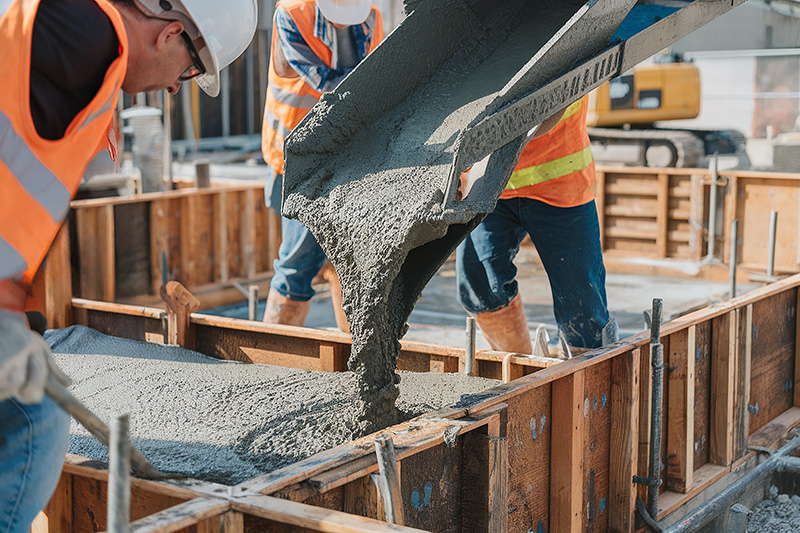
The right surface texture for grip, looks, and wear.
The finish is the part of a concrete job you actually touch and look at every day. The slab can be poured perfectly flat and reinforced right, but if the surface texture is wrong for how you use it, you notice fast. A patio finished too smooth turns into a skating rink the first time it snows. A garage floor finished too rough catches dirt and never wipes clean. We match the texture to the job, whether that is a broom finish for traction, a smooth steel trowel for a clean indoor look, exposed aggregate for grip and character, or saw-cut and scored patterns that give a plain slab some design.
On the Front Range, the finish does real work. Winters here mean ice, snowmelt, and a lot of freeze and thaw, so grip matters on anything you walk or drive on. High-altitude UV is hard on color and sealers. We pick and time the finish around those conditions, then seal it when sealing is the right call, so the surface holds its look and its footing through the seasons instead of looking tired in a couple of years.
There is no single best finish, only the right one for a given surface and how you use it. A broom finish is the workhorse for driveways, walks, and patios because the light texture sheds water and gives you footing in winter. A smooth steel trowel finish reads clean and modern, which is why it belongs indoors or under a coating, not out where it ices over. Exposed aggregate brings natural stone texture and grip that hides dirt and never dates. Saw-cut and scored lines turn a flat field into a pattern of tiles or borders. We walk the site with you, look at sun, slope, and traffic, and tell you which finish actually fits before anyone mixes concrete.
This is the honest concern with finishes, and it is a real one here. A glassy smooth-troweled surface outdoors will get dangerously slick once snowmelt freezes on it, so we do not put a hard trowel finish on exterior walks, steps, or patios where people are on foot in winter. For those, a broom finish is the standard answer: the fine ridges break the water film and give your shoe something to bite. Where you want more grip than a broom gives, exposed aggregate or a coarser broom direction does the job. Smooth trowel finishes have their place, indoors and on covered surfaces, and we steer you there on purpose rather than handing you a pretty surface that becomes a hazard in January. We would rather lose the look than send someone to the emergency room.
A finish is as much about timing as technique. Work the surface too early and you trap bleed water, which weakens the top layer and leads to scaling and dusting later. Work it too late and you fight a stiff slab and lose the texture you wanted. Our crew reads the slab and finishes in the window the concrete gives, which shifts with our dry air, altitude, and temperature swings. After finishing comes real curing, not just letting it dry out. We protect the surface so it holds moisture and gains strength, typically firm enough to walk on in 24 to 48 hours and reaching full strength around 28 days. Skipping the cure is the fastest way to ruin a good finish, so we never do.
Not every slab needs a sealer, but most decorative and colored finishes do, and so does anything that takes road salt. A good sealer keeps water and salt out of the top of the concrete, which is exactly what drives the freeze scaling and surface flaking you see on unprotected slabs around the metro. On colored, stamped, and exposed aggregate work, sealing also keeps the tone rich and guards it against our intense UV, which fades unsealed color over time. We match the sealer to the finish, since a film-forming sealer that looks great on a patio can turn a walk slippery if it is used wrong. We tell you when to plan on resealing so the surface keeps working years down the road.
From homes to commercial sites across the Front Range, here is where broom & custom finishes earns its place.
A broom finish gives the traction you need for tires and footing on a sloped driveway through winter.
A directional broom finish keeps entry walks and treads safe when they ice over.
Exposed aggregate or a fine broom finish balances comfort underfoot with grip and a finished look.
A smooth trowel finish leaves a dense, clean surface that is ready for an epoxy or polyaspartic coating.
A textured, slip-aware finish stays safe wet and cooler than a dark, smooth surface.
Saw-cut and scored patterns turn a plain slab into tiles, diamonds, or bordered fields with built-in control joints.
Concrete behaves differently at altitude. Our expansive clay soils swell with moisture and shrink when they dry, and the freeze and thaw cycle works on any surface that takes on water. Every broom & custom finishes project we pour accounts for both, from base preparation and drainage to air-entrained mixes, proper reinforcement, and control joints cut on time. That is how the work holds its shape and finish through Colorado winters instead of failing by spring.
You also get a written estimate before anything starts, a structural engineer on staff for the jobs that need one, and a crew that pulls and manages permits when the project calls for them. Licensed, bonded, and insured, with finishes that range from a clean broom texture to stamped, colored, and sealed.
Decorative concrete lives on the details, and the price reflects them. Here is what shapes a Custom Finishes project.
Color and texture are protected by sealer, and sealer wears. Plan to reseal broom & custom finishes every few years to keep the color rich and the surface shedding water. A gentle wash and prompt snow removal are all the routine care it needs between reseals. And whatever the project, the same rule applies across the Front Range: keep water from sitting on or soaking into the surface, and the concrete will reward you with decades of service.
You always know what is happening and what it costs before we mix a single yard. Here is the path from first call to final walkthrough.
We visit the site, measure, check drainage and soil, and hand you a clear written quote. No charge, no pressure.
We set the grade, thickness, reinforcement, and finish. Structural work gets engineered and permitted.
Forms, rebar, and a clean pour. We screed, float, and finish to the texture you picked, then cut control joints.
You can walk it in 24 to 48 hours. We walk the job with you and explain how to care for it through the first winter.
Still unsure about something?
Call the crew at (303) 569-4046 and we will talk it through.

Get a free, no-obligation estimate from a crew that knows Colorado soil, Colorado weather, and how to finish concrete that lasts.
Accessibility
Adjust the site to fit how you read and browse. Your choices are saved on this device.