
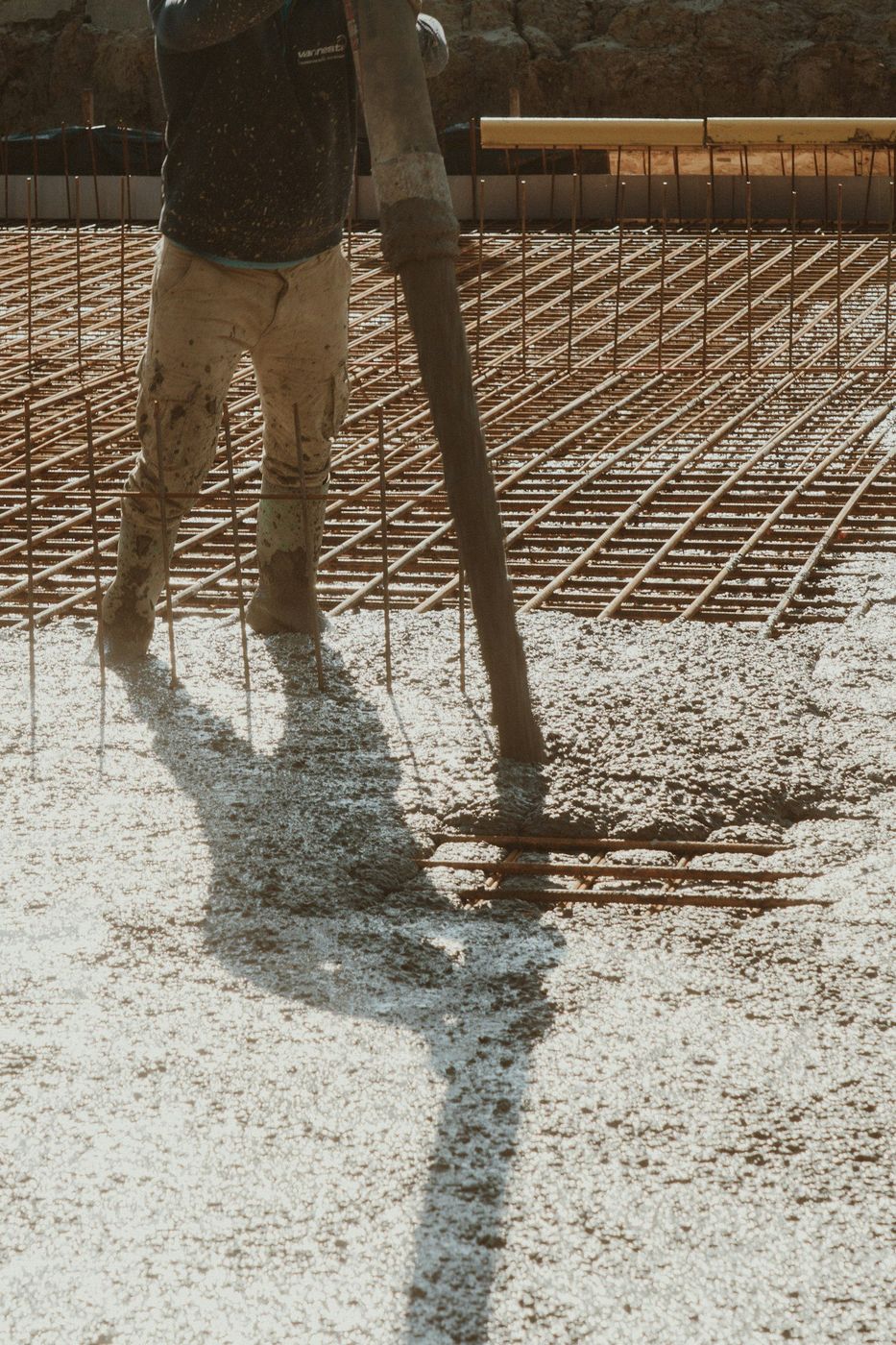
The texture somebody picks in June is the texture they'll be shoveling in January. We pick it with January in mind.
Late October, first snow that sticks. Gone by noon on the south side of the house, still there Thursday on the north. That one afternoon teaches you more about which finish belongs where than any sample board will. We're thinking about that day while standing in your yard in June with a tape measure.
Finish is the last hour of a pour and the only part anybody touches, so it gets treated as a styling decision. It isn't, not entirely. Broom, float, hard trowel, and salt each do something different to water, ice, glare, and a shovel blade. Around Fairways and Montecito we spec texture by exposure first, then let you pick the details.
A bull float knocks ridges down and brings a thin layer of paste up. That's the base state for everything after. A steel trowel then works that paste tighter and tighter, closing the surface into something dense and slick. More passes means harder, smoother, glossier, which is wonderful on a warehouse floor and dangerous on a north-facing walk.
A broom drags grooves open across the paste before it sets. Bristle stiffness and timing set the depth: soft bristles pulled late leave a whisper, stiff bristles pulled early leave grooves you feel through a shoe. Salt finish is another animal. Rock salt broadcast onto a fresh surface, pressed in, washed out later, leaving pits. Great around water, bad anywhere those pits will fill and freeze.
Everybody wants a medium broom until they see the sample, and then half of them want it lighter. We'll do it, but we tell them what they're trading. Every bit of texture you take off is traction you gave back. The place that shows up first is the shady stretch beside the garage.From the crew lead on these jobs
Sun exposure differs more across a single Lone Tree lot than most people expect. A south-facing driveway apron here dries within hours of a storm most of the winter. Twenty feet away, a walk tucked against the north wall of the house may not see direct sun between November and February at all, and whatever melts on it in the afternoon refreezes into a sheet by evening.
So we walk the property and mark the cold zones before speccing anything. Those stretches get rougher texture, sometimes a full grade rougher than the rest of the job, plus traction additive in whatever sealer goes down. The visual gap between a medium broom and a heavy one is small. The gap in footing on a January morning is not. It's also why we push back on smooth troweled patios somebody saw in a photograph taken in Arizona.
| Finish | An icy morning | A July afternoon | Under a shovel |
|---|---|---|---|
| Medium broom | Grooves cut the film. Best all-around traction we install | Kills glare, runs cooler than a closed surface | Slides fine when lines run the way you push |
| Heavy broom | Deepest bite. What we spec for shaded walks and slopes | Rougher on bare feet, holds a little more dust | Grabbier, and worth it where footing matters |
| Float finish | Modest grip, well short of any broom | Soft matte look, forgiving underfoot | Easy push, a touch more drag than trowel |
| Hard steel trowel | Slick as glass. We won't put it outdoors | Bright, hot, reflective | Glides, then you sand it every storm anyway |
| Salt finish | Pits hold water, then hold ice | Cool and casual around a pool | Blade catches the pitting and chips it |
Tell us where the shade sits in December. We'll tell you what texture each part of the project should get.
Finishing is a race against set time, and set time here swings harder than it does anywhere flat and humid. On a hot, dry, breezy June afternoon at 5,817 feet the surface tightens faster than a crew can cross it, so we start at first light and keep evaporation retarder on hand. October flips it. The slab sits open for hours, and troweling early on a slow surface seals bleed water into the top, which reads as a weak, dusty finish by spring.
Spring and fall are the friendly seasons for this. Winter pours still happen, with heated mix water, non-chloride accelerators, and insulated blankets, and we'll run them when a slab genuinely can't wait. But blankets lie right on the surface, and on colored or heavily textured work they can leave marks. Given the choice, we hold decorative finish work for a mild stretch and pour plain structural work in the cold.
Still unsure about something?
Call the crew at (303) 569-4046 and we will talk it through.
Get a free, no-obligation estimate from a crew that knows Colorado soil, Colorado weather, and how to finish concrete that lasts.
Accessibility
Adjust the site to fit how you read and browse. Your choices are saved on this device.