
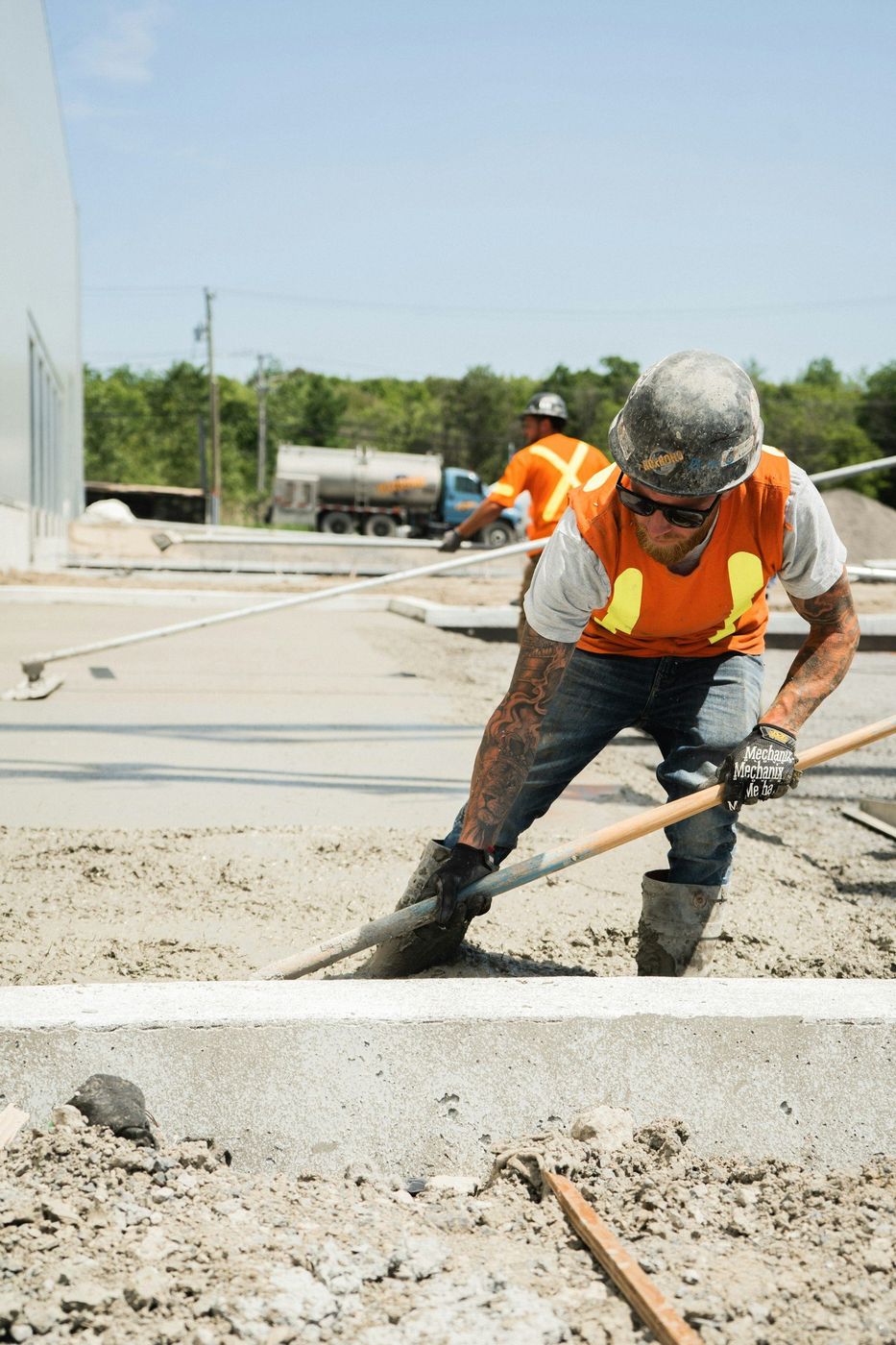
Resurfacing answers exactly one question well, and a lot of people are asking a different question without knowing it.
Resurfacing fixes the top. That's the whole sentence, and everything worth knowing follows from it. If your trouble lives in the upper quarter inch, a new wearing surface is one of the better deals in this trade. If your trouble lives in the base, resurfacing hands you a better looking version of the same failure, on the same schedule.
We get called to plenty of Lone Tree driveways and patios where the answer is obviously yes, and plenty where it's obviously no. Then a smaller pile where it's a real decision with money riding both ways. This page is for that third group, since that's where people get talked into the wrong thing by somebody who sells one product.
Scaling, spalling, pop-outs, dusting, and a worn-out gray are surface problems. They come from deicing chemicals, from rain during finishing years ago, from a slab that froze young, or from decades of ultraviolet and abrasion. The concrete below is often fine. Those are the slabs a resurfacer was invented for.
Settlement, panel offset, wandering cracks that keep opening, and hollow spots are the other category. Those come from underneath, and a topping helps none of them. A resurfacer weighs something and adds zero structural capacity. Over a moving slab the crack comes right back through, usually by the second spring, and the money got spent twice. We'd rather lose the job than sell that.
| Option | What it asks of you | What you get | When it's the wrong call |
|---|---|---|---|
| Resurface | A few days off the slab, and a surface we can get genuinely clean and dry | A fresh wearing layer with new texture and color over concrete you own | Any time the base has failed or panels are moving against each other |
| Replace | Demo noise, equipment in the yard, a week or more, and the biggest number here | A slab built correctly from the dirt up, with the drainage and steel it should have had | When the concrete is sound and only the top is tired |
| Targeted repair | A day, sometimes less, plus tolerance for a visible patch | Spalls filled and joints resealed, buying several more seasons | When damage covers most of the area. Patchwork on a whole drive reads as patchwork forever |
| Wait and watch | Living with how it looks and checking each spring | Time to save, plus real information on whether it's stable | When there's a trip hazard, or water runs toward the foundation |
We'll walk the slab, sound it out, and tell you which of the four options above is actually yours.
It can't add strength. A polymer-modified topping bonded to your slab becomes part of that slab, and the combined assembly is only as strong as the original was. A four-inch slab with a quarter inch on top is still a four-inch slab as far as your truck is concerned.
It can't bridge a moving crack. We can honor one by cutting a joint over it, which keeps the movement in a straight line where it looks intentional, but pretending it isn't there never works. It can't keep water from getting under an edge, and it can't lift a settled panel. That last one gets asked constantly: if a section has dropped, lift it with foam or slurry first, then resurface the whole area so the finish reads as one piece.
A bonded topping is thin, which makes it far more sensitive to conditions than a full-depth pour. It gains and loses heat almost instantly, has very little water in it to begin with, and depends completely on a bond it forms in the first hour. So the calendar is tighter than you might expect: roughly mid-May through late September, with the shoulder weeks being the best of it.
Heat is the daily enemy in July. A dry breezy afternoon at this altitude pulls moisture out of a quarter-inch layer before it knits, so we start early and shade the work where we can. Cold ends the season outright. Through that first winter, keep every deicing chemical off it, including whatever rides home on your tires. Shovel early, throw sand, and let the surface get through year one clean.
Still unsure about something?
Call the crew at (303) 569-4046 and we will talk it through.
Get a free, no-obligation estimate from a crew that knows Colorado soil, Colorado weather, and how to finish concrete that lasts.
Accessibility
Adjust the site to fit how you read and browse. Your choices are saved on this device.