
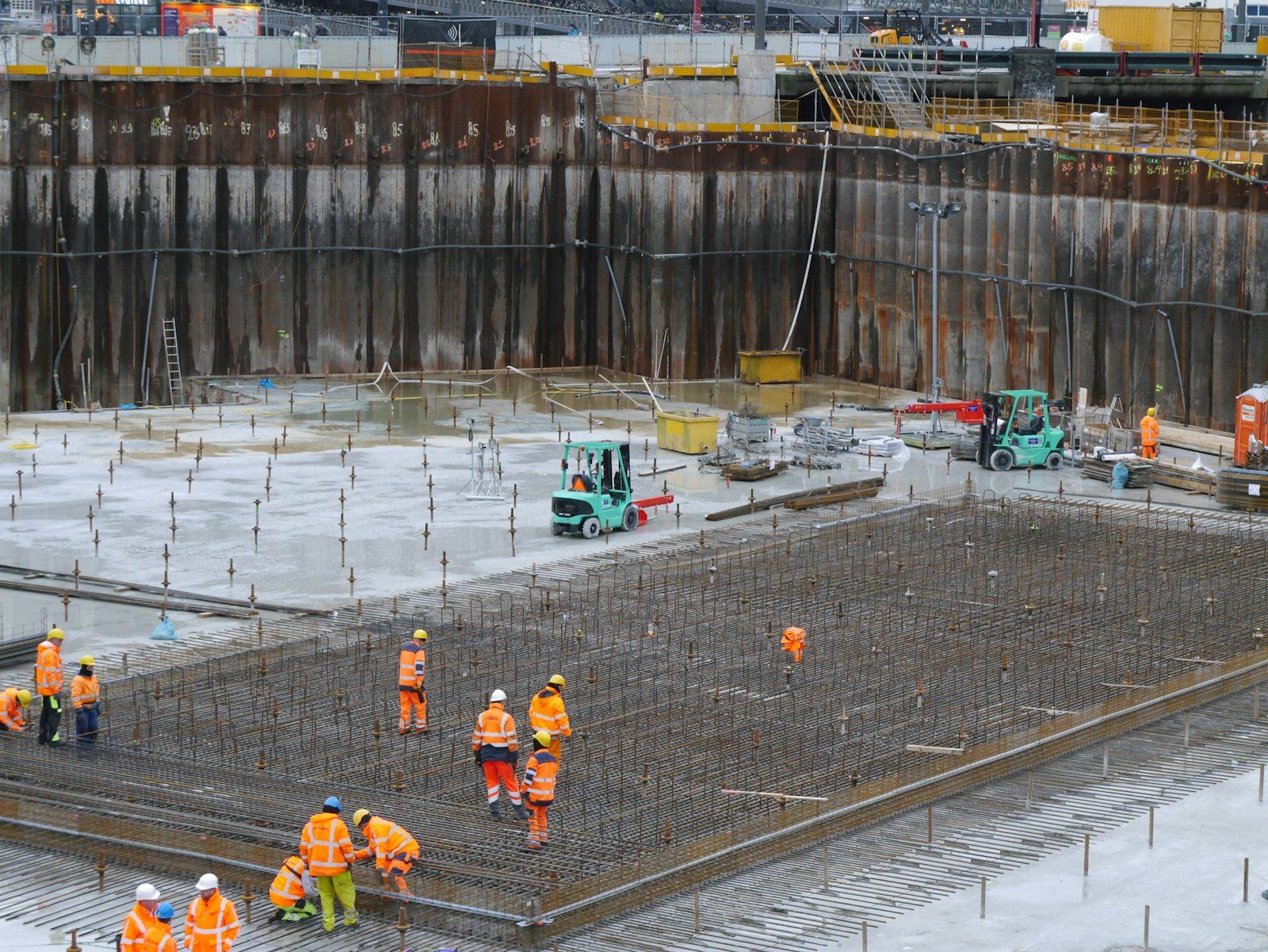
Whether it pays has almost nothing to do with the top half inch and everything to do with what is holding it up.
Nobody ever calls to ask whether we can make an ugly slab look better. We can. The real question, the one worth spending twenty minutes on before anybody quotes anything, is whether the concrete under that ugly surface deserves a new face. Put a fresh wearing layer over sound structure and you've made a genuinely good trade. Put the same layer over a slab that's breaking up from below and you've bought yourself eighteen months.
That's the frame we use on every one of these in Parker, whether it's a shaded walk near The Pinery or a builder-grade patio in Reata that never got sealed. First we decide if the slab has good bones. Then we talk about what drives the number, because resurfacing costs vary more from job to job than almost anything else we do, and the reasons are worth understanding before you compare bids.
A sound slab has a compacted base under it, sits flat with no panel riding higher than its neighbor, rings solid when you tap it, and has cracks that are tight and stable rather than open and moving. Damage in the top layer, scaling, dusting, pitting from deicer, a surface troweled wet that's been shedding ever since, is exactly what resurfacing was built for. We take it off, open the concrete up, and bond a new surface to it.
Damage from below is a different story, and we say so out loud. Panels settled at different heights. Cracks with a lip you catch your shoe on. Edges crumbling because water has been undermining the base for years. A topping fixes none of that. Whatever moved will move again and take the new surface with it. We'd rather lose the job than sell a repair with a known expiration date.
Square footage is the obvious one and the least interesting. Here's what really separates a cheap job from an expensive one on the same size patio. Prep condition comes first: a slab wearing three layers of old sealer, or one with paint, adhesive, or a failed coating on it, can take longer to open up than the resurfacing itself takes to place. Second is how much crack work is involved, since each one gets routed, filled, and honored in the new surface.
Then detail. A plain rectangle is fast. Steps, curved edges, tight corners at a hot tub, and transitions into a threshold all get hand-worked, and hand work is time. Texture counts too; a gray broom-finished resurfacer takes a fraction of the effort of a colored, patterned, hand-antiqued one. And access. A backyard reached through one gate costs more to work in than a driveway we can back the trailer up to.
| Approach | What it addresses | What you get out of it |
|---|---|---|
| Clean and seal | Grime, dullness, minor staining | A visibly better slab for very little. Does nothing for texture loss. |
| Spot patch and joint fill | Isolated damage, spalled edges, open joints | Function restored. It will look like a repair, because it is one. |
| Full resurfacing | Worn, dusting, pitted, or ugly surfaces on a sound slab | A new wearing layer across the whole area, in the texture you choose. |
| Colored, patterned topping | Everything above, plus a slab you actively dislike looking at | Decorative work without a tear-out. The most transformation per dollar. |
| Tear out and repour | Settlement, heaving, base failure, structural cracking | The only real fix when the problem is underneath. Everything else stalls. |
We'll sound the slab, check the joints, and tell you where your money does the most good. No charge, no pressure to go bigger.
Resurfacing earns its keep because you already paid for the expensive part. The excavation, the base, the steel, the concrete itself: all of that is in the ground and still doing its job. You're replacing only the layer that wore out, which is the layer that was always going to wear out first. Against demolition, haul-off, and a fresh pour, that's a strong trade on any slab with good structure.
The math flips when you find yourself resurfacing the same area twice, or when a topping is being used to hide something a buyer's inspector is going to find anyway. It also flips on a slab too thin for its job. A three-inch pad under a truck doesn't become adequate with a quarter inch of topping on it.
Season is part of the value too. These materials want surface temperatures above fifty and holding, which puts the window from late April to mid-October, with September the most reliable stretch we get. Push into November and you risk material that never fully develops strength. Winter goes to estimates and scheduling instead. And the first winter after any resurfacing runs on sand and a plastic shovel, no deicer at all.
Still unsure about something?
Call the crew at (303) 569-4046 and we will talk it through.
Get a free, no-obligation estimate from a crew that knows Colorado soil, Colorado weather, and how to finish concrete that lasts.
Accessibility
Adjust the site to fit how you read and browse. Your choices are saved on this device.