
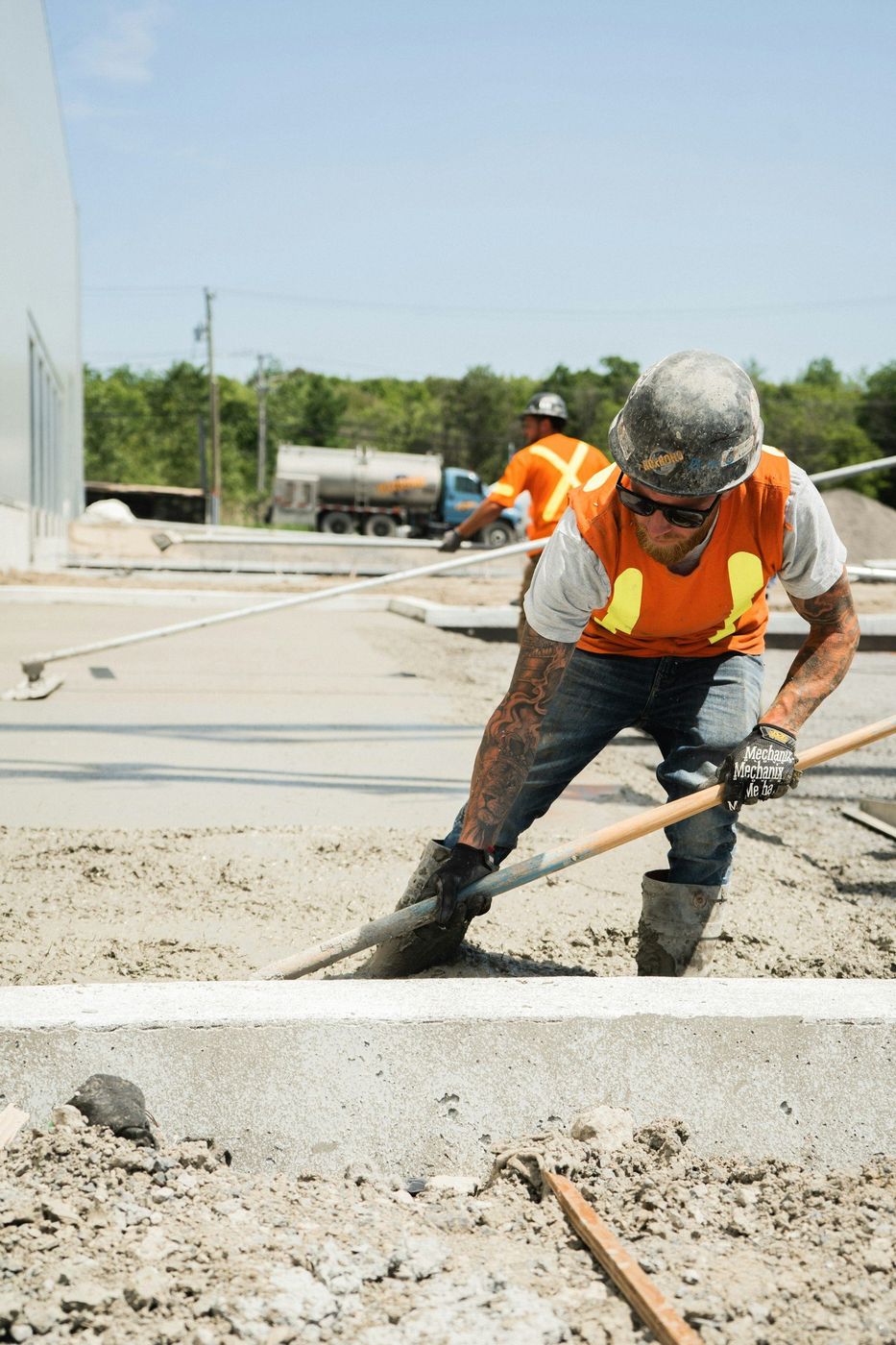
One long morning, a shot blaster, and a worn-out slab comes back with a new face.
Six thirty in the morning, trailer backed into the drive, and the first thing that comes off is a machine most homeowners have never seen. That's how a resurfacing day starts. By the time the neighbors in Sapphire Pointe have finished their coffee we're already past the point of no return on the old surface, and by mid-afternoon the slab has a new one.
Resurfacing renews the wearing course of concrete you keep. We are not pouring a slab, we are not tearing anything out, and we are not hiding structural trouble. What we're doing is taking off the tired, chalky, weathered top and bonding a fresh cementitious layer over it with the color and texture you chose. Below is the play-by-play, because knowing what a crew does hour by hour separates a real resurfacing outfit from somebody rolling paint on your patio.
First hour is protection and prep. Furniture out, plants covered, hose bib located, and every vertical surface within splash range gets taped and papered. Then the shot blaster goes to work. It fires steel media at the slab and vacuums it back in the same pass, which strips the surface open to a uniform profile without the dust cloud a grinder throws. Edges, corners, and anywhere the machine can't reach get hand-ground.
Second hour is repair. We fill spalls, rout out cracks and pack them, and knock down high spots so the new layer sits at an even thickness. Every existing joint gets taped or bond-broken so it can keep moving after we're gone. Then the whole slab gets washed and brought to a damp condition, no puddles, because a bone-dry slab in Castle Rock's air will suck the water right out of fresh material and starve the bond.
Third hour we mix. Unglamorous, and it's where jobs are won. Water gets measured by the gallon, never eyeballed with a hose, and each batch is timed under the paddle. Too wet loses strength and color depth. Too dry drags. Every bucket matches the last, or the difference shows up in the first strong afternoon light.
We'll sound out the slab, check the drainage, and tell you honestly whether resurfacing is the right move.
| Time | What's happening | What you'll notice |
|---|---|---|
| Early morning | Furniture cleared, masking up, shot blaster running | Loud. The machine sounds like heavy rain on a metal roof. |
| Mid morning | Cracks routed and packed, spalls filled, slab washed and dampened | Quiet stretch. Looks worse than when we started, which is normal. |
| Late morning | Bond coat and first pass of material placed and pulled flat | The color arrives all at once and it looks darker than the sample. |
| Early afternoon | Texture worked in, joints cut or honored, edges detailed | This is the window where nobody walks on it, including the dog. |
| Late afternoon | Cleanup, haul-off, cones set, care sheet handed over | Surface lightens as it dries. Final color lands over the next few days. |
Honest limits, stated plainly. A resurfaced slab is still the old slab with a better face. It cannot lift a settled corner, it cannot re-establish drainage that runs toward the house, and it cannot save concrete that has broken into pieces moving independently. If we can rock a section with a foot or hear a hollow thud under a corner, the base has washed out and we'll say so.
It can't outrun the calendar either. Our window at 6,224 feet runs mid-May through early October, with surface temperatures staying in the fifties overnight. Wind is the sneaky one. A dry twenty mile breeze crazes a thin layer fast, so we screen the work and dampen the slab first. Storms cancel the day outright. Winter, we prep interior floors and load the outdoor board for spring.
The slab everyone assumes is trash is usually the one that comes out best. Faded, spalled, ugly as sin, but solid underneath. Blast it open, feed it a good bond coat, and it takes the new surface like it was waiting for it.From the crew lead on these jobs
Still unsure about something?
Call the crew at (303) 569-4046 and we will talk it through.
Get a free, no-obligation estimate from a crew that knows Colorado soil, Colorado weather, and how to finish concrete that lasts.
Accessibility
Adjust the site to fit how you read and browse. Your choices are saved on this device.