
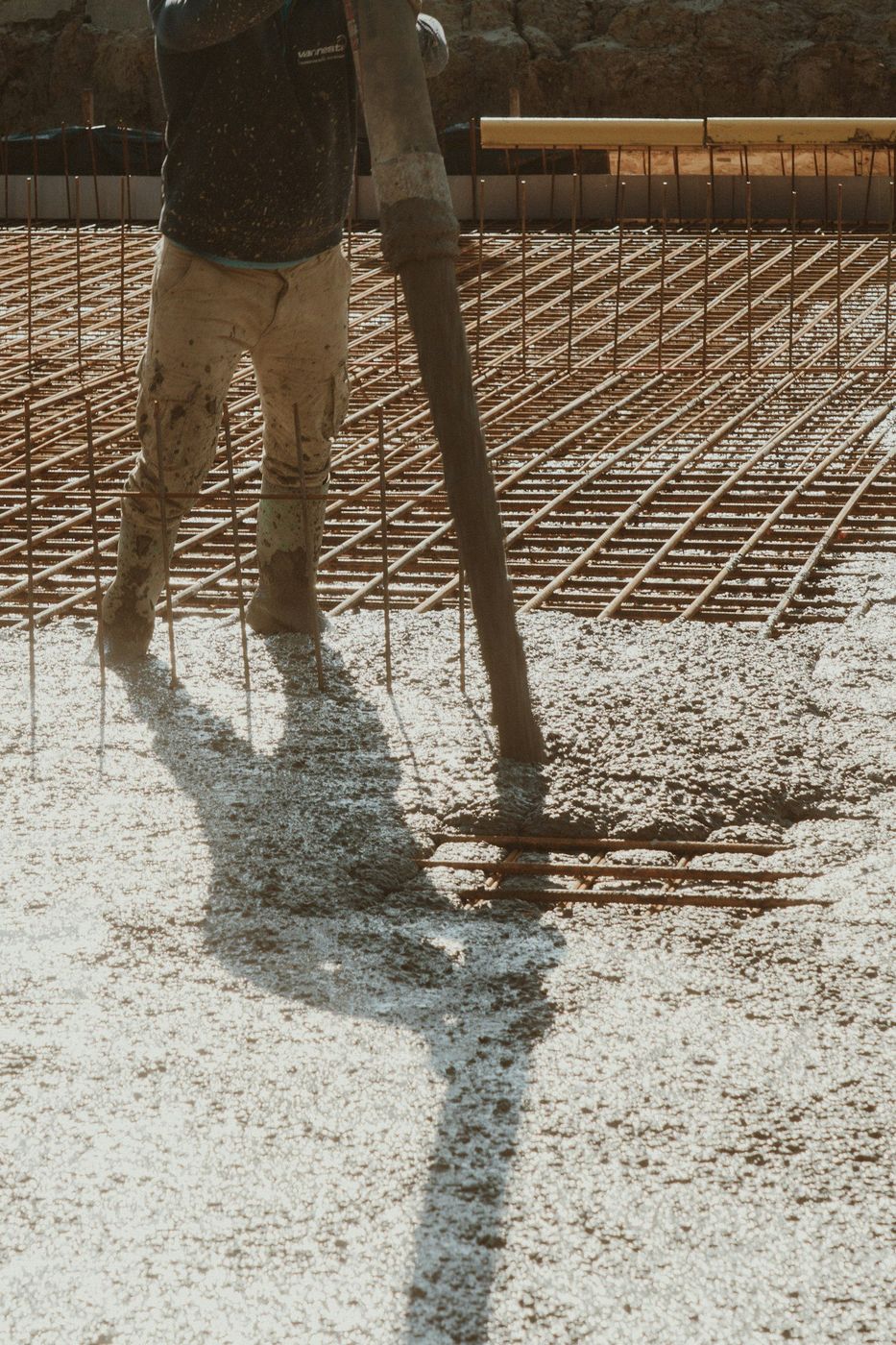
Fifty-eight degrees in February, the door goes up, and the floor turns slick from the inside out.
It happens every year and it always catches somebody off guard. A warm afternoon lands in the middle of winter, the sun gets high, and everybody opens the garage door for the first time in weeks. Twenty minutes later the floor is wet wall to wall and nobody can find a leak, because there is not one. Warm air rolled into a room holding a slab still sitting near freezing, and the moisture in that air condensed on the coldest surface it could find.
A sweating slab is not automatically a defect. But it is a good excuse to look at your garage floor honestly, because the conditions that make it sweat are the ones that decide whether it lasts. Cold from below. Water from above. Salt in between.
A concrete slab holds temperature stubbornly. After a run of cold nights, the floor of an unheated garage can sit thirty degrees below the air that suddenly fills the room on a chinook afternoon. Condensation follows physics, not plumbing. That is the harmless version.
The version worth worrying about looks similar and is not: moisture coming up through the slab from the ground instead of down onto it from the air. Tape a square of clear plastic to the floor overnight. Water on the underside means the ground is feeding it and something below the slab is missing. Water on top means it is condensation and the fix is airflow, not concrete. That one test settles most of the arguments we walk into.
Sheeting under a slab is the cheapest insurance in the whole build, and older garages around The Ranch and Quail Creek frequently do not have any. With no vapor barrier, ground moisture rises through the concrete year round, carries dissolved minerals to the surface as white crust, and lifts any coating you ever put down. No product beats a slab pushing water from behind. That is a replacement conversation, not a repair one.
Slope is the other thing people inherit rather than choose. A garage floor needs to fall toward the door so meltwater off two cars in February heads outside instead of pooling against the back wall. We build about an eighth of an inch per foot, which drains reliably and is shallow enough that a jack stand does not roll. Newer builds in Bradburn and Legacy Ridge usually have some. What they often lack is enough of it after landscaping raised the grade outside the door.
| The work | Conditions it needs | What we do outside that window |
|---|---|---|
| New slab or full replacement | Unfrozen subgrade and a way to hold the slab warm while it sets | Heated water, non-chloride accelerator, blankets, and a temporary enclosure at the opening |
| Demolition and haul-off | Almost anything. Frozen ground breaks easier, not harder | Nothing stops it except a closed disposal yard |
| Grinding and surface prep | Dry slab and a working dust extractor | Runs year round. Winter is honestly a good time to book it |
| Epoxy or polyaspartic coating | Slab above the product minimum and dry enough to bond | Portable heat and a moisture test first. Coating a cold, damp slab peels in sheets |
| Penetrating sealer | Dry surface, mild temperatures, no freeze before it soaks in | We push it to spring rather than waste an application |
| Joint filling and crack repair | Slab at its narrowest, so late winter is ideal | Nothing. This is the one job the cold helps |
Send a photo of the worst two square feet and the age of the house. We will tell you whether it is a surface problem or a slab problem before we drive out.
November through March, your cars carry road treatment home twice a day and drop it in the same two rectangles. Brine soaks into the paste, then the temperature swings this altitude specializes in freeze it, thaw it, and freeze it again inside the concrete. That is the pitting and flaking pattern that always shows up exactly where the tires park.
You can slow it down. Rinse the floor on a warm day before the brine dries in. Park on trays or heavy mats through the worst months. Seal a healthy slab with a penetrating product. What you cannot do is out-clean a slab that never got air entrained or never got a vapor barrier. That floor has been losing the argument since the day it was poured, and grinding it back buys a couple of winters at most.
Still unsure about something?
Call the crew at (303) 569-4046 and we will talk it through.
Get a free, no-obligation estimate from a crew that knows Colorado soil, Colorado weather, and how to finish concrete that lasts.
Accessibility
Adjust the site to fit how you read and browse. Your choices are saved on this device.