
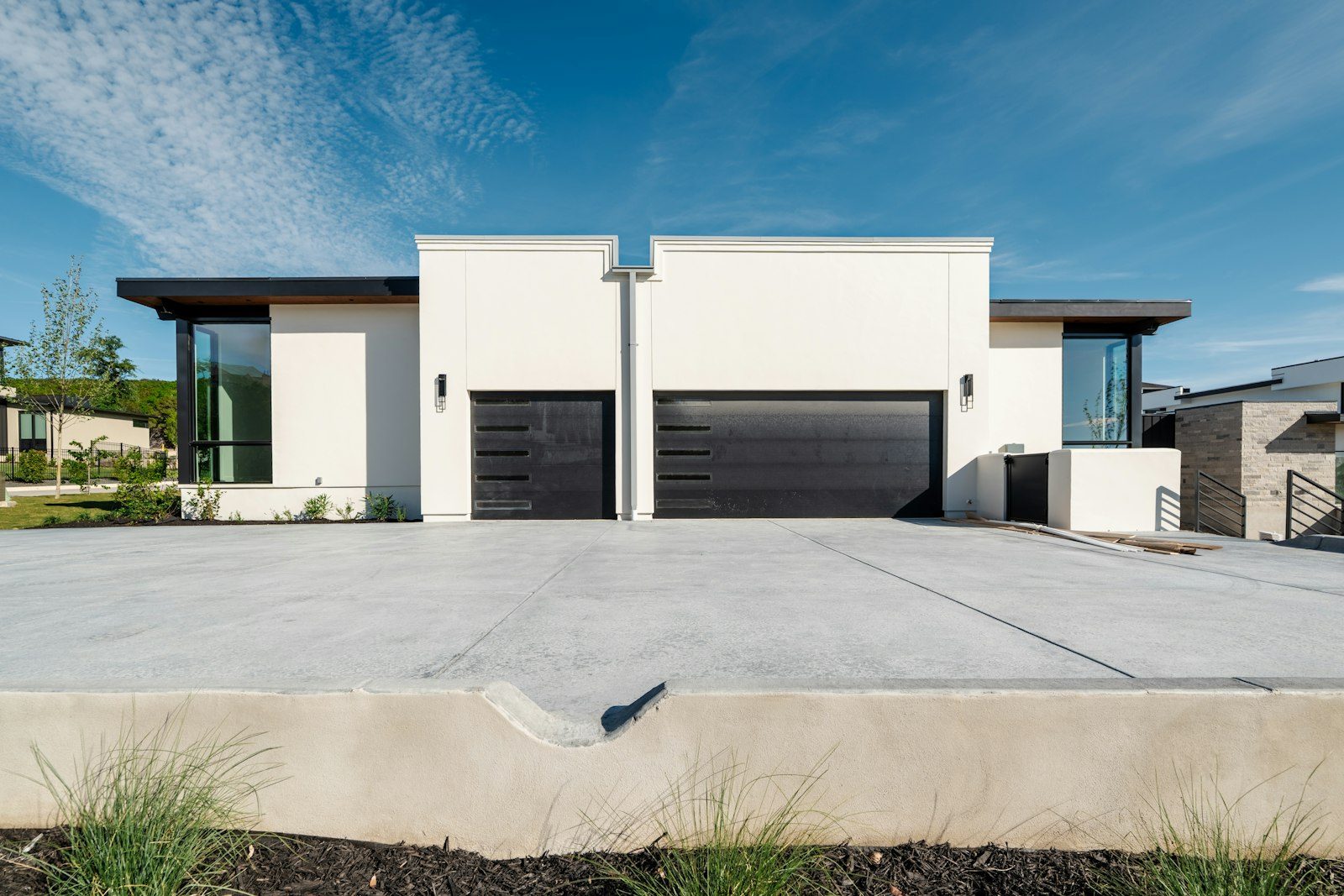
Two cars, one narrow slab, and a decision about whether to widen it or start over.
Plenty of driveway calls here start with a measurement, not a crack. Somebody parks the second car, opens the passenger door, and puts a shoe in the mud. That is the whole problem in one motion. The slab is sound enough. It is just narrower than the way the household actually lives, and now there is a choice to make between more concrete and better concrete.
We would rather help you make that call than sell you the biggest version of it. Some drives want a strip added down one side and nothing else. Some want the top few panels cut out where the apron has broken apart, with the rest left alone. And some are far enough gone that adding to them is throwing good money after bad. Here is how we sort one from the other.
Before anyone talks square footage, we want to know whether the concrete you already own is stable. That is a separate question from whether it looks good. A drive can be stained, faded, and worn glassy in the tire tracks while it sits on a base that is not going anywhere. Another one can read fine from the street and rock under your heel at every joint.
So we walk it. We watch how the panels line up with each other, whether any of them have dropped, and which direction water leaves. Around The Ranch and Quail Creek the flatwork tends to be older, the original gravel under it was thin, and movement shows up as whole panels tipping like piano keys. Legacy Ridge and Bradburn bring a different complaint. Builder slabs poured over backfill that kept settling after closing, which reads as one sunken strip near the garage door. Different causes. Different fixes. Same soil pushing on both.
| What you want | The move | When it is the wrong call |
|---|---|---|
| Room to open both car doors | A widening strip down one edge, dowelled into the existing panels | Skip it if the old slab is already moving. New concrete tied to failing concrete fails alongside it. |
| Space for a trailer or a third vehicle | Extend past the garage line with a thicker section under the parking area | Not worth doing on a lot where runoff already sheets toward the house. Grade comes first. |
| The apron at the garage has broken apart | Saw out and replace the top panels only | Pointless if the rest of the run is cracked through. You will be back for the remainder inside a couple of seasons. |
| A new crack every spring | Full tear-out and rebuild starting at the subgrade | Rarely wrong. If money is tight, phase the area instead of shorting the base depth. |
| It just looks tired | Bonded overlay or resurfacing on the existing slab | Never over a slab with live movement. An overlay copies the crack back to the surface within a year. |
Send one photo from the garage door looking out and one from the street. We will tell you what we see before anybody schedules a visit.
Pour concrete beside concrete and you have created a line that will move. We plan for it two ways. Where a widening strip runs alongside a sound slab, we drill and epoxy dowels into the edge of the old panels so both sides rise and fall together instead of stepping apart under a tire. Where new work meets the garage slab or a foundation wall, we want the opposite: an isolation joint, so the house and the driveway move on their own schedules.
Color is the honest conversation. Fresh concrete comes out lighter than a slab that has spent fifteen winters under high-altitude sun and rubber, and no pigment fixes that on day one. The gap closes most of the way over two or three seasons. If you want a dead match this year, the answer is not a strip. It is replacing the surface all at once.
April through October is the easy window. If you let us pick, we take the back half of September: warm ground, cool nights, and weeks of decent weather before the first hard freeze. Spring works once overnight lows quit dipping below freezing. Summer is routine as long as we start at daybreak and watch what builds over the foothills by two in the afternoon.
Winter is not off the table. Heated mix water, a non-chloride accelerator, and insulated blankets carry us through the cold months, and we hunt for the gap between fronts. What we refuse to do is place concrete on frozen ground, because the thaw underneath drops the slab and you buy the driveway twice. One rule no matter the month: keep ice melt off a new drive through its first winter, and keep magnesium chloride off it forever.
Still unsure about something?
Call the crew at (303) 569-4046 and we will talk it through.
Get a free, no-obligation estimate from a crew that knows Colorado soil, Colorado weather, and how to finish concrete that lasts.
Accessibility
Adjust the site to fit how you read and browse. Your choices are saved on this device.