
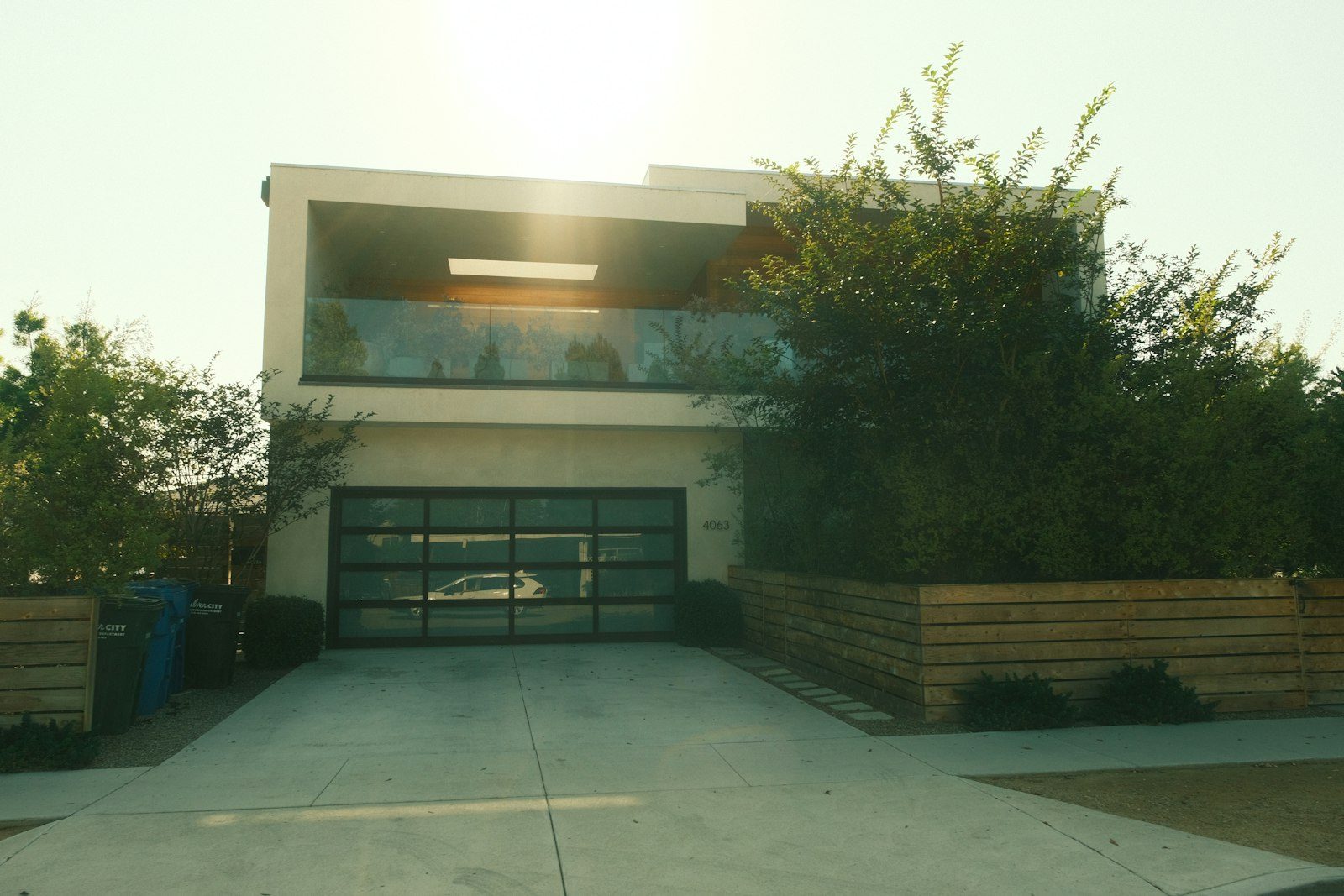
Who parks where, and in what order? That answer changes the whole slab.
Before we price a replacement we ask a question that sounds like small talk: who parks where, and in what order does everybody leave in the morning? It matters. The answer tells us which corner needs extra depth, where the joints should land, how wide the entry has to be, and whether the whole thing wants six inches instead of four.
Most drives get replaced in the exact outline of the one that failed. That's how a household ends up with the same daily annoyances in fresher concrete. We'd rather burn twenty minutes on your routine first. Thornton keeps growing north and we work both ends of that: builder slabs out in Hunters Glen that went in thin and fast, and older drives near Eastlake that have simply run out of road.
Two vehicles, one behind the other. Somebody leaves at six thirty and somebody else at eight, and in the wrong order there's a shuffle in the dark. A kid's bike goes down flat where nobody can see it. Trash cans roll out Sunday night over the same eighteen inches of edge. A delivery van swings a front tire over the corner because the entry is too narrow to turn clean.
Every one of those is a load path, and the old slab keeps the record. We read it before we break it out. A chipped corner means the entry radius was wrong. A dished spot near the garage marks where the heavy vehicle lives. Hairlines by the sidewalk say the apron never got a thickened edge. Then we build the new slab to answer those instead of repeating them.
Two vehicles or four, a trailer, a hoop, a shop out back. We'll spec it to that and quote it free.
Backing a trailer in means a wider throat at the turn and thickened concrete under the tongue jack. Two cars stacking means we set a joint where the front bumper lands rather than at some even spacing, because a joint under a tire that never moves collects meltwater all winter. Hoop going back up? We sleeve for the post first. Recycling bin on the north side where sun never reaches? That strip gets pitched harder so it isn't permanent ice.
Width is the piece people underestimate. A single-lane run feels fine until two people live there and somebody is forever walking the grass to reach the passenger door. Two more feet with the forms already set is the cheapest square footage you'll ever buy. Two more feet in three years is a cold joint and a second crew day.
| What happens there daily | The stress it puts on concrete | What we do about it |
|---|---|---|
| Two cars stacked nose to tail | Static weight on the same panel for months | Joints planned around where wheels rest, not off a tape measure |
| Backing a trailer or camper in | Jack point loads plus tires scrubbing on the turn | Thickened section at the jack spot, wider entry throat |
| Trash cans dragged out weekly | Wheeled load hammering unsupported edge | Thickened perimeter and a properly tooled radius there |
| Kids playing, hoop at the end | Almost none, but sleeves have to exist first | Conduit and post base set before the pour, not cored later |
| Guests parking half on the grass | Edge breaking where nothing supports it | Widen, or build a compacted shoulder beside the slab |
| Snow piled on one side all winter | A wet strip cycling far more than the rest | Extra fall that way, and we tell you where to throw it |
| Work truck or dually parked nightly | Axle loads past what a car slab was meant for | Six inches in that lane with the steel tightened under it |
Thornton sits a little past five thousand three hundred feet, so a January day can start at fifteen degrees and turn shirt-sleeve warm by two. Concrete feels every one of those swings. Water works into the surface at noon and expands in it at midnight, again and again. Entrained air gives that water somewhere to go, which is why nothing else goes outdoors here.
What you do on top counts just as much. First winter, no ice melt at all. Sand for grip, a plastic-bladed shovel, and clear it before it packs into a layer somebody has to chip.
We replace drives April into late October without drama, and we'll pour in cold weather with heated water, a non-chloride accelerator, and blankets when a slab has failed badly enough that spring isn't a reasonable wait. Frozen ground stops us cold.
You can tell where a family parks without asking. There's a shiny lane where the tires run, a dull patch where the second car sits all winter, and one chewed-up corner where the truck cuts in. We build the new slab around those three spots.The crew lead's read on it
Still unsure about something?
Call the crew at (303) 569-4046 and we will talk it through.

Get a free, no-obligation estimate from a crew that knows Colorado soil, Colorado weather, and how to finish concrete that lasts.
Accessibility
Adjust the site to fit how you read and browse. Your choices are saved on this device.