
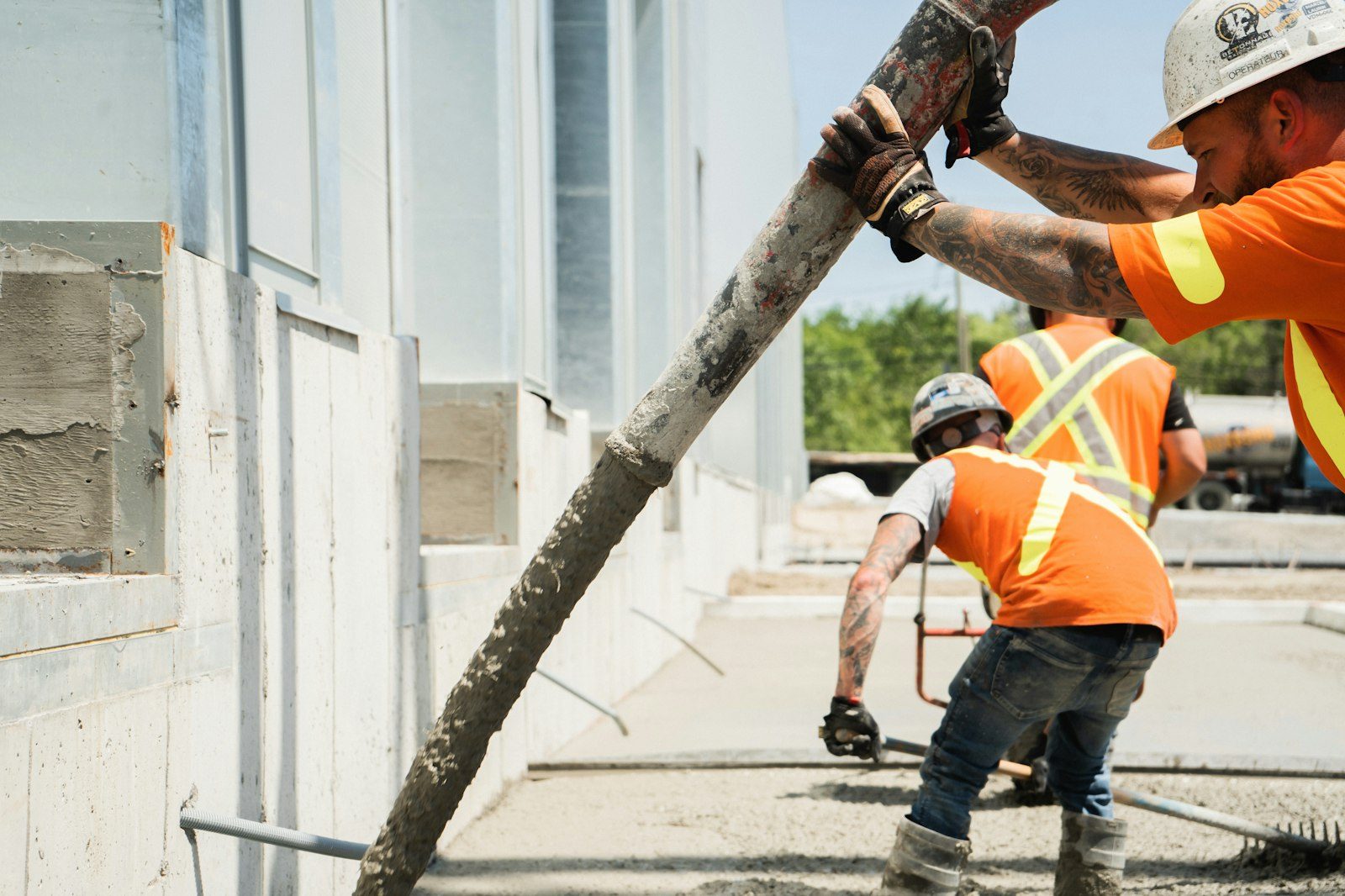
The March thaw finds every flat spot in a flowline. We set grade so there aren't any.
Walk a Larkspur property on a warm March afternoon and the curb tells you everything. Snowmelt comes off the slopes all day, runs the gutter line, and finds the one stretch where the flowline went flat. It ponds there. Then the sun drops behind the ridge, the temperature falls twenty degrees in an hour, and that puddle turns into a sheet of ice sitting against the curb face all night. Do that fifty times a winter and the concrete comes apart from the top down.
Curb and gutter is the least noticed concrete on any commercial property and the one doing the most work. It carries water, it protects the edge of your pavement, it keeps vehicles off landscaping, and around here it handles a melt-freeze cycle that runs from November clear into April. We build it for property managers, business owners, boards, and general contractors across Douglas County, on ground that rarely gives us the courtesy of being flat.
| Condition | What it does to the curb | How we build against it |
|---|---|---|
| Daily melt and refreeze | Saturates the top surface, then splits it as the water expands overnight | Air-entrained mix at six percent. Not negotiable on exterior curb. |
| Heavy spring runoff off a slope | Overtops a shallow gutter and scours the base behind the curb back | Deeper pan, verified flowline fall, and a hard edge tied into the pavement. |
| Plow blades and steel edges | Chips the curb face and shears the gutter lip where the blade catches | Consistent height and a clean batter so the blade rides past instead of digging. |
| Deicing chemicals | Pits and scales the surface, worst on concrete under a year old | Sand only the first winter. We put the rule in writing for your snow contractor. |
| Deep frost in shaded stretches | Heaves short sections and breaks the flowline into a stair pattern | Free-draining base under the curb so there's no trapped water to freeze. |
A curb that looks perfect and holds water is a failed curb. We shoot the flowline before anything gets formed, we verify it after the base is in, and we check it again while the concrete is still workable. Flat spots come from small things: a stake that got bumped, a base lift that settled unevenly, a machine operator running by feel instead of by string. None of them are visible until the first storm, and by then you're looking at saw and replace.
Larkspur's terrain makes this both harder and easier. Harder because slopes vary within a single property, and because a treed lot around Perry Park keeps shaded stretches wet long after the sunny sections have dried out. Easier because we usually have real fall to work with. Sites with grade let water leave. The trouble comes at transitions, where a steep run flattens out at a drive entrance or an inlet, and that flat landing is exactly where ice forms.
Where the curb meets your existing pavement, we set the tie-in so water crosses the seam without stalling. On sloped ground around Bear Dance we sometimes add short intercepting runs partway up a drive, so the flow gets broken into manageable pieces instead of gathering all the way down and arriving somewhere at full speed.
That's a grade problem, not a weather problem. Send a photo of the puddle and we'll tell you what it takes to fix the flowline.
Machine-extruded curb goes fast and holds a clean profile on long straight runs and gentle sweeps. It's the right call for a lot perimeter or a landscape edge where the geometry is simple. Formed curb costs more time and it's what we use on tight radii, drive entrances, transitions into ADA ramps, and anywhere the section has to change shape as it goes. Plenty of properties get both, and we tell you which stretch is getting which before we start rather than letting the machine dictate the design.
Season matters more for curb than for most flatwork because the section is small. Small sections lose heat quickly, so a late fall pour needs blankets sooner and a cold snap hurts it faster than it would a six inch slab. Late April through mid October is the comfortable stretch at this elevation. Early fall is the sweet spot: warm enough to finish clean, cool enough that the surface isn't crusting ahead of the crew, and a full cure runway before the melt-freeze season starts working on it.
Winter curb work is possible with heated water, accelerator, and insulation. Frozen ground stops us cold. Curb set on frost lifts out of grade by April and the flowline you paid for is gone.
You can find the bad section without a level. Just look for the gravel fan. Wherever the gutter ponds, the ice sits, the sand piles up, and by June there's a little delta of grit sitting in the low spot. That grit is drawing you a map of the grade problem.Straight from the crew
Still unsure about something?
Call the crew at (303) 569-4046 and we will talk it through.

Get a free, no-obligation estimate from a crew that knows Colorado soil, Colorado weather, and how to finish concrete that lasts.
Accessibility
Adjust the site to fit how you read and browse. Your choices are saved on this device.