
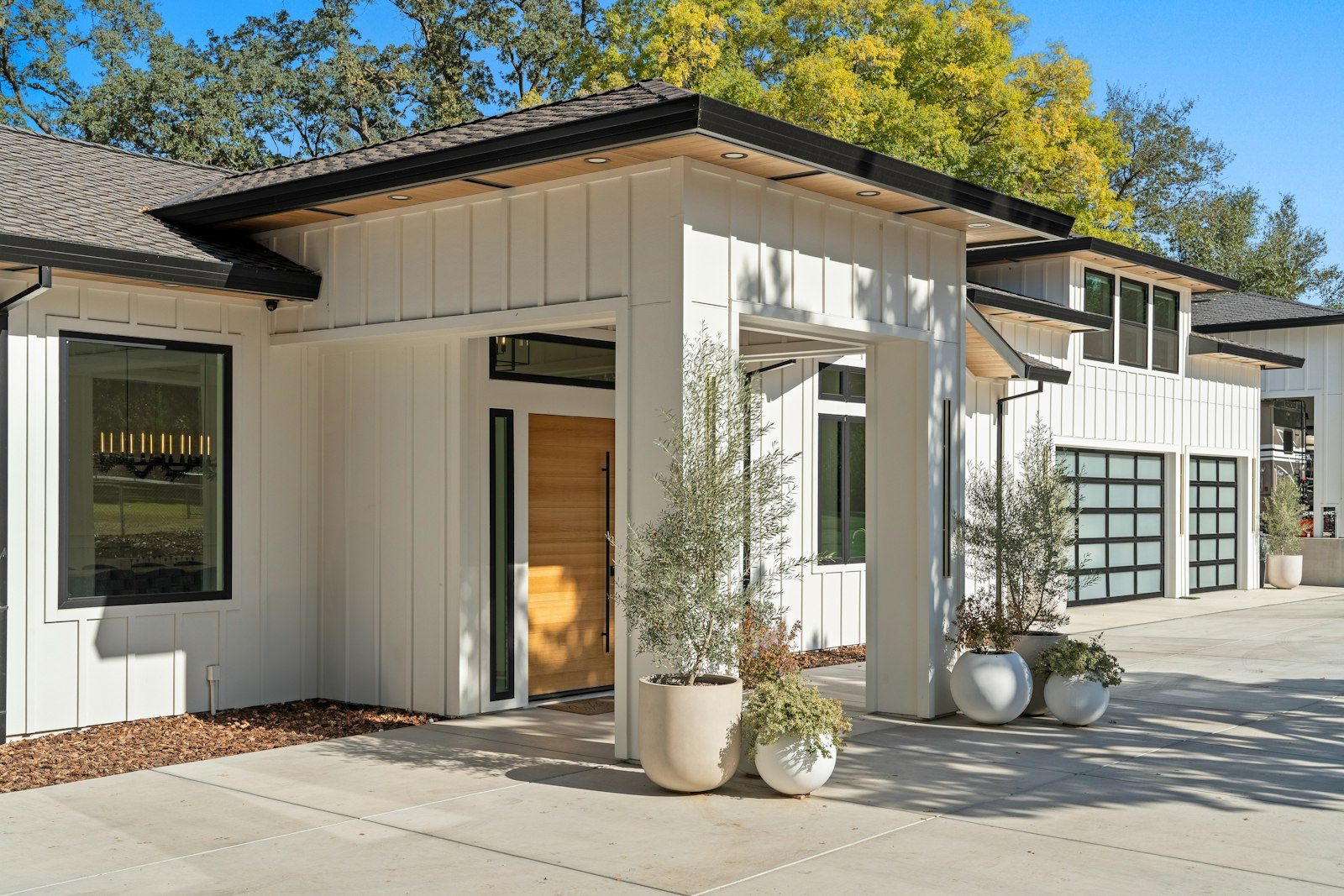
New driveways built for Douglas County clay, from Stonegate cul-de-sacs to long acreage runs past The Pinery.
There's a week in March, every year, when Parker gets all four seasons before Friday. Snow on Monday, sixty degrees by Wednesday, mud in between, then a hard freeze to close it out. Your driveway lives through that whole swing at 5,869 feet, soaking up meltwater by day and locking it into every pore at night. That cycle, repeated over and over each winter, is what decides whether a slab lasts twelve years or forty.
We build driveways for the forty. That means the mix carries entrained air so freezing water has somewhere to go, the base underneath is compacted road base instead of raw clay, and the steel sits in the middle of the slab where it can actually work. None of that shows from the curb on day one. All of it shows by year ten.
Everything about a driveway in Parker starts with what's underneath it. Douglas County clay swells when spring snowmelt soaks in and shrinks hard through a dry August, and a slab poured straight onto that soil gets lifted, dropped, and twisted until it cracks wherever it pleases. So we don't pour on raw clay. Ever. We excavate, bring in road base, compact it in lifts, and give the concrete a stable, draining layer to sit on.
Then comes steel. On this soil we set #4 rebar on chairs in a two-foot grid, tied so it stays put during the pour. When the ground moves anyway, and it will, the steel holds any cracking tight instead of letting it open into canyons.
| Factor | How it shows up in Parker | How we handle it |
|---|---|---|
| Length and square footage | Acreage properties around town carry drives measured in hundreds of feet, not tens | We'll quote full concrete, or a concrete apron with an improved gravel run if that fits the budget better |
| What's there now | Old asphalt or a failed slab has to come out and get hauled away before anything new goes down | Demo and haul-off appear as their own line so you can see exactly what they cost |
| Soil and base condition | Some lots need extra excavation and more road base to get past soft, wet, or filled ground | We compact in lifts and won't pour over ground that pumps underfoot |
| Thickness and steel | Four inches carries cars; five to six is the call where trucks, trailers, or an RV live | Rebar comes standard on our driveways, not as an upsell |
| Finish | Broom finish is the workhorse; exposed aggregate and stamped borders add labor | You'll see samples before you commit to anything |
Parker's still growing fast, and our schedule proves it. In Idyllwilde and Reata we handle what builders leave behind: widening a skinny drive, adding a third-car pad, replacing a production slab that went in quick over loosely compacted fill. Stonegate, Clarke Farms, and Canterberry Crossing sit in the middle years, where drives are showing their first real cracks and owners want to know whether to patch now or plan for later.
Then there's the older stock. Stroh Ranch and The Pinery have driveways dating to the neighborhoods' early days, and a fair number are simply used up. And out on the wooded acreage we pour the long runs, drives that wind through the trees for a few hundred feet, where base prep and drainage matter more than anywhere else in town.
We measure the drive, check what's under it, and put every line in writing. The estimate's free, and there's no follow-up pressure campaign.
Mid-April through late October is our main window, and early fall is the best of it: warm afternoons, cool nights, and far fewer storms boiling up after lunch. Spring works once overnight lows hold above freezing. In summer we pour early and keep plastic sheeting on the truck, because a Front Range afternoon can go from blue sky to hail in forty minutes, and rain beats up a surface that's still being finished.
Winter isn't off the table either. We warm the batch water, dose the mix with a chloride-free accelerator, and tuck the fresh slab under insulated blankets, which keeps us pouring into the cold months whenever the ground isn't frozen. That last part is firm. Frozen subgrade thaws and settles, and the slab on top settles with it, so if your base is frozen we wait for the next window instead of gambling with your money.
On the acreage jobs we spend more time on the base than on the concrete. A four-hundred-foot drive crosses a lot of different ground, and every soft spot you skip during prep comes back later as a crack with your name on it.Our crew lead, after the walkthrough
Still unsure about something?
Call the crew at (303) 569-4046 and we will talk it through.
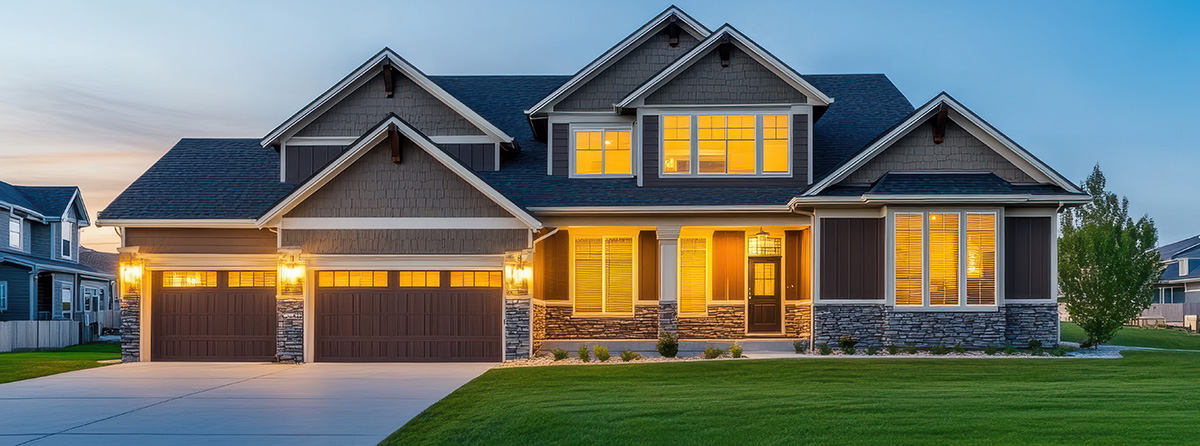
Get a free, no-obligation estimate from a crew that knows Colorado soil, Colorado weather, and how to finish concrete that lasts.
Accessibility
Adjust the site to fit how you read and browse. Your choices are saved on this device.