
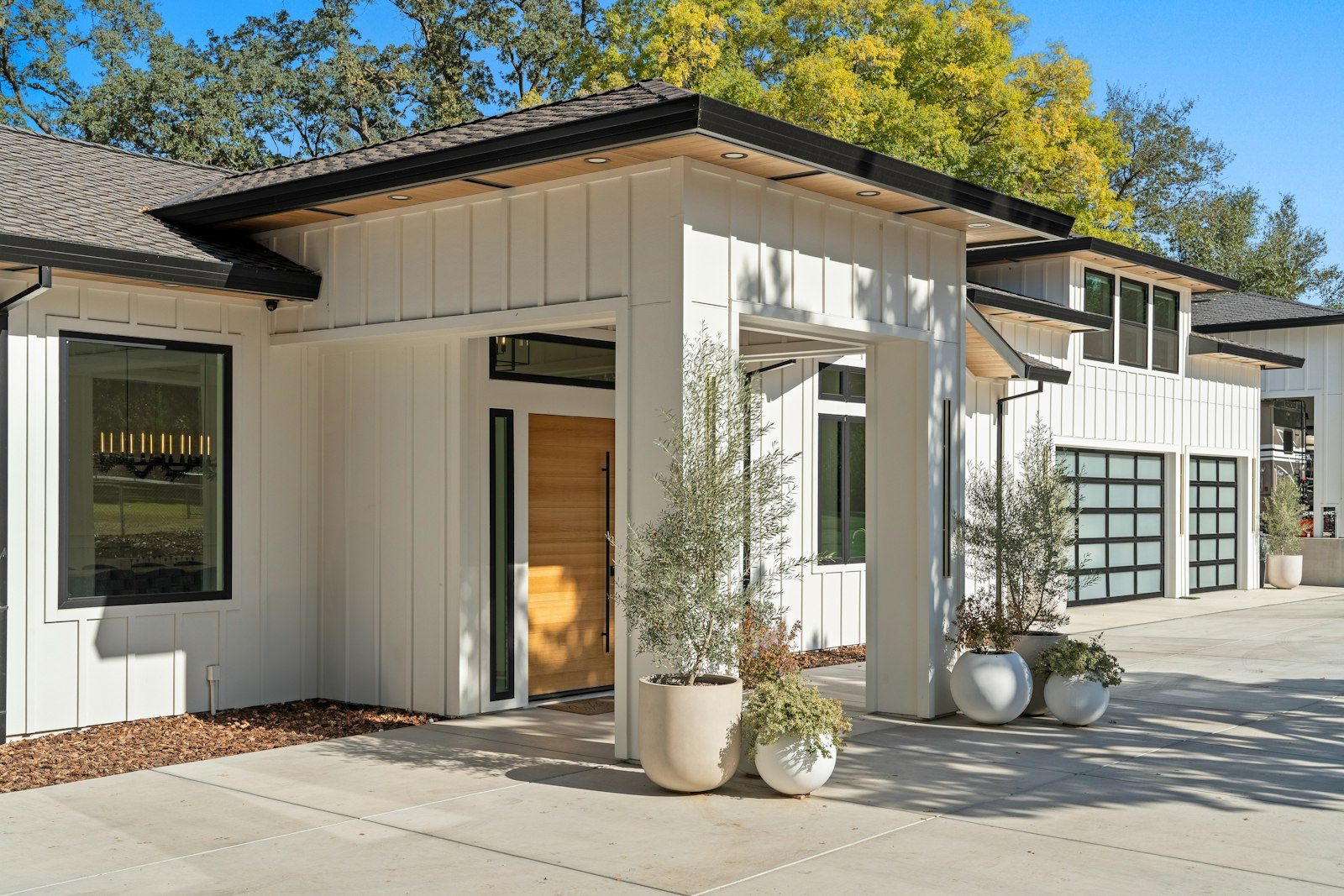
Six inches of compacted base you'll never see is why the finish you do see lasts.
Everything that decides how long a Castle Pines driveway lasts happens before the mixer shows up. The soil under it. The base on top of that soil. The way the grade handles water on a hillside lot. You'll never see any of it after the pour, but you'll live with it for thirty years.
Douglas County clay swells when it's wet and shrinks when it's dry, and on the wooded slopes around Castle Pines North and Daniels Gate that movement comes with runoff that wants to travel under your slab. So we start every driveway the same way: dig to stable material, build back with compacted road base, and set the grade so water leaves in a hurry. Then, and only then, do we talk about concrete.
Dig up any failed slab in this county and the reason is in the first shovelful. Native clay, no gravel, maybe a skim of sand somebody called a base. Clay holds water. Water freezes at this elevation dozens of nights a year, and every freeze lifts the slab a little; every thaw drops it back down crooked. Concrete is strong in compression and lousy in tension, so a slab getting flexed from below cracks no matter what the mix cost.
Our fix isn't clever. It's just work. We excavate past the soft material, bring in road base, and compact it in lifts until the plate compactor stops leaving marks. That layer drains, spreads wheel loads, and keeps the clay's mood swings away from your concrete. Boring? Completely. It's also the whole ballgame.
| Layer | Its job | When it gets shortchanged |
|---|---|---|
| Compacted subgrade | Give the whole system a stable floor | Soft spots settle and the slab bridges them until it can't |
| 4 to 6 inches of road base | Drain water and spread the load | Clay stays wet against the concrete and frost heave gets to work |
| Steel in the middle of the slab | Hold cracks tight so panels can't shift apart | Cracks widen, edges drop, and patching season never ends |
| Sawed control joints | Tell the concrete where it's allowed to crack | It picks its own spots, and it has terrible taste |
Flat lots are rare here. The wooded hills that make Castle Pines worth the drive also send water across, under, and along every hard surface on the property. A driveway in Daniels Gate or Castle Pines North can drop several feet from garage to street, which means grading isn't a detail; it's the design. We set cross-slope so runoff sheds to the side instead of racing down the centerline, and we keep water moving away from the garage slab and the foundation behind it.
The long approaches in The Village at Castle Pines bring their own math. More square footage, more joint layout, more chances for water to find an edge. And in Lagae Ranch and BellaMesa, where the homes are newer, we mostly get called about builder drives poured fast on lots that were still settling.
Cracks tell us most of the story. Send photos or book a free walkthrough and we'll read them for you.
Mid spring through mid fall is the comfortable window on the Front Range, and early fall is our favorite: warm afternoons, cool nights, and weeks of cure time banked before the ground freezes. Summer works too. We pour early and watch the storm cells that stack up to the west most July afternoons, because rain hitting concrete mid-finish weakens the surface for good.
Cold months don't stop us; they slow us down and add steps. Heated mix water, a non-chloride accelerator, insulated blankets over the fresh slab. The one line we won't cross is frozen ground. A base with frost in it settles when it thaws, and everything poured on top settles with it.
First-winter rule for a new drive: sand for traction, shovel often, zero deicer. Magnesium chloride is the fastest way to wreck a surface we just finished.
Most of the old drives we pull up here have decent concrete and nothing under it. An inch of sand if you're lucky, then clay. The slab never had a chance. The new one only needs the thing the old one never got: a real base, compacted until it won't move.What the crew sees on site
Still unsure about something?
Call the crew at (303) 569-4046 and we will talk it through.
Get a free, no-obligation estimate from a crew that knows Colorado soil, Colorado weather, and how to finish concrete that lasts.
Accessibility
Adjust the site to fit how you read and browse. Your choices are saved on this device.