
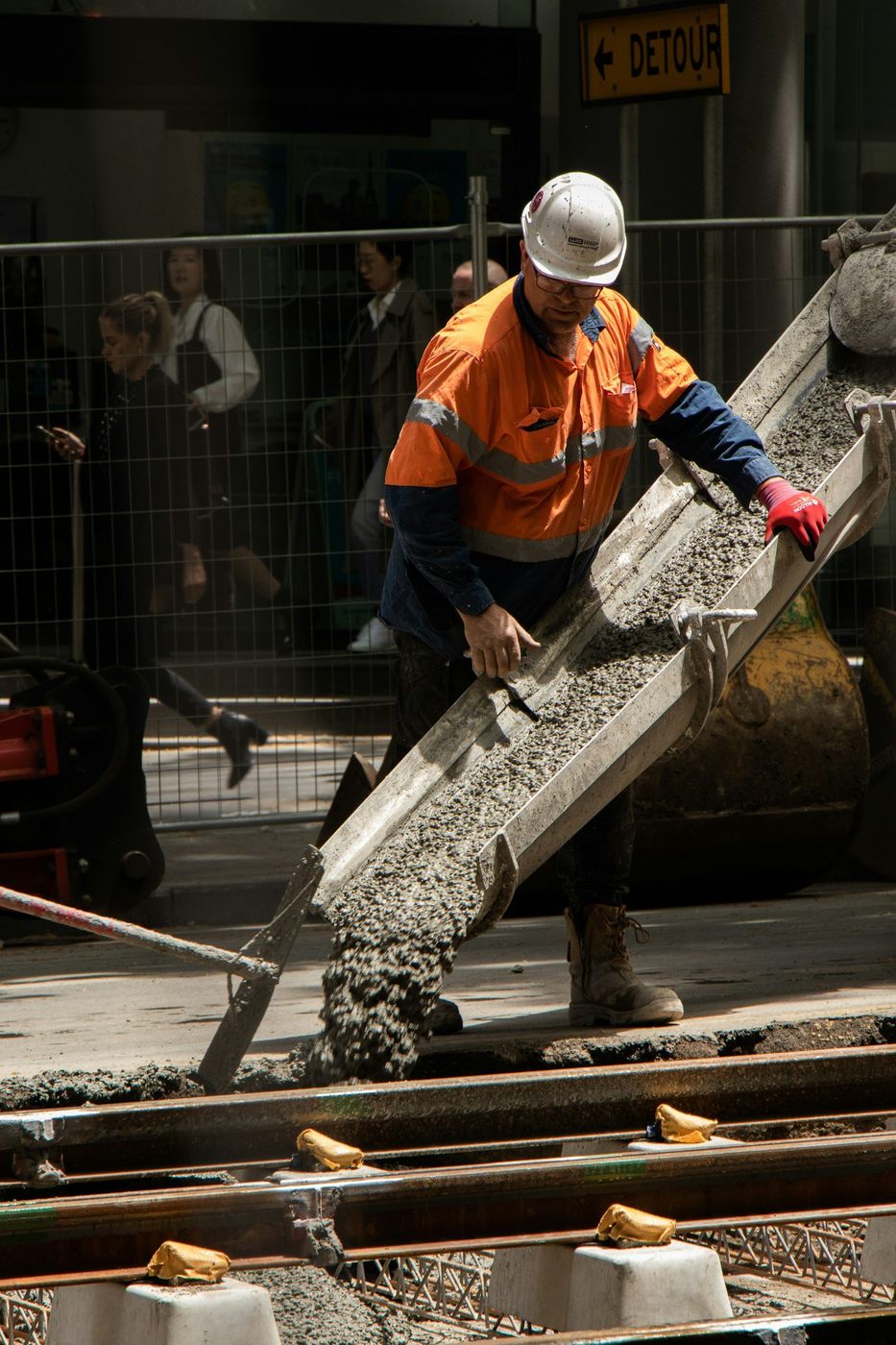
The whole job comes down to one morning, and here's exactly how we run it on Parker ground.
A foundation gets judged on one morning. Trucks stage on the street, the pump boom swings out over the forms, and a crew that walked the layout the afternoon before now has a few hours to place, consolidate, and finish the thing your house stands on for the rest of its life. We run that morning the same way on a tight subdivision lot as we do on wooded acreage. Same checklist, same order, same refusal to improvise.
So this page is the walkthrough. The day before, the pour itself, and the days after while the forms still stand. Building new, adding on, or replacing a foundation that lost its argument with Douglas County clay, you should know what a good pour day looks like. Then you'll recognize a bad one.
Nobody orders a concrete truck on a hope. By the time we schedule one, the hole is dug to the depth on the stamped drawing, the bottom has been checked, and the footings are set hard enough to carry wall forms. Then the forms go up: plumbed, braced, snapped to the layout lines, tightened until a panel won't budge when a hundred and fifty pounds leans on it. Steel comes next. Horizontal bar at the engineer's spacing, vertical dowels lapped into the footing, every intersection wired so the cage stays put when concrete hits it at speed.
Then the parts people forget. Sleeves for the water service and the radon pipe. Beam pockets. Brick ledges. Anchor bolt spacing marked on the form so nobody's pulling a tape while the mix stiffens. We walk all of it the afternoon before, because moving a sleeve then takes ten minutes and moving it later takes a core drill and a bad conversation.
| Placement method | Where it fits on a Parker lot | The tradeoff |
|---|---|---|
| Chute off the mixer | Open lots where a truck can back within reach and the ground is firm | Cheapest when it works. Truck weight on a new drive or soft spring ground is the risk. |
| Line pump | Tight side yards, walkouts, anywhere a mixer would chew up landscaping | Setup and cleanout add time. Beats wheelbarrows and a tired crew making mistakes. |
| Boom pump | Deep holes, long walls, acreage where the truck stays on solid ground | Biggest line on placement. Also the cleanest way to fill a tall wall in even lifts. |
| Conveyor | Sloped sites where a pump is more machine than the job needs | Short reach, slower rate. Suits footings and low walls, not a full basement. |
Send the plans, or just tell us about the lot. We'll walk you through your pour day, and the written estimate is free.
Concrete goes into a wall in lifts, never one long dump. We place about a foot and a half at a time around the whole perimeter, run an internal vibrator down through it to drive the air out and work paste around the steel, then come back before the lift underneath stiffens. Skip the vibrator and you get honeycomb: those rocky voids on cheap walls where nothing filled in behind the aggregate. Overwork it and the rock settles out. There's a rhythm to it, which is why we don't hand that tool to whoever's standing closest.
The last hour belongs to anchor bolts and the top of the wall. Bolts get set to the template while the concrete is still plastic, then checked again before anyone packs up. We screed the top flat, tool the edges, and cover the wall if the sun is hard. Forms usually strip the next day.
Foundation season runs longer than most people assume. From mid-April into November the ground cooperates and we're only managing heat and afternoon storms. On hot July days we start at first light and watch the sky, because a storm can build and land on Parker faster than a finisher walks the length of a wall. Fall is the best stretch of the year.
Winter work happens constantly, because builders don't stop in December. We heat the mix water, run non-chloride accelerators, blanket the walls, and tent and heat the excavation when the numbers call for it. What we won't do is set forms on frozen bearing soil or drop footings into a hole with frost in the bottom. Concrete over frozen ground settles when that ground thaws, and then you've paid for a foundation twice. Thaw it or wait. That's the entire policy.
Still unsure about something?
Call the crew at (303) 569-4046 and we will talk it through.

Get a free, no-obligation estimate from a crew that knows Colorado soil, Colorado weather, and how to finish concrete that lasts.
Accessibility
Adjust the site to fit how you read and browse. Your choices are saved on this device.