
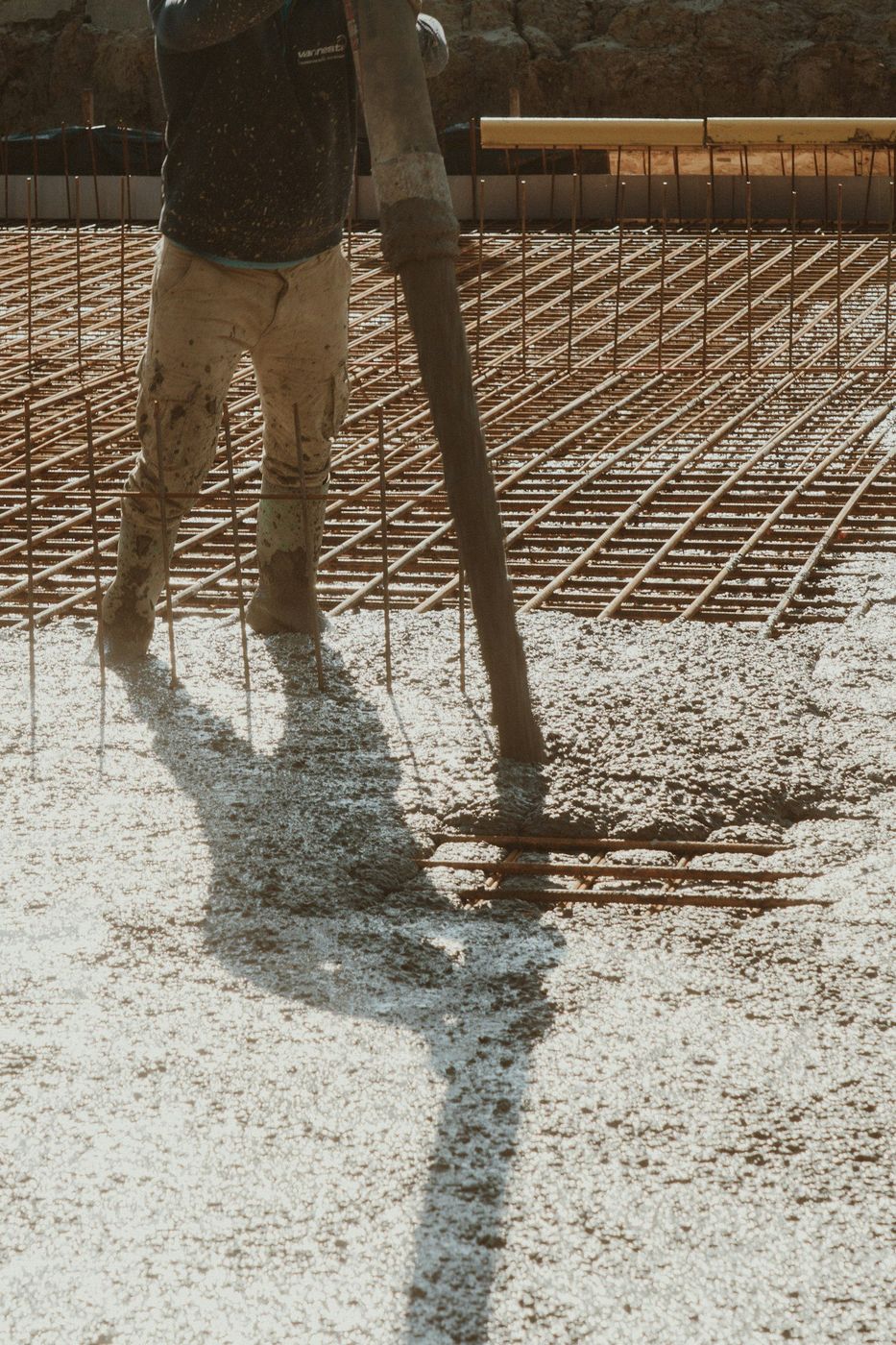
The cheapest decision you will ever make about this floor gets made before we order gravel.
Here's the part of a slab quote almost nobody volunteers: what the floor is actually for. Tell us and the number gets accurate in a hurry. Leave it out and you get priced a generic four inch floor that may or may not survive whatever you were quietly planning to park, lift, bolt down, or run underneath it. Building a slab right isn't expensive. Building one twice is.
We pour garage floors, shop and outbuilding pads, basement floors, and addition slabs all over Fort Collins, from alley garages behind older homes near Old Town to new construction out toward Registry Ridge. The money conversation lands in the same place every time. What sits on this floor, what has to run under it, and what you might want it to do in ten years.
Some of what drives a floor price is fixed by the site and there's nothing to negotiate. How the ground behaves once we open it. Whether a truck can get a chute within reach or every yard travels by buggy. How much old concrete has to come out and go somewhere. Those are conditions, not choices, and any bid that ignores them is going to grow later.
The rest is yours to steer, and it all traces back to the floor's job. Thickness and steel follow what parks on it. Under-slab plumbing, conduit, and drains follow what the room becomes. Flatness follows whether cabinets, a lift, or racking are landing there. Answer those honestly and the estimate stops being a guess. Answer them vaguely and everybody involved is pricing a different floor.
| What you may want | While the ground is still open | After the floor is finished |
|---|---|---|
| A two post lift | Thicken and reinforce the pad under the posts during forming | Sawcut the floor, break it out, pour footing blocks inside a finished garage |
| Radiant floor heat | Tubing tied to the steel before the pour, one afternoon of work | An overlay on top, which raises the floor and fights your door threshold |
| A floor drain | Slope planned toward it from the first grade stake | Cut a trench across new concrete, tie into plumbing, live with the patch |
| Power to the far wall | A conduit sleeve under the slab that costs almost nothing today | Surface conduit up the wall, or a saw cut through the floor you just bought |
| Epoxy or a coating | Vapor retarder installed so the coating has a chance of staying bonded | Moisture testing, mitigation primer, and a coating nobody wants to warranty |
| Parking something heavy | Thicker section and steel sized for the axle loads | Cracks that step at the edges, then a partial tear-out |
Replacing a floor costs more than pouring a new one, and the gap is bigger than most people expect. Old concrete has to be broken, loaded, hauled, and paid for by weight at the recycler. Interior work adds dust control and hand work near walls the machine can't touch. A detached garage in an alley might be easy. A basement floor comes out through a doorway, one wheelbarrow at a time.
Access does the same thing to a new pour. If a mixer backs within chute reach, that concrete is cheap to place. Pumped over a house or buggied through a gate, it costs labor and time, and the finishing window tightens because placement takes longer. We walk this before quoting rather than discovering it on pour day.
Tell us what happens in that space and we'll spec it accordingly, with the assembly itemized so you can see where the money went. (303) 569-4046.
Interior slabs have a scheduling advantage: close the space, put heat in it, thaw the ground, and February behaves like May. That's how we keep garage and shop floors moving through the cold months here. It isn't free. Temporary heat, ground thawing, and protection all show up on the estimate, which is the honest reason a winter floor prices higher than the same floor in September.
Exterior work follows the weather more strictly. Aprons and outbuilding pads want the ground unfrozen and the nights kind, so spring through fall is the window, with summer pours starting early to stay ahead of afternoon storms. Whatever month your floor goes in, keep deicing salt off it the first winter, especially the magnesium chloride that comes home on tires. Shovel it, sweep it, and throw sand down for traction instead.
Still unsure about something?
Call the crew at (303) 569-4046 and we will talk it through.

Get a free, no-obligation estimate from a crew that knows Colorado soil, Colorado weather, and how to finish concrete that lasts.
Accessibility
Adjust the site to fit how you read and browse. Your choices are saved on this device.