
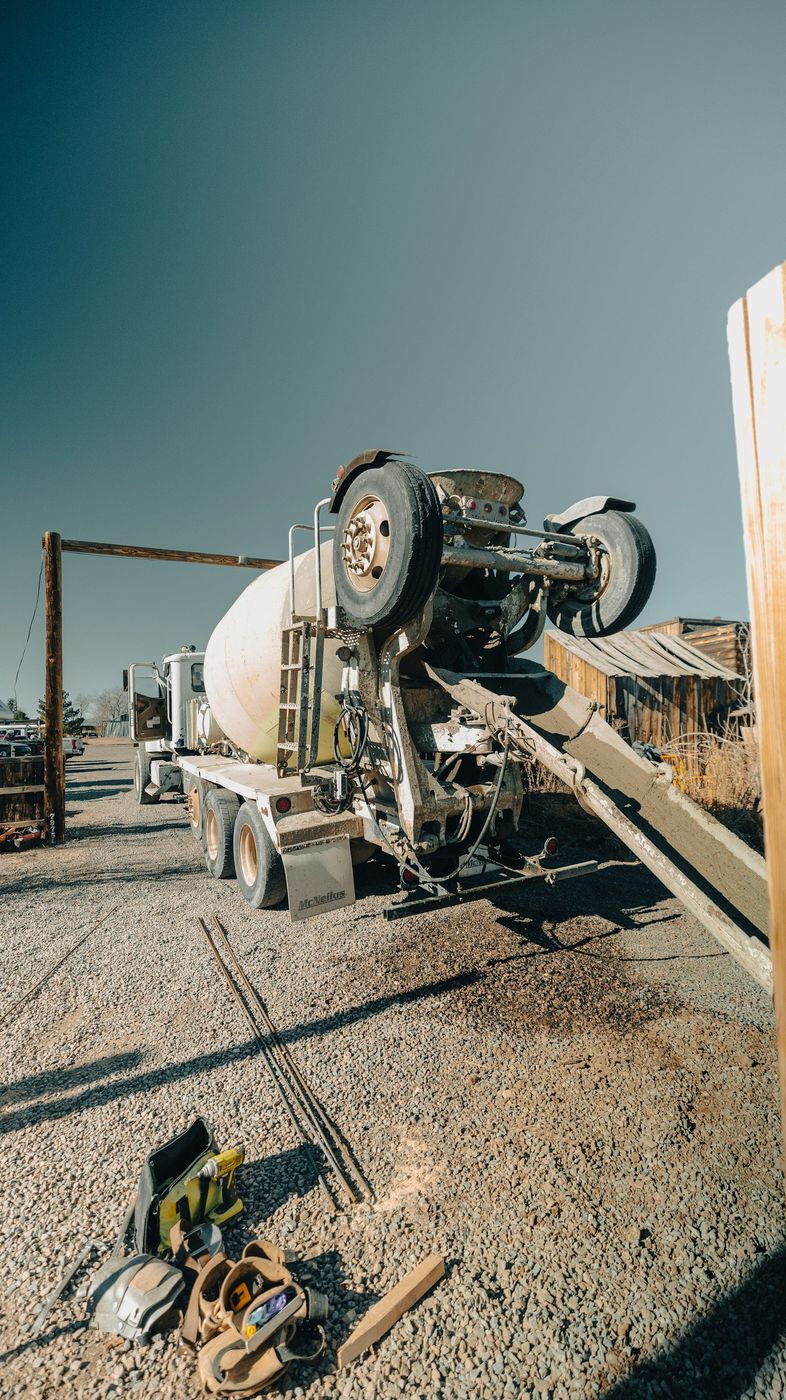
Everything before crane day decides whether crane day is boring. Boring is the goal.
This town built houses first and buildings second. Rooftops filled in across The Meadows, Crystal Valley, and Cobblestone Ranch, and then somebody had to find room for the plumbing supply house, the climate controlled storage, the gym, and the truck shop that all those rooftops need within a short drive. That second wave is where tilt-up earns its place. It's how a twenty thousand square foot shell gets hard walls, real fire separation, and a finished exterior without two months of stacking units.
The idea is simple. The execution is not. Panels get cast flat on a temporary slab right there on the site, cured, rigged, and then on one scheduled morning a crane stands them up one at a time while a crew braces each one before it takes the next pick. Everything upstream of that morning decides how the morning goes.
Flex and light industrial buildings are the natural fit: big clear spans, few windows, an owner who wants the shell watertight before winter. Self storage, contractor shops, distribution space, and single tenant retail all land in the same category. The economics turn on repetition. Twenty similar panels cast on the ground and picked in one day beats every alternative. Nine odd shaped panels with heavy glazing, and the math gets close enough that we'll say so.
Older commercial property near Founders Village and Plum Creek usually gets a different answer, since infill lots are tight and this method wants room to cast panels flat plus room for a crane with a full swing radius. Site geometry decides more than the building program does.
| Wall system | Where it wins | Where it struggles |
|---|---|---|
| Site cast tilt-up panels | Repetitive large panels, fast enclosure, hard durable walls | Tight sites with no casting area or crane room |
| Masonry block | Small footprints, complex shapes, phased construction | Labor time on tall walls, weather sensitivity through winter |
| Steel frame with metal skin | Lowest first cost on simple shells, quick erection | Impact damage, insulation detailing, less finished appearance |
| Plant precast panels | Consistent finish, no site casting area needed | Trucking limits panel size, lead time is set by the plant |
Panels remember their casting surface. Every trowel mark, every low spot, every bit of debris left on the slab shows up on the exposed face of a wall that people will look at for thirty years. So the casting slab is real work, not scrap. We finish it hard, we keep it clean, and we treat the bond breaker like the critical product it is, because a panel that sticks to the slab during the pick is a bad day for everyone.
Lifting is where our engineer spends the most attention. A panel is strongest standing up and weakest lying flat, and the moment of the pick puts stresses through it that the finished wall will never see again. Insert count, insert location, rigging geometry, and the concrete strength on lift morning all get calculated together. We break test cylinders and wait for the number. Nobody picks a panel because the schedule says Tuesday.
Send the site plan. We'll tell you honestly whether tilt-up fits your lot or whether something else serves you better.
The best crane days feel like nothing happens. Panels come up in the order we wrote down, braces go on, the surveyor checks plumb, next pick. When a crane day gets exciting it's because somebody skipped a step two weeks earlier. We'd rather spend an extra afternoon on layout than an extra hour with a panel hanging.Our crew lead, after the walkthrough
Panel casting wants steady conditions. Late spring through early fall is the working season, and we chase strength gain, so a warm stretch is worth real money on a project like this. High altitude sun and dry wind pull moisture off a flat panel fast, which is why we cure aggressively with blankets or wet cure rather than letting the surface skin over and craze.
Cold weather changes the calculus more than it does on flatwork. Strength gain slows, cylinder breaks come back lower, and lift day slides. We can cast into the cold with heated mix water, accelerators without chloride, and insulated coverings, though the honest advice is to plan a schedule that puts casting in the warm months and leaves interior work for winter. Wind is the other one people forget. Crane picks stop when gusts pass the rigging limits, and Front Range spring afternoons produce plenty of those. We build float into the lift week for exactly that reason.
Still unsure about something?
Call the crew at (303) 569-4046 and we will talk it through.

Get a free, no-obligation estimate from a crew that knows Colorado soil, Colorado weather, and how to finish concrete that lasts.
Accessibility
Adjust the site to fit how you read and browse. Your choices are saved on this device.