
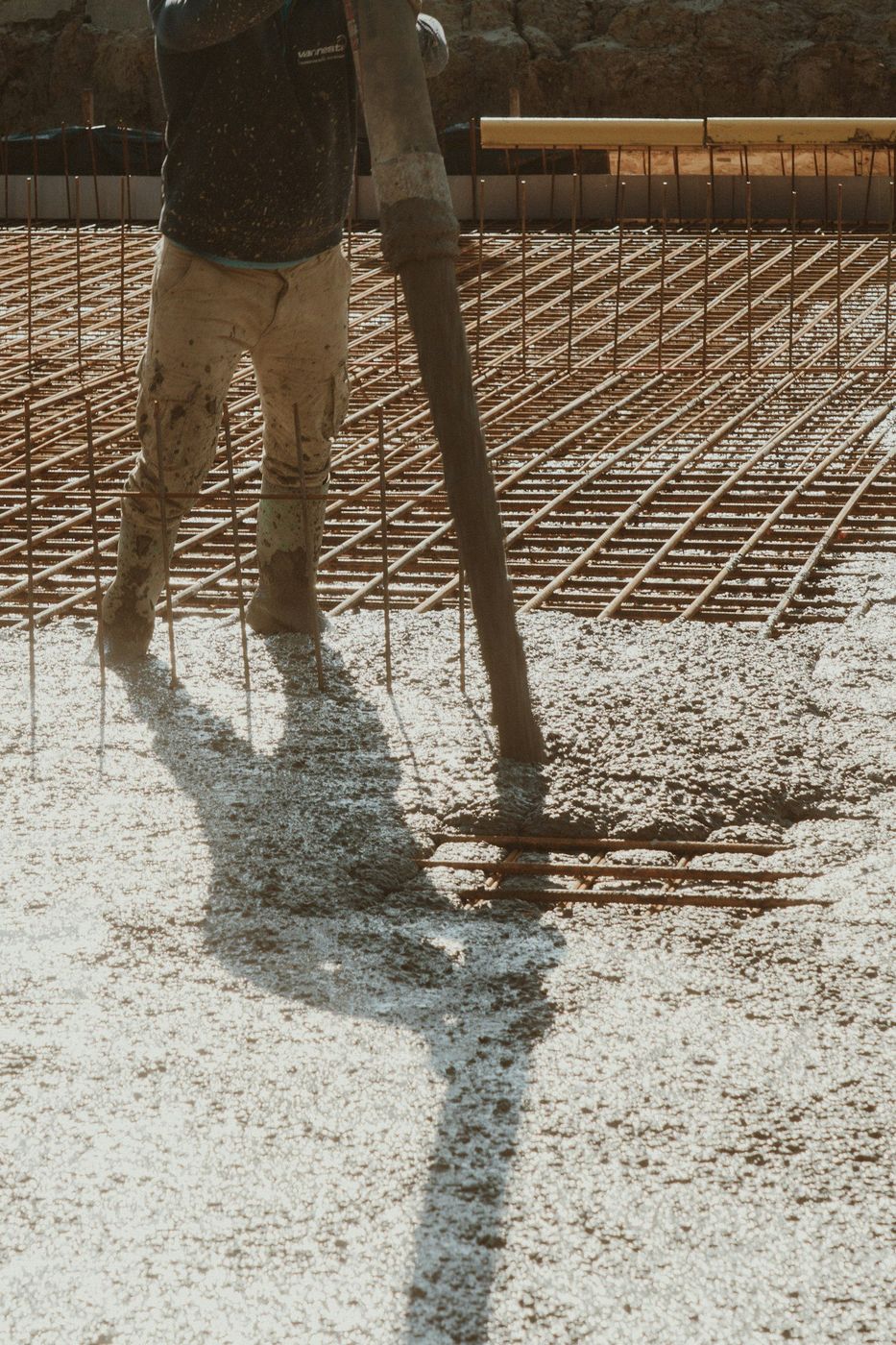
Approach slabs, pit walls, and the dirt work underneath that decides whether a dock still lines up in five years.
Everything that goes wrong at a loading dock starts about eighteen inches below the concrete. The slab is what cracks and the leveler is what stops reaching, but the reason is almost always down in the material nobody has looked at since the building went up. Backfill that was dumped against the foundation wall and never properly compacted. A trench line for the storm drain that settled a half inch a year for a decade.
We rebuild dock approaches for warehouse and distribution property around Castle Rock, including the light industrial near Plum Creek and the newer commercial buildings that have gone in as Founders Village and Cobblestone Ranch filled out. Same story most visits. The concrete gets blamed and the subsurface did it.
Think about how that area was created. The building went up, a hole was excavated for the dock pit, the foundation walls were poured, and then the whole depression got backfilled. Compacting fill in a confined space right against a wall is slow, awkward work, and on plenty of buildings it got the quick version. Now put a trailer on it.
A loaded trailer parks on landing gear, which is two steel pads carrying enormous weight on a few square inches each. Then the tractor drops, pulls, and jackknifes across the same twenty feet several times a day. That's not distributed traffic. That's concentrated punching load repeated thousands of times on ground that was never proven. Add water running down the approach into that same backfill and the dock sinks away from the building, which is exactly the failure everybody eventually calls about.
Dock approaches slope down toward the building by design, so every bit of rain and snowmelt on that apron heads for the pit. Up here that water freezes overnight, thaws by afternoon, and does it again dozens of times each winter. Any of it soaking into loose backfill takes fines with it, and the void grows quietly under a slab that still looks fine from above.
So drainage comes first on every dock we build. Trench drains or an area drain at the pit with real capacity, a positive path out, and the apron shaped so water reaches the drain instead of the wall. Then we deal with the deicers your crew spreads on the approach all winter, which is what an air-entrained mix and a sealed joint system are for.
| Zone | What it carries | How we build under it |
|---|---|---|
| Against the pit wall, first ten feet | Landing gear point loads and constant water | Structural fill compacted in thin lifts, drain in place before backfill |
| Trailer parking area | Sustained static weight for hours at a time | Deep compacted aggregate, thickened slab, heavier steel through the pads |
| Tractor maneuvering apron | Turning, braking, and jackknife torque | Full-depth section with dowelled joints so panels move together |
| Trench and utility crossings | Whatever was buried before the building | Excavate, recompact in lifts, bridge the trench with added steel |
| Transition to the yard or lot | Repeated hard hits at the edge | Thickened edge, doweled to the adjacent surface, no lipped joint |
That's a grade problem, not a leveler problem. We'll shoot elevations at your dock and tell you what actually moved.
Nine times out of ten the leveler is fine. The apron dropped, the trailer now sits lower than it used to, and the lip won't make it. Owners spend money on the equipment first because that's the part with a serial number on it. Shoot the grade before you buy anything.What the crew sees on site
Still unsure about something?
Call the crew at (303) 569-4046 and we will talk it through.

Get a free, no-obligation estimate from a crew that knows Colorado soil, Colorado weather, and how to finish concrete that lasts.
Accessibility
Adjust the site to fit how you read and browse. Your choices are saved on this device.