
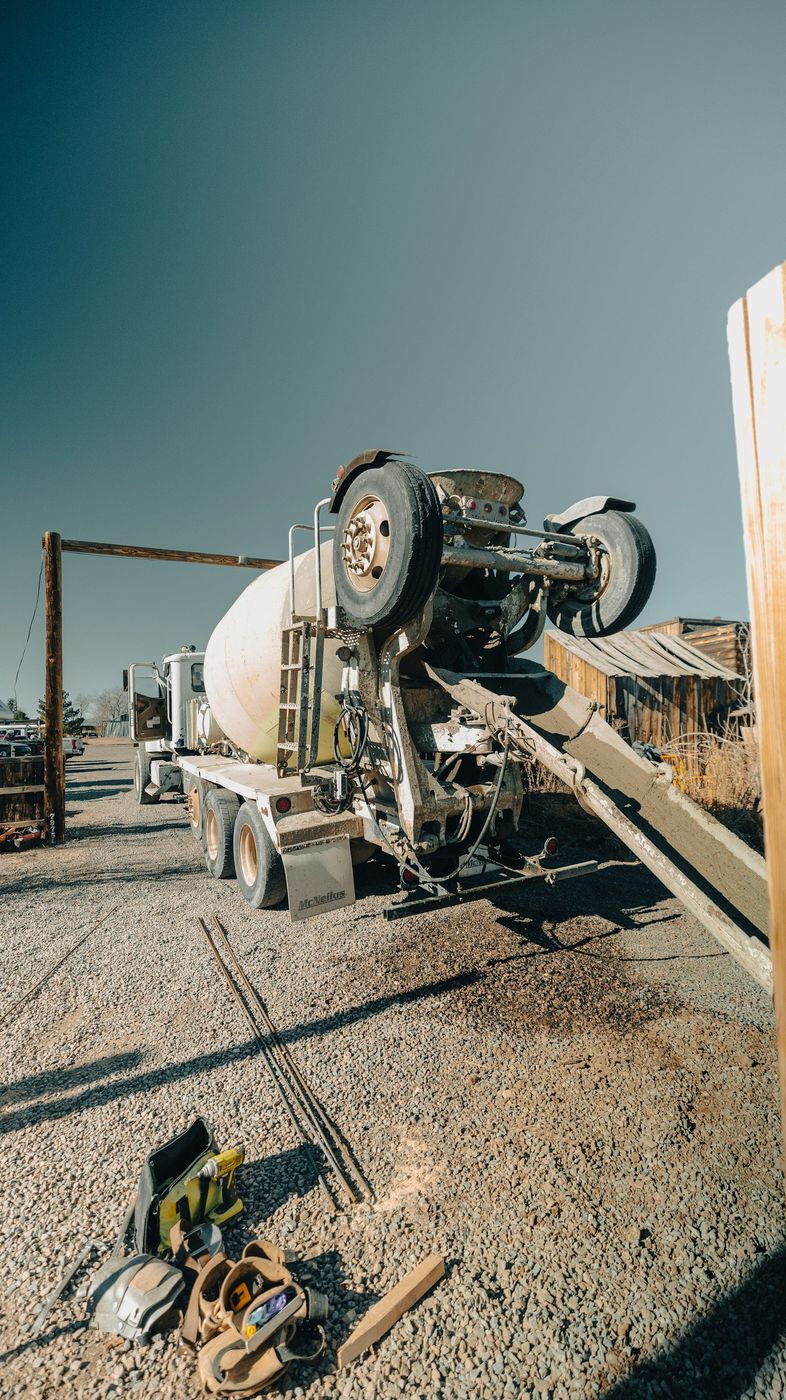
The first question isn't how thick. It's whether the rig belongs at home at all.
Two decisions come before anything we'd call a spec. First: does the rig live here, or keep living in a storage lot across town? Second: if it comes home, how much concrete does that take, because the honest answer is more square feet than people picture, and it lands in the corner of the yard nobody wanted to give up.
We'd rather have that conversation up front than talk somebody into a slab they resent. Some lots are wrong for it. A pinched side yard behind a gate, a cross slope needing a wall to hold it, covenants with opinions. When the lot works, though, a pad quietly pays you back every time you back in without thinking about it.
Our position: if the rig goes out more than a few times a season, home wins. Not because of what storage costs, but because of what having it fifty feet away changes. You load over three evenings instead of one frantic Friday. You catch a soft tire or a dead battery in April, while there's still time, rather than discovering it in a gravel lot the morning you meant to leave.
The case for storage is real too. If the only spot kills the last usable piece of lawn, or the approach needs a three point turn on the neighbor's grass, that's a bad trade. And if your neighborhood is covenant controlled, find out what's allowed before you spend a dollar. Ask first, in writing.
| Where the extra goes | What it buys you | When it's the right call |
|---|---|---|
| Length past the bumper | Room to leave the tow vehicle hitched, with the tongue jack landing on concrete | Almost always. Length is the upgrade people wish they had taken |
| Width past the sidewall | Somewhere to stand, a step down onto hard surface, clearance for slides and awning | When you load over several days or do your own maintenance at home |
| Thickness under the wheels | Capacity for tandem axles parked for months without dishing the slab | Fifth wheels, toy haulers, and anything with a heavy truck in front of it |
| The apron and the transition | A square path from drive to pad, no wheel dropping off a raw edge | Every time. The apron is first to break when it gets skipped |
| Depth of base under all of it | Support that behaves the same in April as in August | Whenever the test hole comes up soft, common on graded lots |
A driveway spreads a car's weight across a lot of concrete. A parked rig does the opposite. Tandem axles put thousands of pounds into a contact patch the size of a dinner plate, then leave it there for eight months. Add four jack feet, each concentrating load onto a few square inches, and you have the least forgiving thing a residential slab ever gets asked to do.
Which is why we dig before we quote. Around Candelas, Leyden Rock, and Whisper Creek the lots were shaped before the houses went up, and side yards often sit on fill that was moved, spread, and driven over rather than engineered. Sometimes it's fine. Sometimes eighteen inches down sits material that acts like a sponge in April.
The fix isn't always a thicker slab. Usually it's a deeper base, dug out, replaced with clean road base, and compacted in lifts. Concrete is only as good as the plate it sits on.
Length, weight, and which corner of the yard. We'll say whether that ground can carry it. (303) 569-4046.
Best case, we build while the rig is out. A pad is a two visit job, dirt and forms on one, concrete on the next, plus a week before anything heavy touches it. A trip in June is an ideal window. If the rig is home with nowhere to go, we can often stage the work in halves, but say so at the estimate rather than on pour morning.
Spring is our busiest stretch and the ground is at its wettest, so book early. Late September into October is the quality window: mild days, cool nights, a long slow strength gain ahead. Winter pads get built too, under heat and blankets, though we won't place on frozen ground for any deadline.
One rule for the first winter: no deicer anywhere on it. Snow slides off a rig roof in a ridge down one side, so give that pile a way to drain instead of soaking the same strip of base all season.
Still unsure about something?
Call the crew at (303) 569-4046 and we will talk it through.
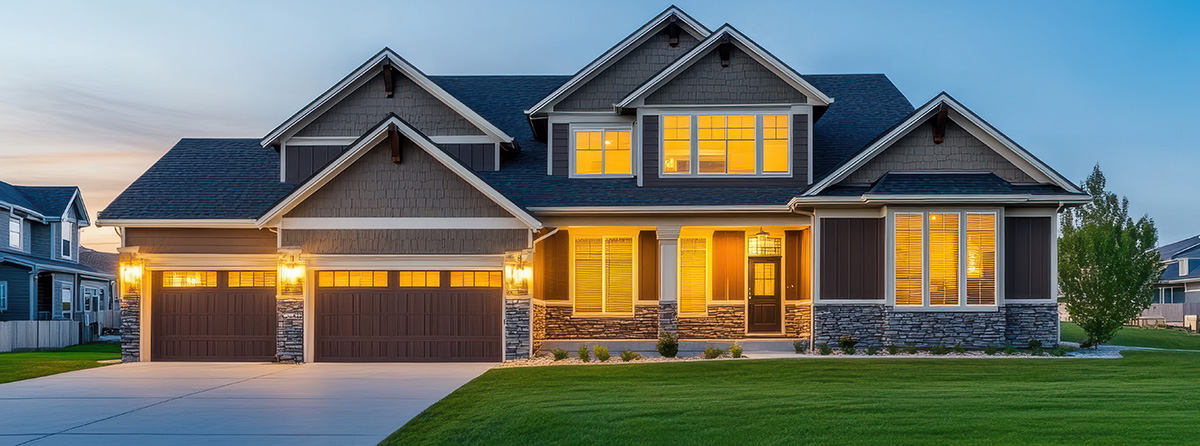
Get a free, no-obligation estimate from a crew that knows Colorado soil, Colorado weather, and how to finish concrete that lasts.
Accessibility
Adjust the site to fit how you read and browse. Your choices are saved on this device.