
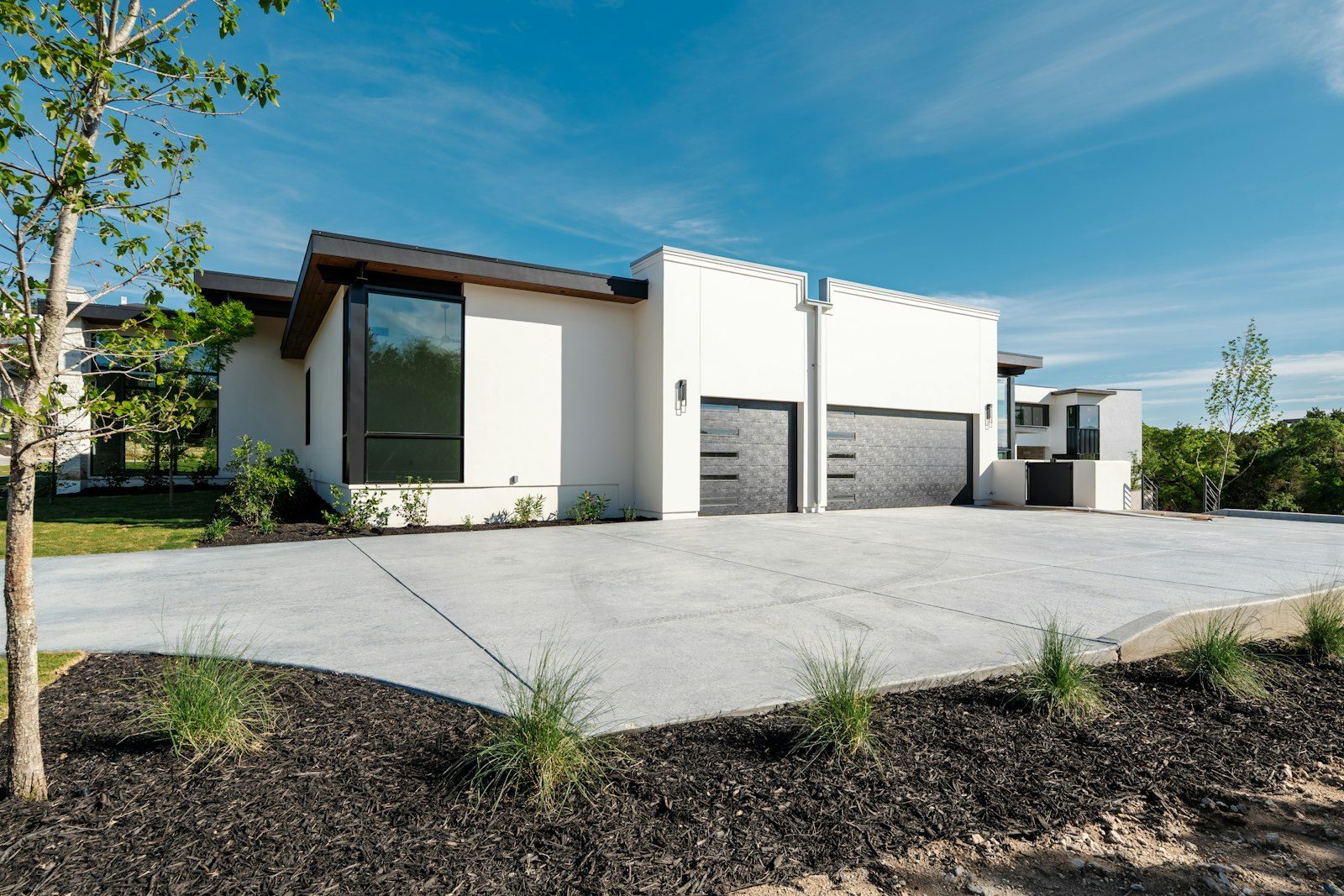
Original slabs near Olde Town, builder pours out in Candelas: we work both ends of a driveway's life.
Arvada has two driveway populations. Around Olde Town, plenty of slabs went in generations ago, before anyone put gravel under concrete or cut joints on a schedule, and those drives are cracking along whatever line the clay picked for them. Out west in Candelas and Leyden Rock the concrete is young, but young doesn't mean safe. A builder-grade drive poured fast over freshly graded ground can fail before the landscaping fills in.
We work both ends of that range. One week it's tearing out an original slab that owes nobody anything; the next it's correcting a three-year-old pour in Whisper Creek that never had a compacted base under it. Different failures, same cure. Do the ground work right, put steel in the slab, and pour a mix built for what this climate actually does.
The older drives near Olde Town mostly die of era. Thin concrete, no steel, no base, joints nowhere. When those slabs crack, there's nothing underneath worth saving, so patching becomes a losing game and replacement is the honest answer.
The west side is a different story. Candelas, Leyden Rock, and Whisper Creek sit on ground that was cut and filled during development, and a driveway out there is only as good as the compaction beneath it. Where the fill was placed right, the concrete rides quiet for decades. Where it wasn't, we see sunken corners and stepped panel edges on houses that still smell like new carpet. So before we pour anything, anywhere in Arvada, we proof the subgrade and build up compacted road base. That step never shows in photos. It decides everything.
| Housing stock | What we usually find | The right move |
|---|---|---|
| Original slabs near Olde Town | No steel, no gravel underneath, cracks wandering through whole panels | Full replacement over a compacted base; the old concrete has nothing left to give |
| Established drives in West Woods and Whisper Creek | Sound structure with surface wear, maybe a settled panel, joints doing their job | Panel replacement or leveling; keep the good concrete, fix the cause under the bad |
| New builds in Candelas and Leyden Rock | Builder pours that skipped compaction or steel to hit a closing date | Correct it early, before small settlement grows; sometimes one panel, sometimes a re-pour on proper base |
Text us a couple photos and your cross streets. You'll get an honest repair-or-replace answer, free, before anyone drives out.
Arvada sits at 5,344 feet, and the altitude isn't a trivia point; it's a load case. High-altitude UV cooks the paste at the surface. A winter day here can cross freezing twice between breakfast and dinner, and every swing pumps water in and out of the slab's pores. Add June hail, gully-washer storms on July afternoons, and the deicer dripping off your car all winter, and you've got a climate that finds every shortcut a contractor buried.
Our answer doesn't change: 4,000 PSI air-entrained mix, steel on chairs so it stays mid-slab, control joints sawed the same day we pour, and a cure schedule we hand you in writing. And one rule for you. No deicer the first winter. Sand only. Magnesium chloride is rough on mature concrete and murder on green concrete.
The comfortable window runs late spring into fall, and September might be the best month of all: the mix sets steady through warm days, cures happy through cool nights, and the slab carries real strength into the first hard freeze. Summer works too. We just start early and watch the afternoon build-up over the foothills, because rain during finishing is the one weather event that can genuinely wreck a surface.
Cold months? We still pour, with heated water in the mix, non-chloride accelerators, and blankets on the slab. But frozen subgrade is a hard stop. Concrete placed over frost settles when the frost lets go, and no admixture fixes that. If your timing lands in January, we'll tell you honestly whether to pour now or hold for a window.
Still unsure about something?
Call the crew at (303) 569-4046 and we will talk it through.

Get a free, no-obligation estimate from a crew that knows Colorado soil, Colorado weather, and how to finish concrete that lasts.
Accessibility
Adjust the site to fit how you read and browse. Your choices are saved on this device.