
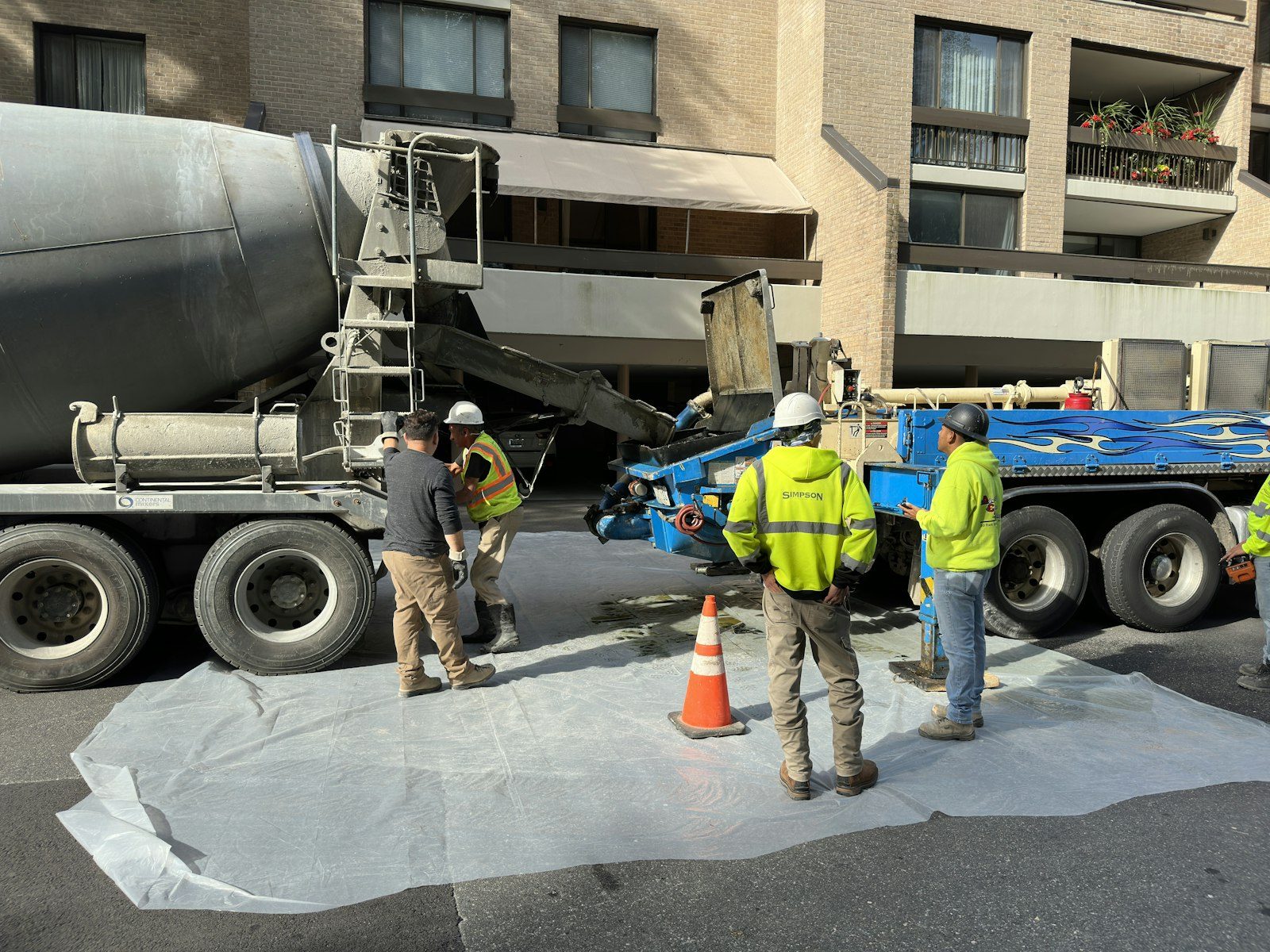
Saw, skid steer, fresh steel, new pour. Here's what replacement day actually looks like.
Replacement day starts loud. The saw drops in first, cutting the old drive into liftable pieces, then the skid steer walks them into the dump trailer while a shovel man chases the crumbs. By lunch on most jobs the old slab is gone and you're looking at bare ground for the first time since the house was built. That moment matters more than the pour, because whatever we build on that ground is what you'll live with for decades.
Go Denver Concrete runs driveway replacements all over Arvada, from the older blocks around Olde Town to newer streets in Candelas and Leyden Rock, and the sequence is the same everywhere. Demo clean. Fix the ground honestly. Then pour a slab with steel in it. Here's what those few days look like from your kitchen window.
When the panels come up, we finally get to see why they failed. Sometimes it's two inches of gray sitting on bare clay. Sometimes there's wire mesh lying flat in the dirt where it never did an hour of work. On west-side lots in Leyden Rock and Whisper Creek we occasionally uncover fill that was never compacted in lifts, and the slab above it simply followed the ground down.
Whatever we find gets fixed before anything else happens. Usually that means trimming the grade, running a plate compactor over the subgrade until it stops moving, then building road base back up in compacted layers, pitched so water runs toward the street instead of under your garage door. Boring work. It's also the day your new driveway is actually built; the pour just makes it visible.
| Stage | What we're doing | What you'll see from the house |
|---|---|---|
| Saw and demo | Cutting the slab, breaking it out, loading the haul-off | A loud morning, trailer trips, old concrete leaving for the recycler |
| Grade and base | Compacting subgrade, placing road base in lifts, setting the slope | A crew making gravel boring on purpose; quietly the most important stage |
| Forms and steel | Setting forms to final lines, tying #4 bar up on chairs | Your next driveway outlined in lumber with a steel grid floating inside it |
| Pour and finish | Placing 4,000 PSI air-entrained mix, screeding, edging, brooming | The ready-mix truck, a fast couple of hours, heads down until it's done |
| Cut and cure | Sawing joints the same day, curing protection down | A quiet slab you can't touch yet. Walk it in a day or two; park at seven |
Not every ugly slab needs replacing, and we'll say so when yours doesn't. But some symptoms end the conversation. Panels that rock under a truck tire. Cracks wide enough to lose a key in, with edges sitting at different heights. A drive that tilts back toward the foundation and delivers snowmelt to your basement wall every March. Those are ground failures wearing a concrete costume, and anything short of tear-out just redecorates the problem.
We measure, we check what's under the edges, and you get a written line-item number. If a repair would honestly do the job, the quote says that instead.
Most Arvada replacements land between April and October, and fall is quietly the smart play. The schedule loosens after summer and the curing weather is about as kind as Colorado gets. In July we pour at first light so the finish is closed up before the mountains send the afternoon storm east. And if a slab dies on you in December, there are options: warmed mix water, accelerating admixtures with no chlorides in them, insulated blankets over the fresh work. The one thing that stops us cold is frost in the ground. Pouring over frozen base is how you buy the same driveway twice, so if the subgrade's frozen, we stabilize what you have and grab the first thaw window instead.
My favorite part of demo is showing the homeowner what was under there. Once you've seen your old driveway sitting on straight dirt, nobody has to sell you on base work. You just watched the reason it failed get hauled away.What our crew lead tells homeowners
Still unsure about something?
Call the crew at (303) 569-4046 and we will talk it through.
Get a free, no-obligation estimate from a crew that knows Colorado soil, Colorado weather, and how to finish concrete that lasts.
Accessibility
Adjust the site to fit how you read and browse. Your choices are saved on this device.