
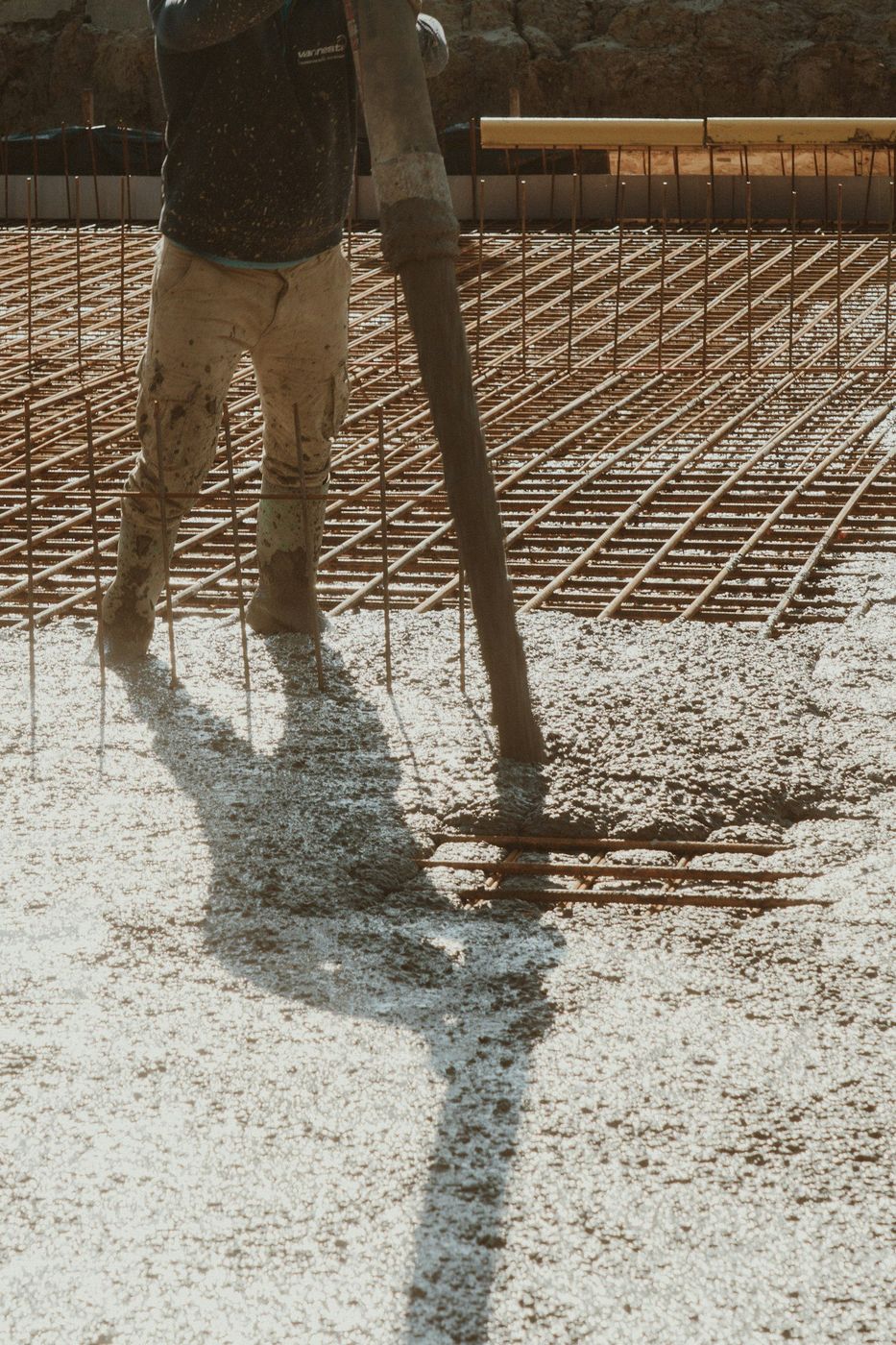
Long before anything cracks, the cover stops closing right. That's the pad talking.
Nobody calls us about a spa pad because they went out and inspected one. They call because the cover quit sealing on the left side, or the lifter binds, or the waterline stopped running parallel with the tile and now it's all they can see.
Every one of those is a symptom you can read from the back door, without a level and without draining anything. A filled spa is a load measured in thousands of pounds, concentrated in a footprint smaller than a small bedroom, and it never moves off. Concrete under that either holds a plane or it doesn't, and the tub reports the answer daily.
| What you notice | What's happening under the pad | Can the tub stay put |
|---|---|---|
| Cover no longer seals along one edge | The shell is out of plane, usually a corner going down | Yes, if it's early. This is the cheapest moment to deal with it. |
| Waterline no longer parallel to the tile band | Tilt across the whole pad, most often toward the house or the yard's low side | Usually. We can measure and plan without moving anything. |
| Gap opening between the pad edge and the patio it butts | Two slabs on different bases going different directions | Yes. This one is about the joint, not the spa. |
| Cabinet door binding, panels no longer flush | The frame is being racked by the surface it sits on | Not for long. Racking a cabinet eventually reaches the plumbing. |
| A ridge of ice on one side every winter | Drips landing on the low corner and freezing where they collect | Yes, and this one is a drainage fix as much as a concrete fix. |
Three reasons, and they stack. First, the load. A patio carries chairs and people who move around; a spa parks its whole weight on four or six bearing points and leaves it there for fifteen years. Soil under a steady point load consolidates in a way it never does under foot traffic.
Second, placement. Almost every spa in Whisper Creek, Leyden Rock, and the newer streets goes right against the house, on the ring of backfill that went in around the foundation after the walls were up. That material is looser than the ground beside it and keeps finding its level for years. Put the heaviest object in the yard on it and you've chosen the one spot most likely to settle.
Third, water. A spa drips, gets drained a few times a year, and sheds snowmelt off the cover all winter. If the surface doesn't carry that away, it soaks the soil right where the load is heaviest, and at 5,344 feet that corner freezes and thaws more than anywhere else in the yard.
Those two shots tell us more about your pad than a paragraph of description. (303) 569-4046.
We build for the filled number and nothing under it. Six inches thick, steel on chairs, and a base built up in layers rather than dumped and raked. That base is what really decides the outcome, so on a backfill zone near the foundation we dig deeper and bring it back with material we trust.
Flatness matters more here than on any slab we pour except a court. A spa shell wants a true plane, and a fraction of an inch of twist across the footprint is what shows up months later as a cover sealing on three sides. We screed to plane, check both diagonals before the concrete stiffens, and fix it while fixing is still free.
Drainage gets designed, not hoped for. Water leaves the pad away from the house, the drain cycle has somewhere to go besides the base you just paid for, and the step beside the tub gets poured the same day so there's no cold joint where wet feet land.
The symptoms are seasonal. All summer a slightly tilted pad is a cosmetic annoyance. Come December the drips freeze on the low corner, the cover gap lets heat out, and the thing costs you money every night. Which is why the calls cluster in the coldest ten weeks of the year and why we don't tell people to wait for May.
New pads pour best from April into October, when a small slab can cure without a fight. Winter placement works: warmed mix water, blankets pinned for several days, a chloride-free accelerator. Frozen subgrade is still the hard stop. First winter: no deicer near the tub, sand only, shovel rather than chip.
Still unsure about something?
Call the crew at (303) 569-4046 and we will talk it through.
Get a free, no-obligation estimate from a crew that knows Colorado soil, Colorado weather, and how to finish concrete that lasts.
Accessibility
Adjust the site to fit how you read and browse. Your choices are saved on this device.