
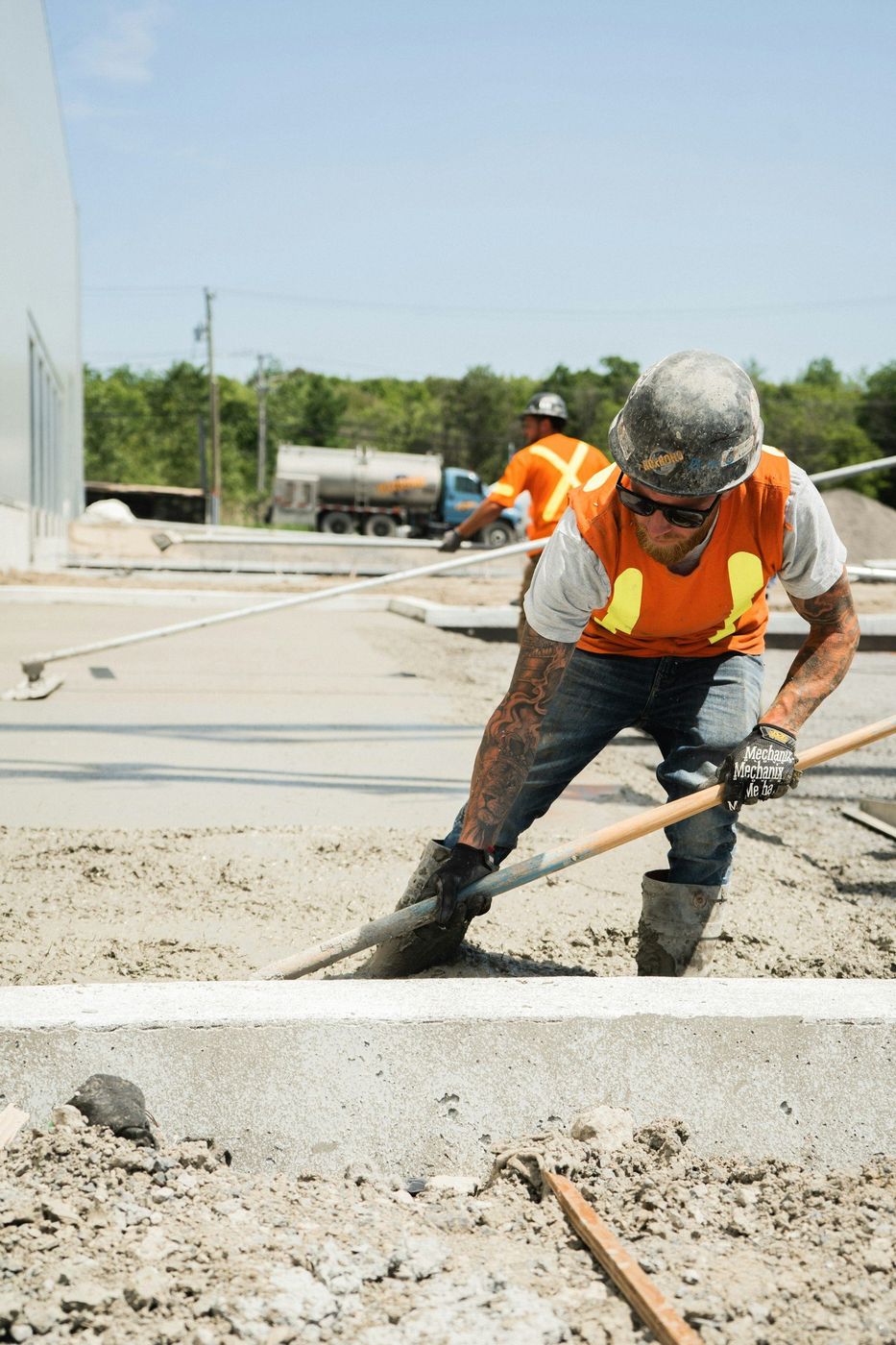
The whole finish comes down to one hour on pour day, and nobody posts the start time.
Here's the thing about a washed finish: you can't fix it later. A heavy broom finish can be ground and recoated. An uneven trowel finish can be topped. But the stone in an aggregate slab either gets uncovered at the right moment or it doesn't, and the moment lasts as long as it lasts.
So this page is about pour day. Not stone samples, not sealer brands. The morning itself, because every decision that determines whether your walk looks like a river bottom or looks scrubbed happens between the truck arriving and the crew putting the hoses away.
Forms are set and the base compacted before the truck is ever ordered, usually the day prior. Morning starts with a walk of the grade, a check that the steel is chaired and tied where it belongs, and a conversation about where the truck sits and how far the chute reaches. That last part sounds trivial. It isn't. On tight lots around Bradburn we've spent more of a morning solving access than placing concrete.
Then it arrives. Placed, raked to rough grade, screeded flat. Bull float next, which pulls a layer of paste to the top and buries the stone. That's supposed to happen. The rock you'll eventually see sits a fraction of an inch under a skin of cement and sand, and the rest of the day is about removing that skin at the right second without taking the rock along.
Surface retarder goes on while the slab is fresh. It keeps the top paste soft while the concrete underneath sets normally, which turns a frantic window into one a crew can work inside.
Testing starts with a garden hose and a soft brush at one corner. If stone rolls, we're early and we wait. If nothing moves under moderate pressure, we're late and the day just got harder. What we want is paste giving way while the aggregate stays locked, sitting proud but not loose.
Once that corner reads right, everybody moves. Brushes and controlled pressure, working in a line, holding the same depth of exposure the whole way across. Uniformity is the entire game. A slab washed deep at the house and shallow at the far edge looks like two pours joined in the middle, and there's no coming back from that.
A light acid rinse follows a day or two later, neutralized and flushed, to clear cement haze off the stone faces. Then it cures. Sealer waits weeks.
| What we're dealing with | What it does to the window | How we run the day |
|---|---|---|
| Full sun on an open slab in July | Paste sets top down and the window closes early | First-light start, retarder staged, more hands rather than more water |
| Wind across the open ground | Pulls surface moisture faster than heat does and crusts the slab in patches | Screens up, stronger retarder, wash in sections instead of one sweep |
| Half the slab shaded, half in sun | Two set times on one pour, so one end is ready and the other isn't | Read the slab in zones and wash the sunny side first |
| Overcast morning after a damp night | Set drags on for hours and a crew burns daylight standing around | Push the start later, dial back the retarder, order the truck to the slab |
| A cell building over the foothills | Rain lands on a surface we deliberately left open and loosens stone | Plastic staged before we place. A bad morning forecast moves the day |
| Trucks arriving out of sequence | First concrete placed runs far ahead of the last, so the window arrives in pieces | One supplier, spaced loads, and we stop placing rather than stretch a pour |
We'll bring samples out and show you what each blend does in your light. Free estimates. Call (303) 569-4046.
The blend decides the look and it decides how the surface feels underfoot. Small rounded river rock gives a quiet texture that's easy on bare feet, which is why it lands around patios. Larger, more angular stone reads bolder from a distance and grips better on a slope. Darker blends hold July heat. Lighter blends show organic staining faster under trees.
Season runs late April to about mid-October, and September is our pick for this finish anywhere on the north metro. Winter is off the table for washing. The process ends with water sitting on a deliberately open surface, and no version of that works when it freezes overnight. We'll pour flatwork in January. We won't wash it.
Still unsure about something?
Call the crew at (303) 569-4046 and we will talk it through.
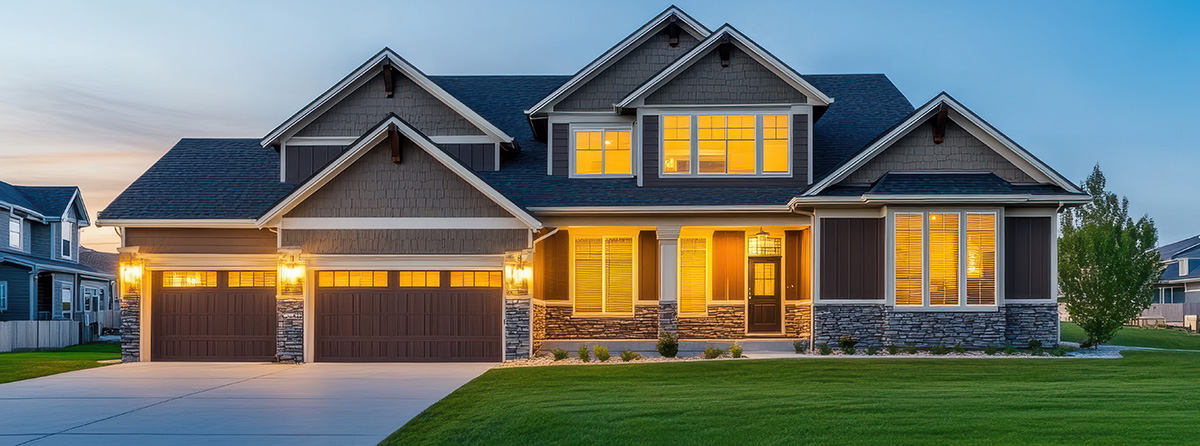
Get a free, no-obligation estimate from a crew that knows Colorado soil, Colorado weather, and how to finish concrete that lasts.
Accessibility
Adjust the site to fit how you read and browse. Your choices are saved on this device.