
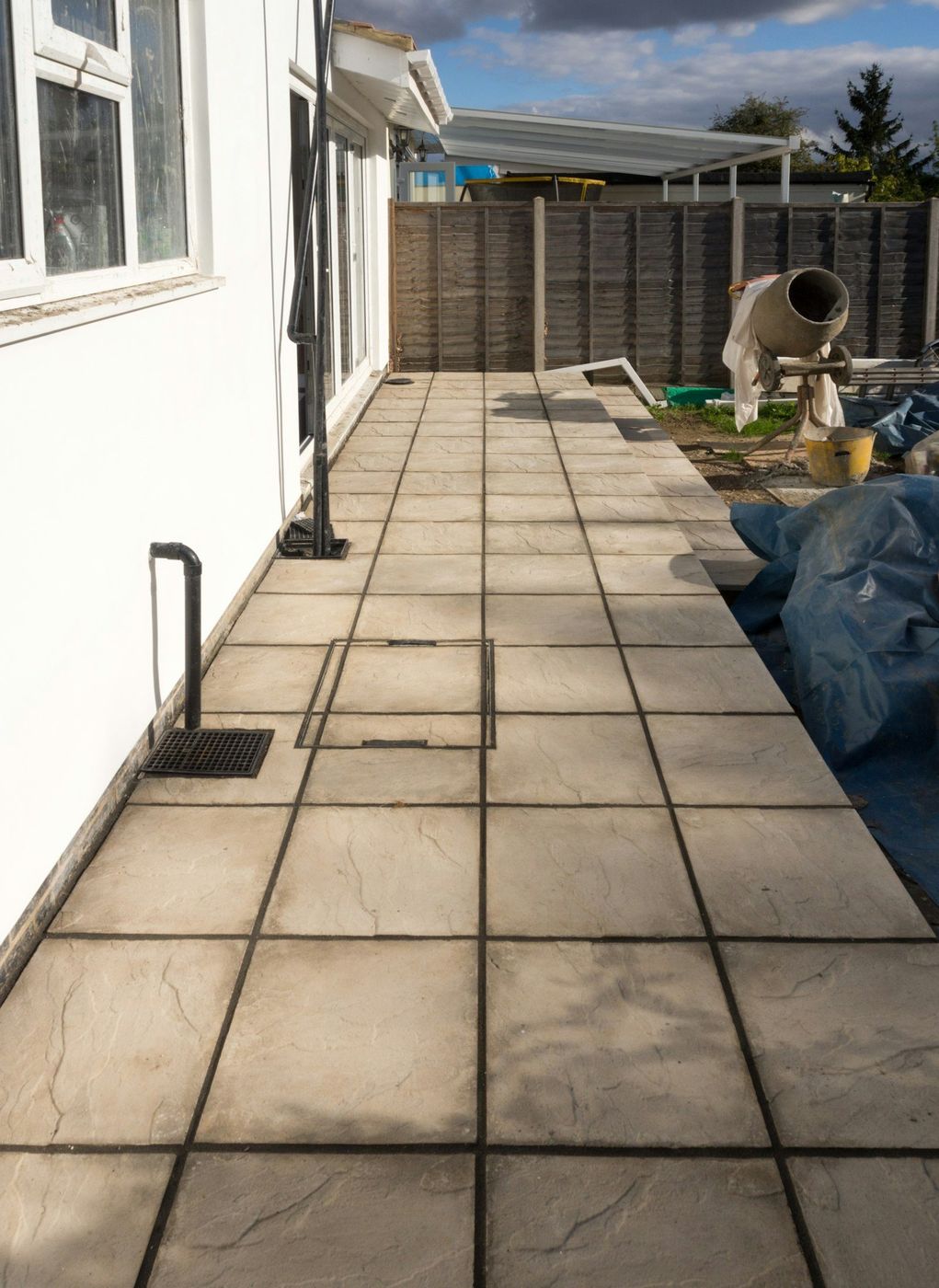
A topping is only ever as good as the slab it's stuck to, and in this town that slab could be from any decade.
Same phone call, two very different houses. One is a patio that's been out back a long time: heavy trowel finish, deep joints, a settled panel or two, a surface that's spent decades taking sun and ice melt. The other is newer, poured by a production crew on a schedule, dead flat and dead plain, nothing wrong with it except that nobody wants to look at it.
Both are overlay candidates. They're not the same job. The older slab gets judged on whether it's still sound enough to carry a topping, and sometimes the answer is no. The newer one is almost always yes. Around Westminster we take both calls in the same week.
On the longer-standing homes around Quail Creek and The Ranch, the slabs have history. Sealers that came and went, a repair or two, joints that opened and filled with grit, a surface abraded by however many winters of shoveling. Those slabs are either excellent substrates or they're finished. The test is whether the concrete under the tired top is still solid, and a hammer answers that faster than any conversation.
Newer construction around Bradburn and off Legacy Ridge brings the opposite problem. The concrete is usually sound and reasonably flat, which is exactly what a topping wants. What's missing is any character. A stampable or hand-troweled overlay over a good builder slab is one of the better values in this trade, because you're buying appearance without buying a tear-out.
Every overlay failure we've been called to look at came down to bond. Not the product, not the weather, not the homeowner. The topping simply never grabbed the concrete underneath.
Getting that right means mechanically opening the surface. A grinder or a shot blaster takes off the smooth, weak skin sitting on every finished slab and leaves a profile the new material can key into. A pressure washer does not do this. It cleans, which matters, but the skin stays, and a topping bonded to it is bonded to something already on its way off. Then the slab gets dampened to saturated with no standing water, so it quits drinking mix water out of the material, and a bond coat gets scrubbed in rather than poured and spread.
| How it shows up | What got skipped | Can it be saved |
|---|---|---|
| A hollow sound when you tap a section | The slab was never mechanically opened, so the topping grabbed weak surface skin | Cut the loose area out, profile it right, patch back. The seam always shows |
| Edges curling up around the perimeter | Dry slab pulled water out of the material before it could set | Small spots can be re-bonded. Widespread curling means it comes off |
| Old cracks reappearing along the same lines | A moving crack got skimmed over instead of treated | Route and treat the crack, then patch. Nothing thin bridges a working joint |
| Sheets lifting after one winter | Water underneath it, or the material went down too cold to gain strength | Remove it. A topping that froze young did not partially fail |
| Blisters and pinholes across the sunny half | Applied on a hot slab in direct sun, so it skinned before it released air | A few blisters grind and fill. A field of them is a redo |
A hammer and twenty minutes tells you whether this is a good idea. Call (303) 569-4046.
Thin systems are thin on purpose. A microtopping is a skim, and it does color and texture beautifully while fixing nothing about shape. A stampable overlay carries more thickness and can hold real pattern. Past about three quarters of an inch you've stopped applying a topping and started pouring a slab, and a slab that thin needs steel, joints, and a plan of its own.
So here's where we turn work down. A slab with panels sitting at different heights is moving, and a topping over movement cracks in the first season. Widespread scaling means the concrete is failing from the top down and there's nothing solid to bond to. Steady moisture coming up from below will push any coating off eventually. In those cases we'd rather talk about lifting, replacement, or fixing the drainage than sell you a surface that fails on our name.
Season matters too. May through September, with the slab warm and nights above freezing, and we avoid the middle of a hot afternoon in July because a baking substrate flash-sets the material. October is workable with blankets and a close eye on the forecast. Winter is a no.
Still unsure about something?
Call the crew at (303) 569-4046 and we will talk it through.
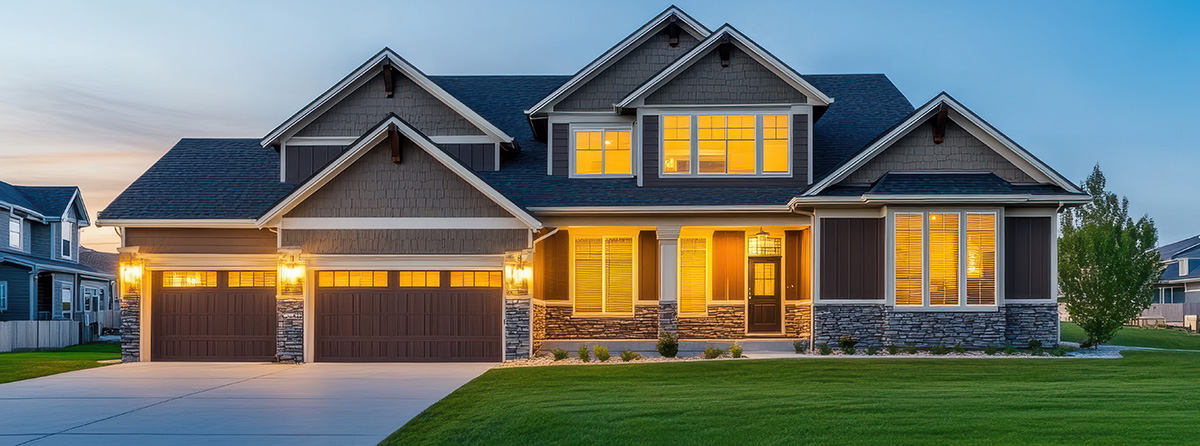
Get a free, no-obligation estimate from a crew that knows Colorado soil, Colorado weather, and how to finish concrete that lasts.
Accessibility
Adjust the site to fit how you read and browse. Your choices are saved on this device.