
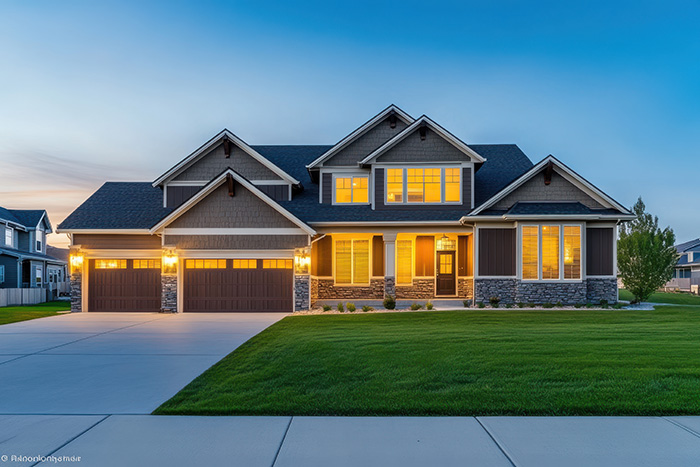
Four different products get sold as a concrete counter. Only one of them is concrete.
Before we talk about color or edge profiles, there's a decision worth making with clear eyes. People walk into this wanting a look, and there are several ways to buy that look, priced miles apart and behaving nothing alike. We build the real version. We'd still rather you knew what the alternatives are than find out later.
So start here. Figure out which route fits the kitchen you actually cook in and the timeline you actually have, then let the details follow. A concrete top is a handmade object with variation baked into it. That's the appeal for a lot of people and it's a dealbreaker for others, and both reactions are reasonable.
| The route | What it actually is | Where it's worth it | What you give up |
|---|---|---|---|
| A cast concrete top | Real concrete, reinforced, ground and sealed, built to a template of your cabinets | Islands, bars, outdoor kitchens, anywhere thickness and a custom edge matter | Weight, lead time, and a surface that asks you to respect its sealer |
| A topping over your existing counters | A cement-based skim bonded over sound laminate or tile | A kitchen headed for a full redo later, or a budget that won't reach new tops | Edge durability, and no real say over thickness or profile |
| Precast concrete panels | Factory slabs cut and fabricated the way a stone shop works | A clean modern look with color you can predict from a sample | The handmade variation that made people want concrete in the first place |
| Engineered stone printed to look like concrete | Quartz with a concrete pattern on it | A hard-working kitchen where nobody wants to think about the surface | It photographs like concrete and behaves nothing like it |
A countertop is a structural piece pretending to be furniture. Roughly an inch and a half thick, spanning cabinet boxes, cantilevered over a bar, with a big rectangle cut out of the middle for a sink. That's a demanding shape, and it's why the mix is nothing like what comes out of a ready-mix truck. Fine aggregate, low water, and admixtures that let us place a stiff mix into a tight form without leaving voids everywhere.
Reinforcement runs through every piece we build. Bar around the perimeter and around the sink opening where the stress concentrates, mesh through the field, all held so it stays inside the section instead of drifting to the bottom of the form. Steel sitting on the form face does nothing except rust through the finish two years later.
And it all starts with a physical template. We template off cabinets that are set and level, in your kitchen, with the sink and the faucet on site. Not off a drawing, and never off numbers somebody read off a tape and texted us.
We'll tell you whether a cast top is the right call before anybody measures anything. Call (303) 569-4046.
This is the part that decides whether you love the counter in year three. Concrete is porous and mildly alkaline, so a bare top will drink red wine, lemon juice, and olive oil, and the acidic things will etch it. The sealer is the entire defense, and there are two philosophies. Penetrating products soak in and leave the surface feeling like stone: they resist water well, breathe, and let the concrete look like concrete, but they concede that some staining is part of the deal. Film-forming products, mostly the two-part urethanes, sit on top and resist almost everything, at the cost of a slightly plastic feel and a repair process that means recoating a whole section.
Either way, we use products rated for food contact and we let them fully cure in the shop before the top ships. Then you get a short list: cutting board, trivet, wipe up the acidic spills, and a maintenance wax or recoat on a schedule we write down. Shop work runs all year, which is why kitchen projects don't have a season. Outdoor kitchen tops are the exception, and those installs wait for weather that lets the sealer cure properly.
Everybody asks about color first. We ask what they cook. A kitchen that runs citrus and wine every night wants a different sealer than one that mostly makes coffee, and picking that wrong is the only thing on a concrete top that's hard to undo.The crew lead's read on it
Still unsure about something?
Call the crew at (303) 569-4046 and we will talk it through.
Get a free, no-obligation estimate from a crew that knows Colorado soil, Colorado weather, and how to finish concrete that lasts.
Accessibility
Adjust the site to fit how you read and browse. Your choices are saved on this device.