
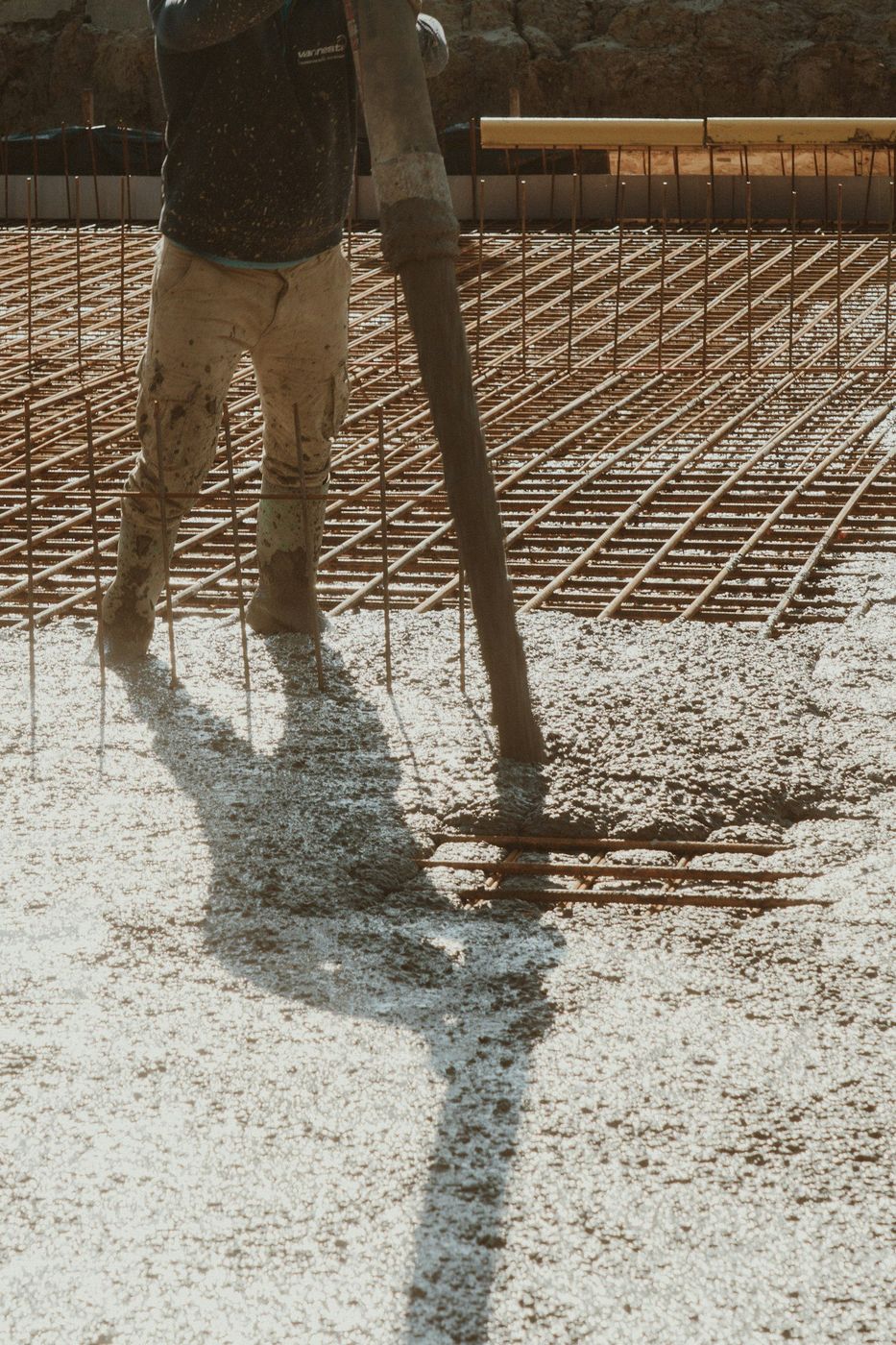
Color gets decided on pour day, months before anybody opens a bottle of acid.
Most people think of staining as something done to a floor later. It is. But the day the truck backs up is the day your color gets decided, and by the time we arrive with acid the slab has already made most of the choices for us. How hard it got troweled. Whether a curing compound went down. What was in the mix.
So this page walks the thing in order, from the pour through the last coat of sealer, because that's how the work actually happens. We color patios, entry landings, basement floors, and shop slabs across Thornton, on new pours going in north of town and on twenty-year-old concrete around Eastlake that's finally getting the treatment it should have had at the start.
Concrete takes acid stain by reacting with free lime in the cement paste. That reaction needs somewhere to go, which means it needs an open surface. A slab burnished with a power trowel until it shines has been sealed shut by its own paste, and acid on it produces a thin, even, disappointing tone. A slab left with a light float or a fine broom drinks the product and gives back the depth and mottling people actually want.
Curing compound is the other one. It's the right call for the concrete and a nuisance for the color, because it has to come off completely before a drop of stain goes down. Not mostly off. Completely. Ghost patches of leftover compound are the leading reason a floor turns out blotchy in a way nobody planned or wanted.
| Pour-day decision | What it does to the surface | How it shows up in the color |
|---|---|---|
| Hard steel trowel to a burnish | Closes the pores and drives paste to the top | Light, flat tone with little variation. Dye works better here than acid |
| Light float or a fine broom | Leaves an open, absorbent surface | Deep mottling and real range. This is what we ask for when color is planned |
| Spray-applied curing compound | Holds moisture in for a proper cure | Has to be ground off first. Anything left behind stains pale |
| Wet cure under plastic | Cures without leaving a film to remove | Easiest slab to color, though plastic wrinkles can leave faint marks |
| Integral pigment in the truck | Color through the entire slab | Gives you color even where it chips. Acid over it shifts the tone rather than setting it |
| Chloride accelerator in cold weather | Speeds the set on a cold day | Can throw the reaction and bring up rust-colored freckles. We order non-chloride |
We start by making the floor bare. Degrease, grind off whatever coating or mastic or old garage paint is up there, vacuum twice, and then run a water test in a dozen spots. Water that darkens the concrete means we're clear. Water that beads means something is still sealing that patch, and the acid will skate right over it.
Then a sample somewhere nobody looks. Concrete has as much say in the final tone as the bottle does, so a chart is a starting point and nothing more. After that we mask siding, thresholds, cabinets, posts, and anything green within reach of a sprayer, and the product goes down in even overlapping passes with nothing allowed to stand in a puddle.
The reaction runs a few hours. Then the step that decides everything: neutralizing. A baking soda solution, rinse, rinse again, watching the water run from rust colored to pale to clear. We test before another product touches the floor. Only then does sealer go on, thin, in two coats, with the second waiting until the first is genuinely dry.
Five minutes on the phone about trowel finish and curing changes what color is possible later. Free advice either way. (303) 569-4046.
Exterior color runs mid-May into early October here, and the shoulders beat the middle of summer. A July cell arriving during the rinse window is how a good floor turns patchy, and there's no fixing it that afternoon. Interior work runs all twelve months, which is why basement and garage slabs are most of what we color between Thanksgiving and April.
At this elevation the ultraviolet load is heavier than people budget for, and it isn't really the color that pays. Mineral pigment sitting inside the concrete doesn't wash out in any meaningful way. The sealer above it thins, dulls, and eventually quits, and once it's gone the slab absorbs everything that lands on it. Two to three years between refresh coats outdoors. A west-facing patio in Hunters Glen with nothing shading it takes the short end of that range.
Winter chemicals are the other thing. Chloride melters go after the coating first and the surface second. Sand, a shovel, and a little patience get you through a Thornton January without touching either.
Still unsure about something?
Call the crew at (303) 569-4046 and we will talk it through.
Get a free, no-obligation estimate from a crew that knows Colorado soil, Colorado weather, and how to finish concrete that lasts.
Accessibility
Adjust the site to fit how you read and browse. Your choices are saved on this device.