
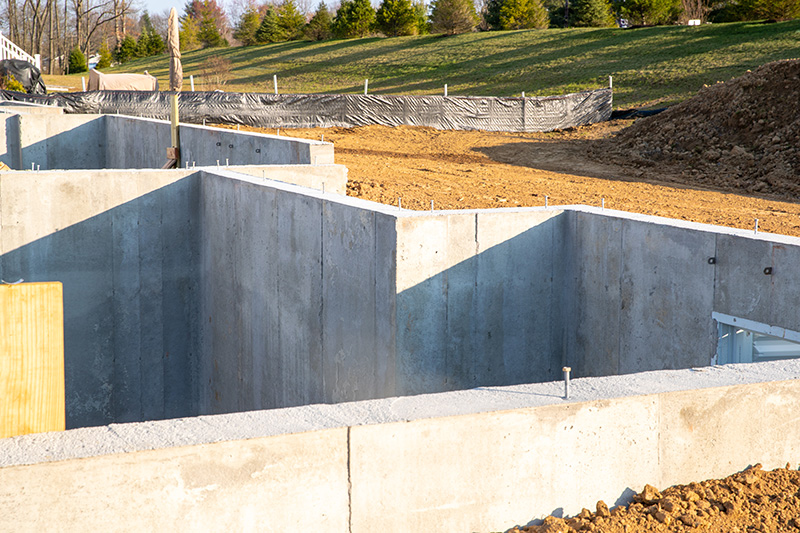
Every polish job starts with whatever the last owner glued to the floor.
Thornton's housing stock splits pretty cleanly, and so do the polish jobs. The older streets around Eastlake and Quail Valley have basements that were finished once in the seventies and again in the nineties, which means the slab down there is wearing carpet glue over vinyl tile mastic over whatever the original owner rolled on. The newer builds north of town hand us a bare, flat, hard-troweled slab and not much else.
Two different jobs with the same name. One is mostly removal and one is mostly polishing, and we quote them differently because the diamonds don't care what the finished floor will look like. They care what's between them and the concrete on the first pass.
| What's on the floor now | How it comes off | What it adds |
|---|---|---|
| Bare builder slab, never covered | Nothing to remove. Straight to the first metal-bond pass | Nothing. This is the least expensive floor to polish |
| Carpet and pad over tack strips | Pull it, grind the glue dots, patch the strip holes | Half a day, plus small patches that will always read a little different |
| Vinyl tile set in black mastic | Test it first. If it comes back clear, blast or grind with dedicated tooling | Real hours, and the adhesive shadow sometimes stays as a soft ghost |
| Rolled garage epoxy or floor paint | Aggressive metal-bond diamonds, several passes before we reach concrete | The largest add on this list. It fights back the entire way down |
| Ceramic tile on thinset | Chip the tile off, then grind the thinset ridges flat | A day or more, and the floor loses more height than people expect |
| Old sealer or leftover curing compound | One pass with coarse metals usually clears it | Almost nothing, provided we knew it was there when we quoted |
Polishing is not one machine going over a floor. It's a sequence, and skipping a step is why some floors look cloudy from an angle no matter how bright they read straight down. We open the concrete with coarse metal-bond diamonds, then step up through the grits, and every pass has one job: remove the scratch pattern the pass before it left.
Somewhere in the middle we stop and put densifier down. It's a liquid that soaks in and reacts with lime in the concrete to harden the surface from the inside out, and it is not a coating. Nothing sits on top. Skip it and the resin pads are polishing a soft surface, which shines beautifully and then goes dull in the walking lanes inside a year.
After that it's resin pads through the finer grits until we reach the sheen you picked. Around eight hundred grit a floor starts reflecting light. By three thousand it reflects objects. Where we stop is a look and a maintenance decision rather than a quality one, and a lower sheen on a garage or a shop floor is usually the smarter call.
Pull up a corner of the carpet, send us a photo, and we'll tell you which of these jobs you own. (303) 569-4046.
Basements first. Finished lower levels in Hunters Glen and North Creek Farms are where most of this work happens, because the slab is already down there, it's flat, it's dry, and grinding it costs less than building a floor on top of it. Garages are second, and a polished garage floor at a low sheen takes hot tires without the peeling you get from a rolled coating.
Where we say no: outdoors. A polished surface is slick when it's wet, and a wet slick surface at this elevation is an icy one from November to March. We won't polish a patio, a walk, or a porch landing. If you want that look outside, a ground and sealed finish with traction grit in the top coat gets you partway there without the liability.
The other no is a slab that's too soft or too broken. Concrete that dusts under a coarse pass, or a floor with panels that have moved against each other, won't hold a polish. We check both before quoting, not two days in.
Interior polishing runs twelve months a year, and winter is honestly the best time to book it. The crew isn't fighting the outdoor calendar, the house is closed up anyway, and if the space is heated the concrete doesn't care what January is doing outside. We'd rather grind your basement in February and pour your patio in June.
Dust is the question everybody asks and the answer is less than you're picturing. The grinders run on vacuums rated for concrete dust, we plastic the openings, and a negative air machine moves whatever gets away out of the house instead of upstairs. It isn't zero. It's a long way from the gray fog people imagine. Plan on the room being closed off for the run of the job plus a day.
Still unsure about something?
Call the crew at (303) 569-4046 and we will talk it through.
Get a free, no-obligation estimate from a crew that knows Colorado soil, Colorado weather, and how to finish concrete that lasts.
Accessibility
Adjust the site to fit how you read and browse. Your choices are saved on this device.