
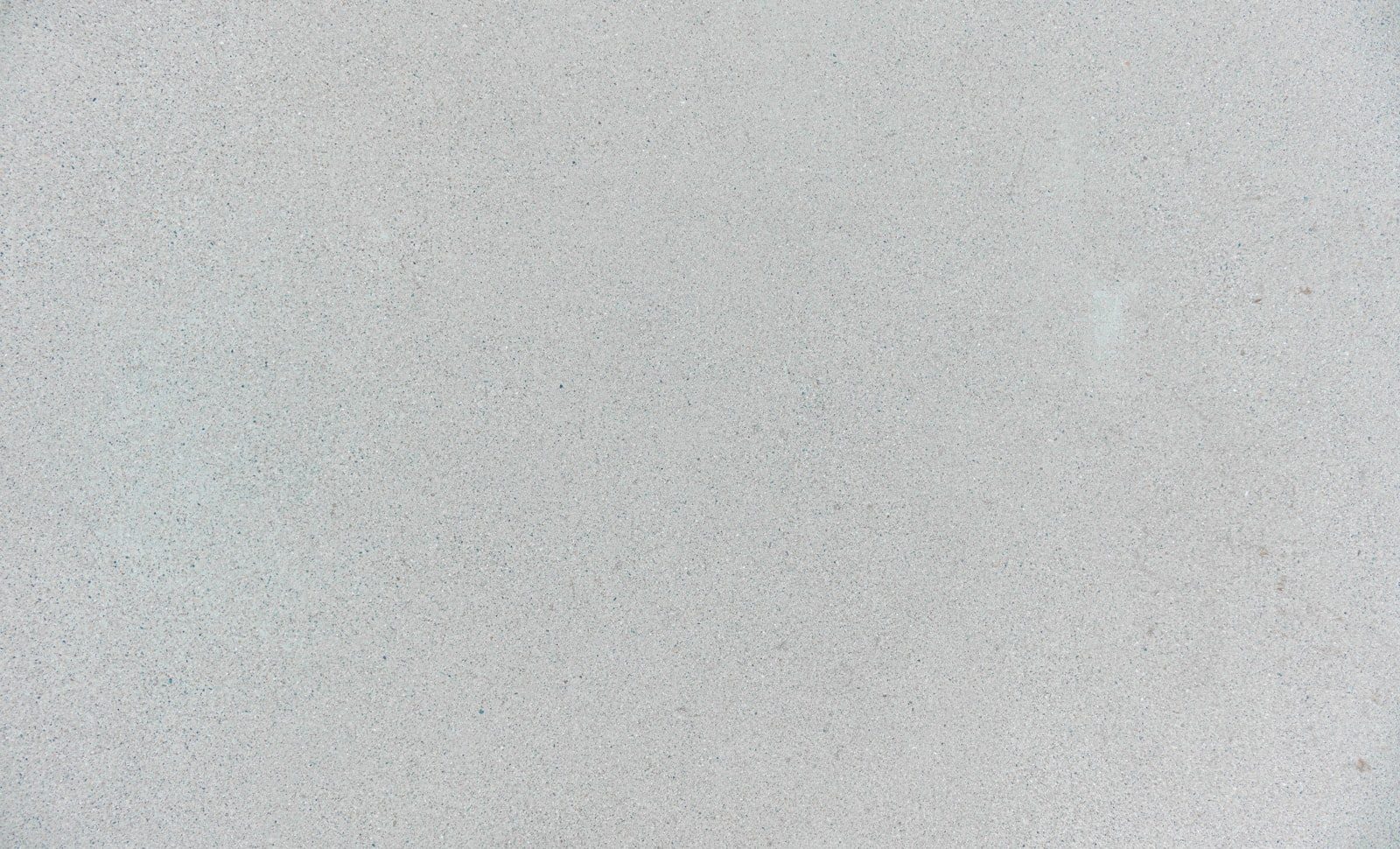
The texture gets chosen in about ninety seconds. You live with it for thirty years.
Somewhere near the end of an estimate, usually while we're rolling up the tape, somebody asks what finish they want. The conversation lasts about ninety seconds. Then you live with the answer for thirty years, through every wheelbarrow, every dog, every February morning with a shovel in your hand.
We'd rather spend ten minutes on it. Not because one texture is better than another, but because the right one depends entirely on what crosses that slab on a Tuesday. A dog run, a garage apron, a patio where people go barefoot, and a walk on the shaded north side of the house all want different things, and one property often needs three of them.
Start with the traffic. A driveway apron takes tires, a plow blade, and the worst of whatever the street was treated with. A back patio takes chair legs dragging, a grill cart, bare feet in July, and a hose in September. A dog run takes claws and has to rinse clean in two minutes. A shop apron takes a tractor tire and a floor jack.
Now think about the two chores you'll actually do out there: clearing snow and cleaning. A heavy broom sheds snow well but holds grit down in the grooves. A fine broom clears faster under a shovel and still gives footing. A hard steel trowel finish, which is lovely indoors, is a skating rink outside and we won't put it on an exterior walk. Float finish sits between the two and it's the quiet workhorse nobody asks for by name.
| Where two surfaces meet | What goes on each side | Why it changes there |
|---|---|---|
| Garage floor to driveway apron | Steel trowel inside, medium broom outside | Inside stays dry and gets swept. Outside gets ice and needs tooth |
| Driveway to the street | Broom throughout, with the lines pulled across the slope | Lines running downhill channel water and ice. Across the slope, they grip |
| Patio to a hot tub or pool pad | Broom or light float on the patio, heavier texture at the wet edge | Wet feet on smooth concrete is the most common slip on any property |
| Walk to steps | Same finish on both, with the tread noses given extra broom | Steps are where people fall, and the nose is the part that matters |
| Patio to the fire pit or grill area | Broom in the field, a smoother float under the furniture zone | Chair legs and carts hate a heavy broom. Keep the smooth part inside the seating area |
| Anything to a north-facing walk | Whatever the rest is, plus a coarser texture on the shaded run | Shade means the ice stays for days. That run needs the most grip on the property |
Texture is easier to point at than describe, and we can usually name it from a photo. (303) 569-4046.
Finishing is timing work, and the weather here keeps moving the timing. On a hot, dry, windy afternoon a slab can go from too wet to too stiff in the time it takes to walk its length, which is why we start early in July and August and why you'll see us keeping the surface damp. On a cool October morning the bleed water takes hours to leave, and troweling into bleed water is exactly how you get a surface that flakes off three years later.
Rain during finishing is the real damage. Extra water beaten into the top layer leaves a weak, dusty skin, and it shows up as scaling long after everybody has forgotten it rained that day. We watch the afternoon build over the foothills all summer and we'll reschedule rather than gamble your slab on a radar guess.
Best months here are late April through mid October, with September the one we'd choose. Winter pours get warm water, a chloride-free accelerator, and blankets, and the texture gets simplified to a broom, because you can't stamp or wash a slab that has to be covered right away. Never on frozen ground, in any month.
Still unsure about something?
Call the crew at (303) 569-4046 and we will talk it through.
Get a free, no-obligation estimate from a crew that knows Colorado soil, Colorado weather, and how to finish concrete that lasts.
Accessibility
Adjust the site to fit how you read and browse. Your choices are saved on this device.