
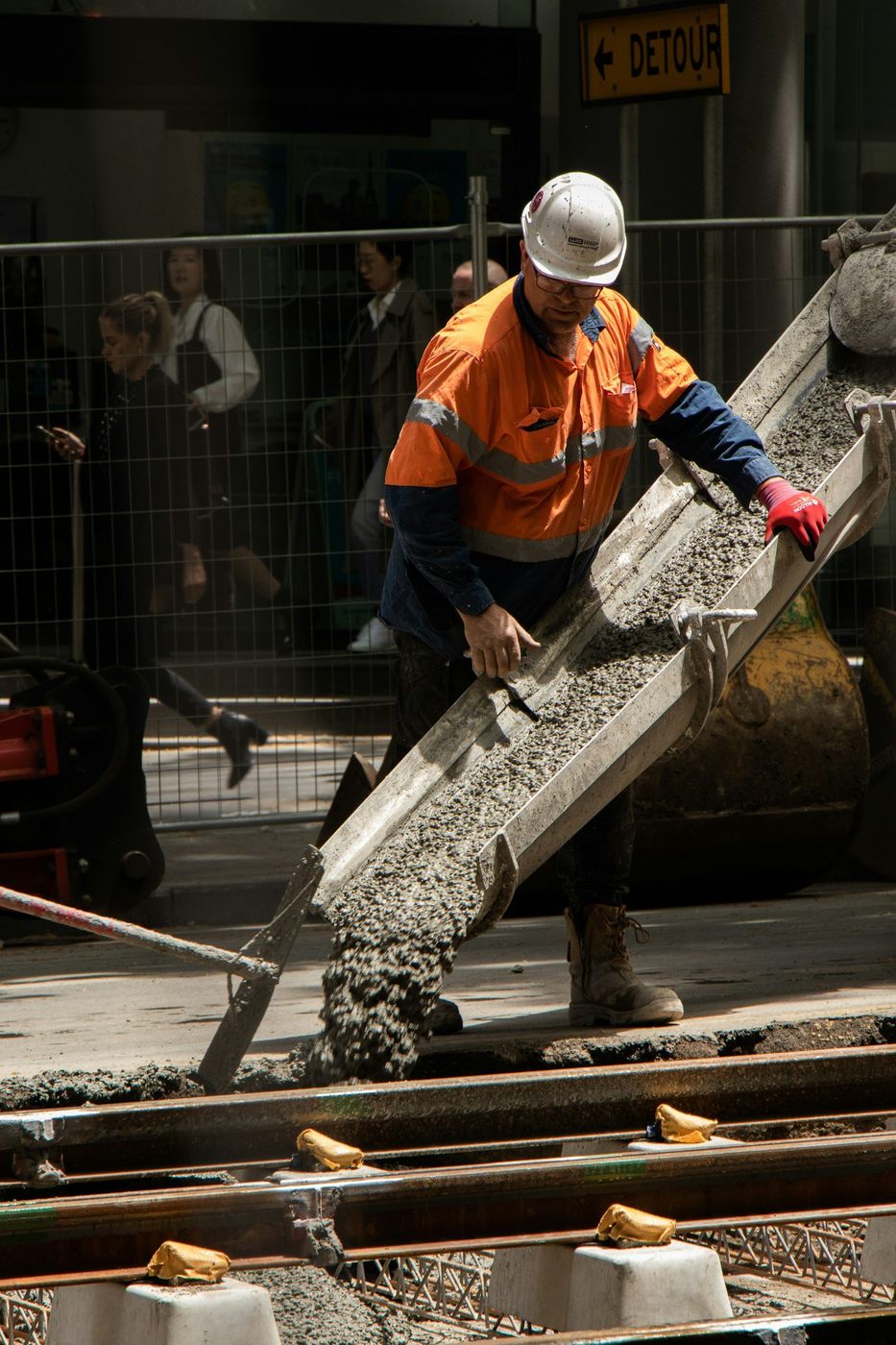
Three bids on the same enclosure pad can differ by half, and the reason is almost never the concrete.
Put an enclosure pad out to bid and watch the spread. One number covers a slab poured on whatever is down there now. Another covers excavation, a rebuilt base, a thickened apron, footings for the posts, and coordination with your hauler. Same square footage, same finish note on the drawing, completely different pieces of work. Owners who pick on price alone usually find out which one they bought in about four winters.
We build and replace enclosure pads for retail centers, apartment and townhome communities, restaurants, and HOA properties around Parker. It is small concrete with big loads on it, and it is the one pour on a site where cutting scope shows up fastest. This page is about where the money actually goes and which line items are worth defending when someone asks you to value engineer the pad.
Start with what lands on it. A front-load truck rolls in with the container lifted, which throws its weight forward onto the front axle, and the fork tines transfer point loads into the same two spots week after week. Then the container drops. That impact goes into a square yard of concrete, repeatedly, for as long as the pad exists. No parking stall on your property sees anything like it.
So the pad is thicker than the lot, carries heavier steel, and needs a base that was rebuilt rather than reused. That's the first cost. The second is shape: containment slope, an apron that reaches past where the truck stops, and footings under the gate posts and bollards that go below frost so nothing shifts and jams the gates in January.
The third cost is logistics, and it's the one nobody puts on a bid sheet. Your hauler has to pull the container, a temporary location has to be approved and reachable by the truck, and residents or tenants need to know where to take trash for two weeks. On the multifamily properties around Canterberry Crossing and Clarke Farms, that coordination takes more phone calls than the concrete takes hours.
Send us the scopes. We'll show you which line items are missing and what those omissions cost you later.
| Driver | Which direction it pushes | What you can do about it |
|---|---|---|
| Condition of the ground under the old pad | The largest single swing in any bid | Let us cut a test hole first so nobody is guessing |
| Size of the apron in front of the gates | Up, and it is the wrong place to save | Build it once at full length rather than twice at half |
| Enclosure walls, gates, and bollards in scope | Up, sometimes past the concrete itself | Bundle them. Separate mobilizations cost more than the work |
| Site access for trucks and equipment | Up when a pad sits deep in a tight lot | Schedule when the lot is empty so demo and pour run clean |
| Number of pads on the property | Down per pad as the count rises | Do them in one mobilization if the budget allows |
Forget the bid for a second and think in service years. A pad built to the loads it carries gives you decades with nothing but sweeping. A pad built to parking lot standards gives you a patch cycle: spall at the gate line, a crack across the middle, a low spot that holds liquid, then a replacement anyway. Add up the repairs, the mobilizations, and the weeks your container sat in a fire lane, and the cheap pad was never cheap.
Weather is why the gap is so wide here. An enclosure sits shaded by its own walls most of the day, so snowmelt and wash water linger, refreeze overnight, and thaw again by afternoon. That cycle runs November into March at this elevation, and it strips the surface off any concrete poured without entrained air. Summer brings the other half: storms flood the enclosure, and a pad that doesn't shed water becomes a basin.
Schedule wise, put this work in May through early October, with the shoulder months easiest to book. Winter pours happen with heated water and blankets when a pad fails and cannot wait. Frozen ground stops us, and then we'll help you set a temporary container location until the thaw.
Still unsure about something?
Call the crew at (303) 569-4046 and we will talk it through.
Get a free, no-obligation estimate from a crew that knows Colorado soil, Colorado weather, and how to finish concrete that lasts.
Accessibility
Adjust the site to fit how you read and browse. Your choices are saved on this device.