
The walk in front of your suites is the first thing a tenant's customer reads about the property.
Park at the far end of your own lot sometime and walk the frontage on foot. You'll read the concrete faster than any condition report reads it back to you. A lifted panel at the corner where the irrigation line runs. Wheel ruts pressed into the service apron where the delivery van cuts the turn every morning. A walk that pitches back toward the building instead of away from it.
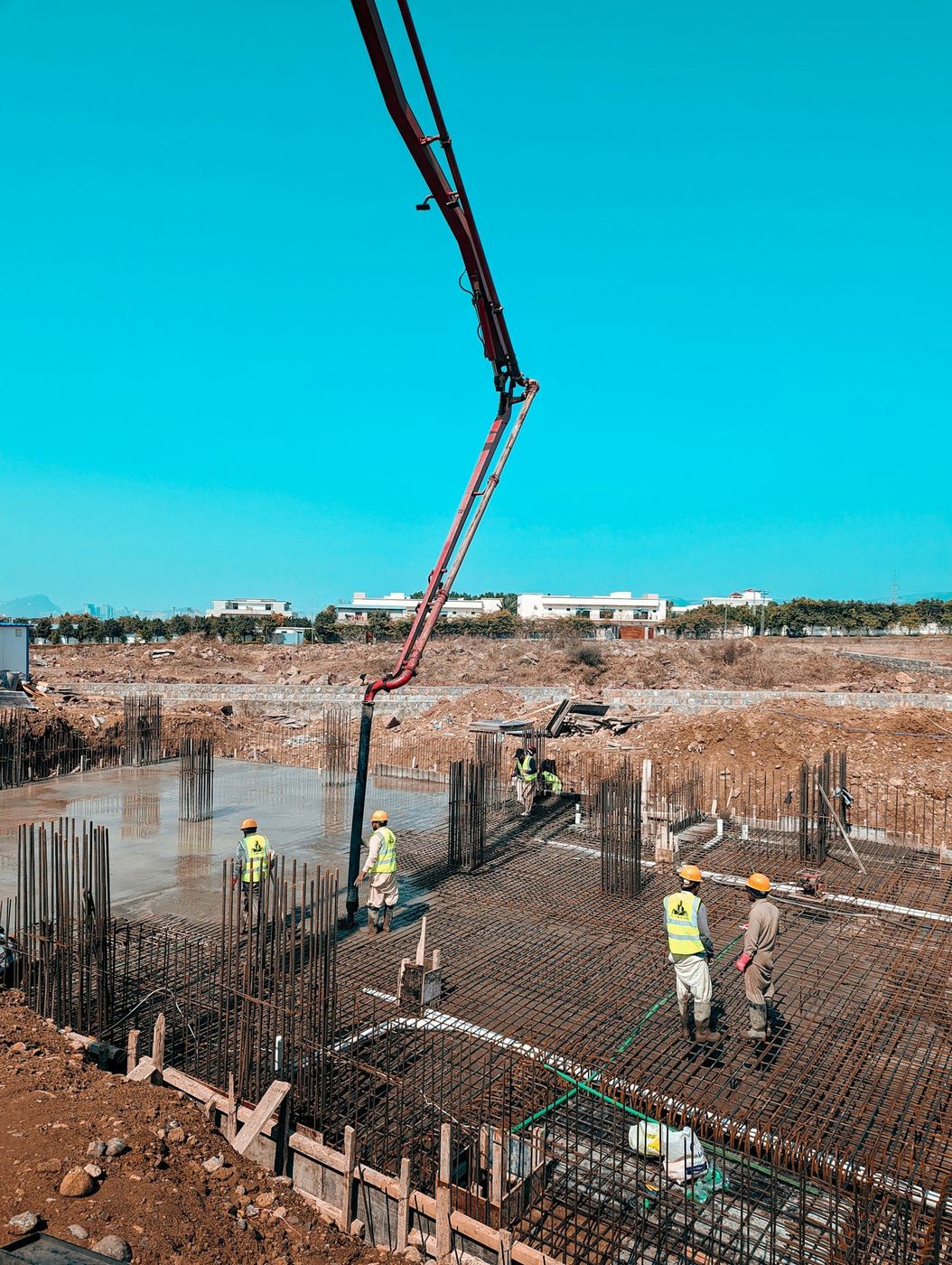
We pour and replace commercial flatwork for property managers, general contractors, and owners around Parker. Sidewalks, service aprons, trash approaches, entry landings, connector walks between buildings, pads for a transformer or a generator. This is the concrete that carries foot traffic, hand trucks, and the occasional box truck that ignored the sign. When it fails, it fails where everyone can see it.
Most flatwork scopes we get handed are square footage and a finish note. That's a bid, not a fix. Before we price anything we want to know why the concrete is in the shape it's in, because the same crack pattern can mean a nuisance or a rebuild depending on what's under it.
Three things move flatwork on a Parker property. Water that isn't leaving, base that was never compacted in the first place, and loads the original pour was never designed to carry. Irrigation is the sneaky one. A head that overshoots a walk for ten minutes every night from April to October softens the subgrade slowly enough that nobody connects the two. At 5,869 feet the freeze-thaw swing runs hard from November on, so concrete holding water at the surface starts shedding its top layer.
Parker's commercial stock spans a wide age range. Older buildings serving Stroh Ranch and The Pinery are on their second or third patch cycle. Newer retail and office near Stonegate, Canterberry Crossing, and Idyllwilde shows builder-grade base work rather than age, and the failures cluster where trucks turn.
| What shows from the curb | What is happening below | How urgent |
|---|---|---|
| One panel sits low, lip at the joint | Base washed or consolidated under that panel only | Trip hazard. Handle it now, lifting may be enough |
| Surface flaking to a rough gray texture | Top layer lost to freeze-thaw or deicing salt | Cosmetic at first, structural once aggregate is exposed |
| Ruts and hairline map cracking in an apron | Slab too thin for the vehicle that actually uses it | Plan a thicker replacement of that section |
| Cracks radiating from a landing corner | No isolation joint against the building | Watch it. Cut a joint in and monitor |
| Standing water two hours after a storm | Slope lost, or never there to begin with | Regrade at replacement. Ponding causes the next three problems |
We'll walk the property with you, mark what's urgent versus what can wait a year, and put it in writing at no charge.
Nobody signs a lease expecting the front walk to be closed for three weeks. So we plan flatwork the way you'd plan a store reset: in bites, with a route in and a route out at every stage.
Typical pattern on an occupied property. We break the work into pours small enough that each one is demolished, formed, and placed inside a single day, then barricade only that stretch. Temporary walk routes get laid out with your property manager before demo, not improvised on site. Saw cutting and breaking happen early, because that's the noise. Where a suite has a hard operating window, we move to a night or Sunday pour and hand the area back before the doors open.
Night work carries a real cost in Colorado, and it isn't the crew rate. Concrete placed into a cold overnight sets slow, so the finishers wait while the slab decides it's ready. We'd rather run a Sunday than a midnight in January.
Half the commercial walks we replace didn't die of age. They died of a sprinkler head. You can stand there in July and watch the thing hit the same eight feet of sidewalk every night, and that's the eight feet that's cracked. We move the head before we pour the new panel, or we're back in six years.From the crew lead on these jobs
Still unsure about something?
Call the crew at (303) 569-4046 and we will talk it through.

Get a free, no-obligation estimate from a crew that knows Colorado soil, Colorado weather, and how to finish concrete that lasts.
Accessibility
Adjust the site to fit how you read and browse. Your choices are saved on this device.