
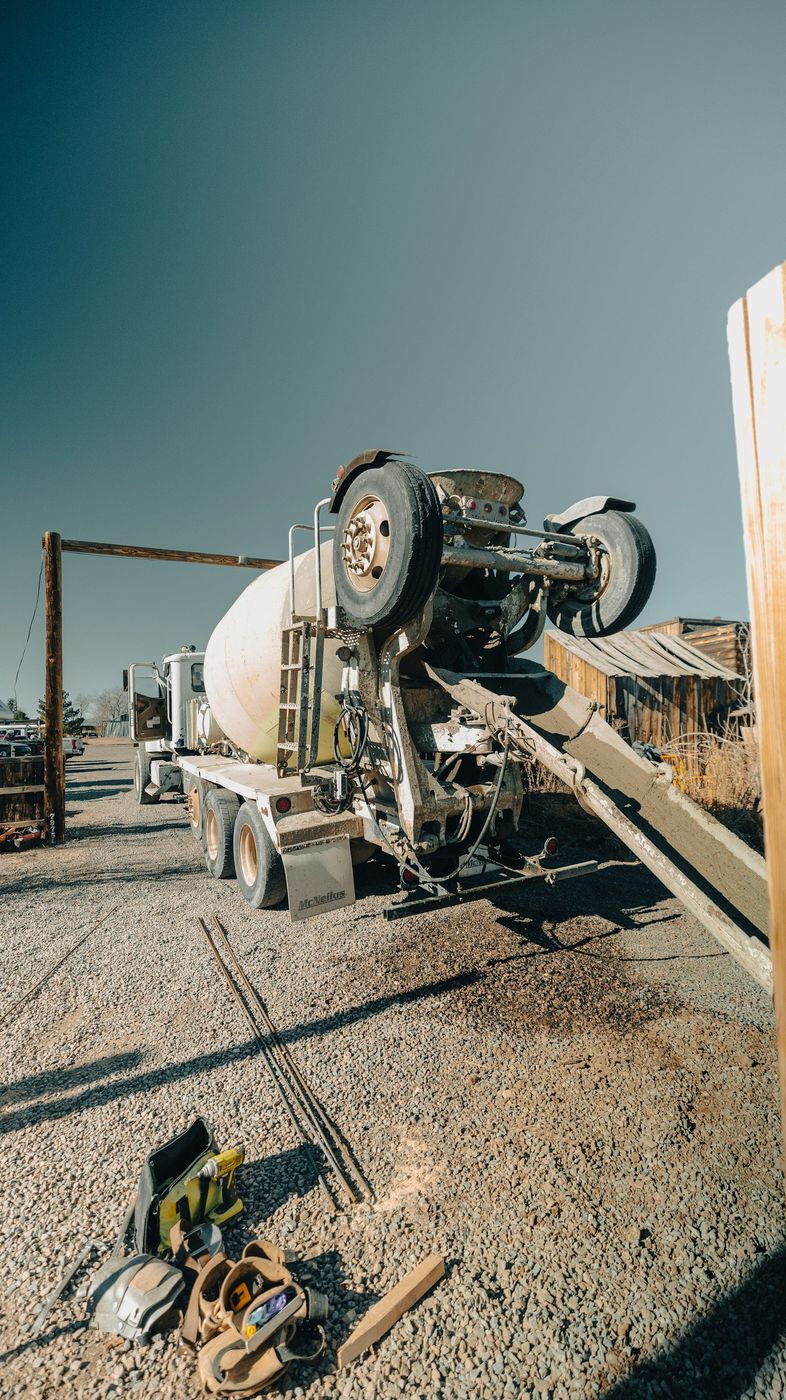
Every property that gets one has the same story: the gravel worked until the trucks got heavier.
Parker splits into two kinds of property, and access roads are where the difference shows up hardest. There are the newer platted areas around Idyllwilde and Reata where drives are short and the public street does most of the work. Then there's the acreage side, out through The Pinery and the wooded parcels, where a single private drive carries everything: the propane truck, the septic pumper, the fire district's apparatus if it ever comes to that, and a contractor's loaded trailer every time somebody builds a barn.
We build concrete access roads for acreage owners running a business at home, church and school campuses, self-storage sites, contractor yards, utility facilities, and general contractors who need a haul route that holds up through a two-year build. Long, narrow, heavily loaded, and usually the only way in.
A self-storage site and a church campus need almost nothing in common. Storage traffic is constant, light, and turns tight around building corners with box trucks in the mix. A campus sees a surge twice a week, buses that track wide, and a delivery entrance that gets used daily. A contractor yard gets tracked equipment and loaded tandems. We size and reinforce the road to whichever of those is really happening, not to a standard detail pulled off a shelf.
Acreage properties are their own case. The drive is long, which means the cost is in linear feet, and the temptation is always to thin the section to afford the length. That's backwards. On a long drive we'd rather narrow the paved width and pour it properly, with turnouts where two vehicles can pass, than run a wide ribbon of thin concrete that cracks under the first loaded truck.
Wooded parcels add a wrinkle nobody plans for: trees. Roots lift a drive from below, and shade keeps a road wet and icy for weeks after open ground has dried. Through timber, we deal with roots during excavation and crown the surface so meltwater leaves.
| Option | Fits when | The trade you are making |
|---|---|---|
| Full-width concrete | Daily truck traffic, a long hold on the property, tight maintenance budget | Highest day-one cost, lowest cost per year after that |
| Concrete wheel ribbons with gravel center | Long rural drive, light-to-moderate use, budget matters | Saves concrete. Needs discipline about where drivers track |
| Asphalt | Moderate loads, shorter time horizon | Cheaper up front, deforms where heavy vehicles sit or turn |
| Concrete aprons plus gravel body | Only the entrance and turnaround see abuse | Fixes the worst spots. Leaves you maintaining gravel |
| Gravel or recycled asphalt | Occasional access, seasonal use | Cheapest, and you will regrade it after every wet spring |
Gravel roads out here don't fail in a storm. They fail in the thaw. Frost drives moisture up under the surface all winter, then everything releases in a few warm days and the road turns soft under load. That's when the ruts get pressed in, and every dry month after that just bakes them in place.
Concrete removes most of that cycle, but only if water still has a route off and away. So drainage goes in first: crown or cross fall across the driving surface, ditches that actually run, culverts sized where natural flow crosses the alignment. Any road that ponds will freeze, and at 5,869 feet that means a slick spot on the exact grade where a loaded truck needs traction.
Build season runs late spring through early fall, September being ideal for a long pour. Winter work is possible with heated water and blankets, it's slower, and frozen subgrade stops the job outright. On a two-phase build we'll do earthwork in fall and pour in spring.
Tell us what actually drives on it and how often. We'll price the road that matches, not the one that looks good in a brochure.
Owners always ask how wide. Wrong first question. Ask what the biggest thing coming down it is and where that thing has to turn around. We've built plenty of drives where the straight run is modest and the turnaround at the top is the widest, thickest concrete on the property, because that's where every truck sits still and cranks its wheels.The crew lead's read on it
Still unsure about something?
Call the crew at (303) 569-4046 and we will talk it through.
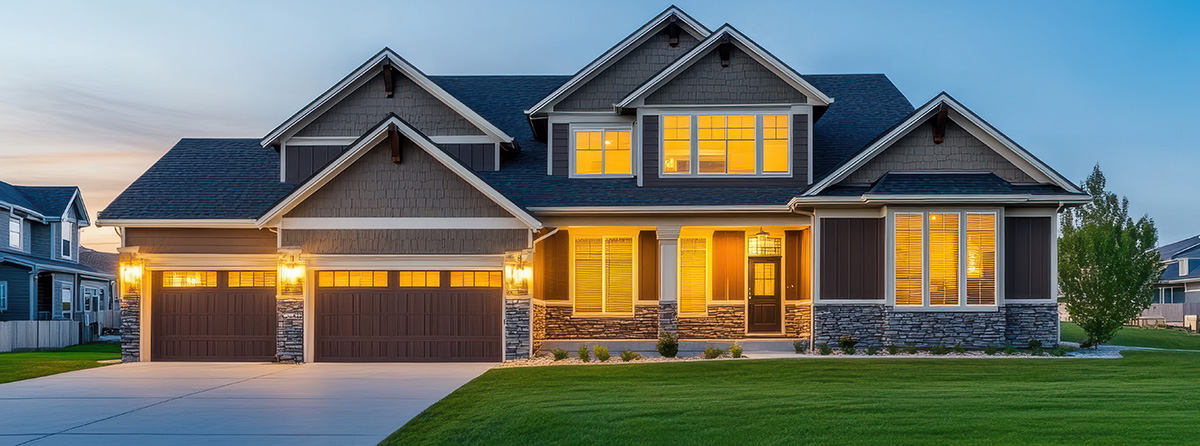
Get a free, no-obligation estimate from a crew that knows Colorado soil, Colorado weather, and how to finish concrete that lasts.
Accessibility
Adjust the site to fit how you read and browse. Your choices are saved on this device.