
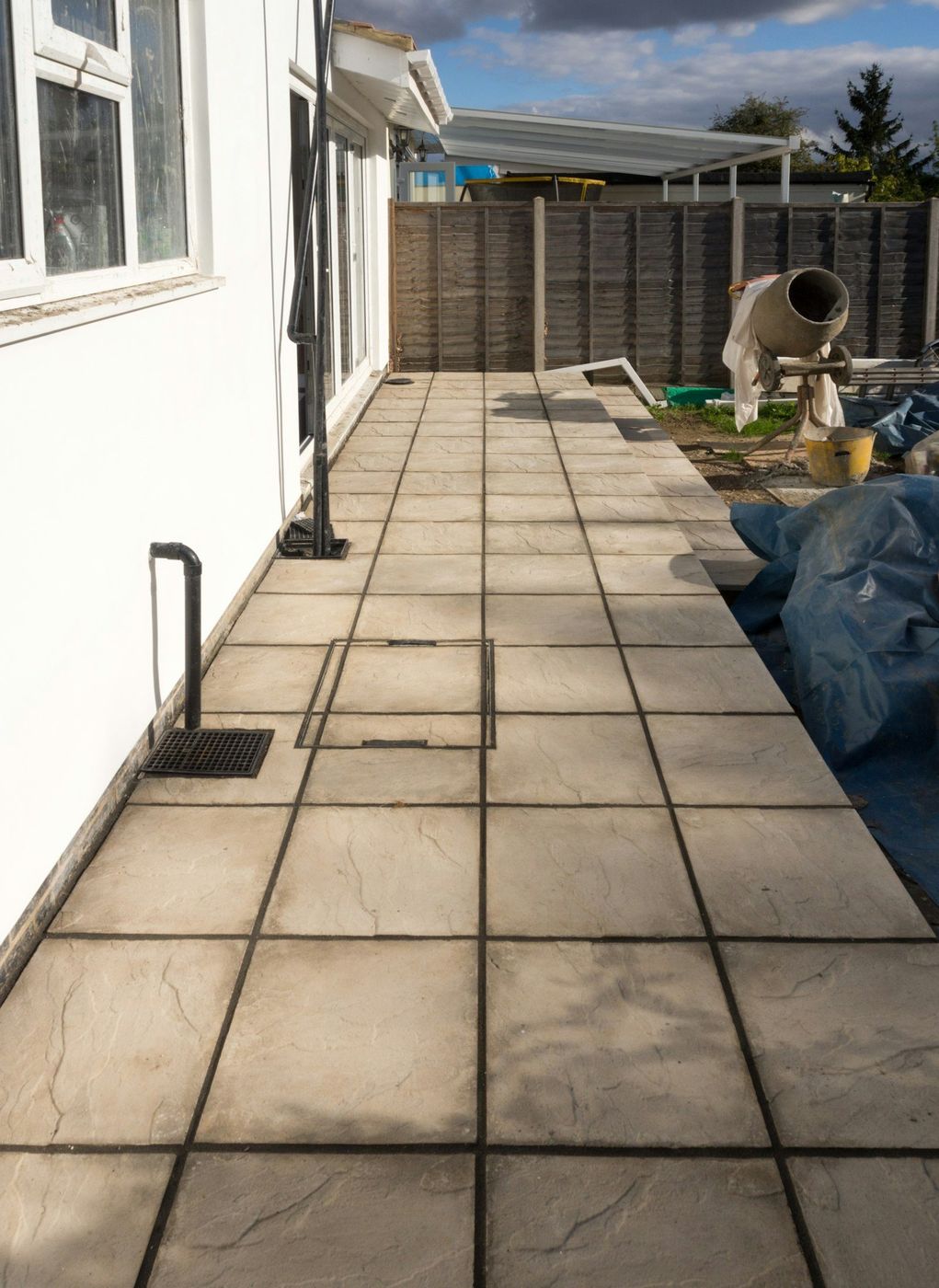
Nobody builds a pergola crooked. It gets that way one winter at a time, from the ground up.
You spot it from the driveway before you spot it from the patio. The pergola over the back seating area used to run parallel with the fascia, and now one corner rides a little high, the shade beams tip downhill, and the whole frame reads crooked from thirty feet out. The carpenter didn't build it that way. The ground rearranged itself underneath.
Post footings are small concrete with an outsized job. Around Lone Tree we ask them to do it in soil that changes volume with moisture and in frost that shows up every single fall. We set footings for pergolas, shade structures, covered patios, and porch columns, and a good share of our work is replacing ones that somebody put in twelve inches deep on a Saturday.
| What you see | What's going on underground | What it takes to fix |
|---|---|---|
| One corner sitting higher than the rest | Frost or swelling clay lifting a shallow footing | Remove and reset that footing below the freeze line |
| Post leaning away from the house | Footing tipping as saturated soil gives on one side | New footing plus drainage correction at that corner |
| Gap opening under a post base | The structure was lifted and then dropped back short | Reset the support, do not shim and hope |
| Rust staining and rot at the post bottom | Post buried in soil or sitting flat on wet concrete | Standoff base hardware that lifts wood off the surface |
| Cracked patio slab radiating from a post | Post set through the slab with no independent footing | Isolate the post on its own footing below the slab |
Your house wins this fight by being heavy and deep, with footings well below frost and weight above them that argues with any soil trying to push up. A pergola has neither advantage. Four skinny posts, almost no weight, and often a hole that stopped as soon as the digger hit something firm.
So when moisture gets under a shallow footing and then freezes, or when clay takes on water and expands, the pergola is the easiest thing in the yard to lift. A fraction of an inch per season is enough to show, because a small tilt at the base turns into a big one out at the end of a rafter. The mature backyards around Fairways and Montecito supply plenty of examples, since anything standing there has ridden out a long stack of winters. Newer properties call just as often, usually because posts went in during a rushed autumn.
Depth is not negotiable and it's the thing most often cheated. Get the bearing surface below where the ground freezes, verify it's actually holding, and the seasonal lifting stops being your problem. Diameter follows the load, modest on most pergolas, though the hole still has to fit a proper cage of steel with cover on all sides.
Then the hardware, which people underestimate. A pergola with a solid roof or fabric shade catches wind the way a sail does, and around here the wind is a genuine load in the uphill direction. That means the post base has to resist uplift, tied into anchor bolts or embedded straps that go into the concrete while it's still wet. It also means a standoff base, so the bottom of the post sits above the surface rather than wicking water out of a puddle for the next twenty years. Set the post in a bucket of concrete and you get rot on a timer.
Send a photo from where you first noticed it. We'll tell you whether it's the footings or the framing, and the estimate costs nothing.
Spring through fall is the sweet spot, and if we can pick, we take September and October. The ground digs easily, holes stay dry, concrete cures at a sensible pace, and the footings are fully set before the first hard freeze arrives to test them. Early summer works too, though afternoon storms mean we start at daybreak and keep plastic on the truck.
Winter work is possible on small footings. We break through the frozen crust, thaw the bearing surface, use warm mix water, and blanket the tops. It costs more and it takes longer, and we're honest about that. If your project is a spring pergola for summer shade, calling us in February to get on the schedule is smarter than calling in May, because everybody in the neighborhood wants outdoor work done in the same eight weeks.
Still unsure about something?
Call the crew at (303) 569-4046 and we will talk it through.
Get a free, no-obligation estimate from a crew that knows Colorado soil, Colorado weather, and how to finish concrete that lasts.
Accessibility
Adjust the site to fit how you read and browse. Your choices are saved on this device.