
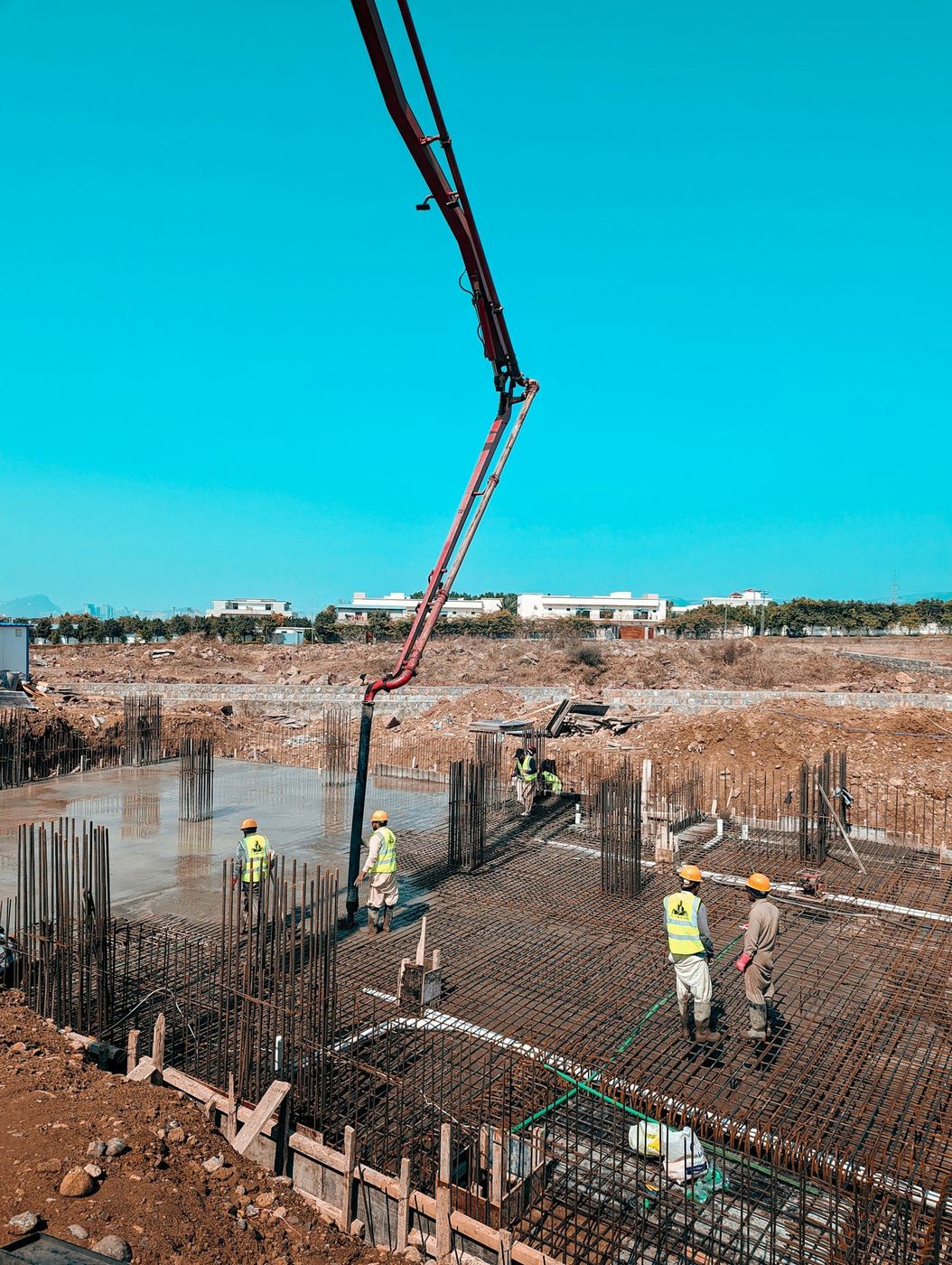
Polyurethane injected through pencil-sized ports, priced by the pound of material it actually takes.
The first question is always what it costs. Fair enough, so let's talk about how foam gets priced, because it isn't by the square foot the way people assume. Polyurethane jobs are quoted on material weight and the number of injection points, which means the size of the hidden cavity under your slab matters far more than the size of the slab itself.
That's the whole value story in one sentence. A large patio sitting on a thin void can come in surprisingly reasonable. A small stoop over a deep washout can cost more than the patio. Nobody likes hearing that a quote depends on something neither of us can see, so we probe, we sound the concrete, and we give you a range with the variables spelled out instead of a number that changes on the day.
Cured polyurethane is light. Depending on the density we run, you're looking at a few pounds per cubic foot against roughly a hundred for a cement slurry. Light matters twice. It matters structurally, because we're not asking already tired soil to carry a new load, and it matters on your invoice, because we buy the chemical by weight and pump exactly what the cavity swallows.
So the variables are simple to list and impossible to eyeball. How deep is the void. How far does it run past the visible dip. Is the soil loose enough that foam keeps traveling into places you don't need it. How many inches of lift are we asking for. A quarter inch correction on a walk in Montecito and a two inch correction on a garage approach in Heritage Hills are not the same job, even if the slab dimensions match exactly.
| Cost driver | Which way it pushes | What you can do about it |
|---|---|---|
| Depth of the cavity | Up, sharply, since fill volume is the material bill | Nothing, but catching settlement early keeps the void small. |
| Inches of lift required | Up, and it compounds with cavity depth | Call at the first quarter inch instead of the first full inch. |
| Soil looseness under the slab | Up, because foam migrates instead of stacking | Fix drainage first so the ground stops washing out. |
| Number of separate panels | Up per panel, since each needs its own port pattern | Bundle neighboring slabs into one visit. |
| Access for the hose and rig | Mildly up on tight backyards | Open the gate and clear a four foot path. |
| Surface finish on top | Up on stamped or colored work | Accept a small color variance, or plan a reseal after. |
Foam wins on speed and on weight, full stop. A settled garage apron in RidgeGate that a family needs to park on tonight is a foam job. So is an interior basement slab, where we can work through half-inch ports with no mixing water and almost no mess. Same for any pool surround or narrow side yard where a mud rig simply can't reach. And because the cured polymer shrugs off water, it doesn't erode back out of a spot that stays damp.
Where it doesn't pay: giant open cavities under thick concrete. Filling a big volume with an expensive polymer when a cheaper heavy fill would do the same work is a bad trade, and we'll say so. We'll also talk you out of lifting a slab that's already broken into pieces. Foam raises concrete. It doesn't glue it back together.
Tell us the slab, the dip, and where it is on the property. We'll walk you through the cost drivers on the phone.
Polyurethane is far less fussy about the calendar than anything that involves cement and water. The reaction generates its own heat, so we lift through most of the Front Range winter as long as the ground isn't frozen solid enough to give us a false floor. That's the real limit, not the thermometer. Frozen soil props a slab up, we lift to what looks like grade, and in March the whole thing settles back.
Best case, you call after the spring runoff has done its damage and before the July storm cycle refills the cavities. May and September are our cleanest windows at 5,817 feet. And if a hailstorm or a blown irrigation line dumped water under your walk last week, give the ground a few dry days before we shoot. Foam pumped into saturated soil is money spent on a moving target.
The homeowners who spend the least are the ones who called us over a dip you could barely see. The expensive jobs are always the ones somebody watched get worse for four years, because by then we're not lifting concrete, we're filling a basement's worth of empty space first.What the crew sees on site
Still unsure about something?
Call the crew at (303) 569-4046 and we will talk it through.

Get a free, no-obligation estimate from a crew that knows Colorado soil, Colorado weather, and how to finish concrete that lasts.
Accessibility
Adjust the site to fit how you read and browse. Your choices are saved on this device.