
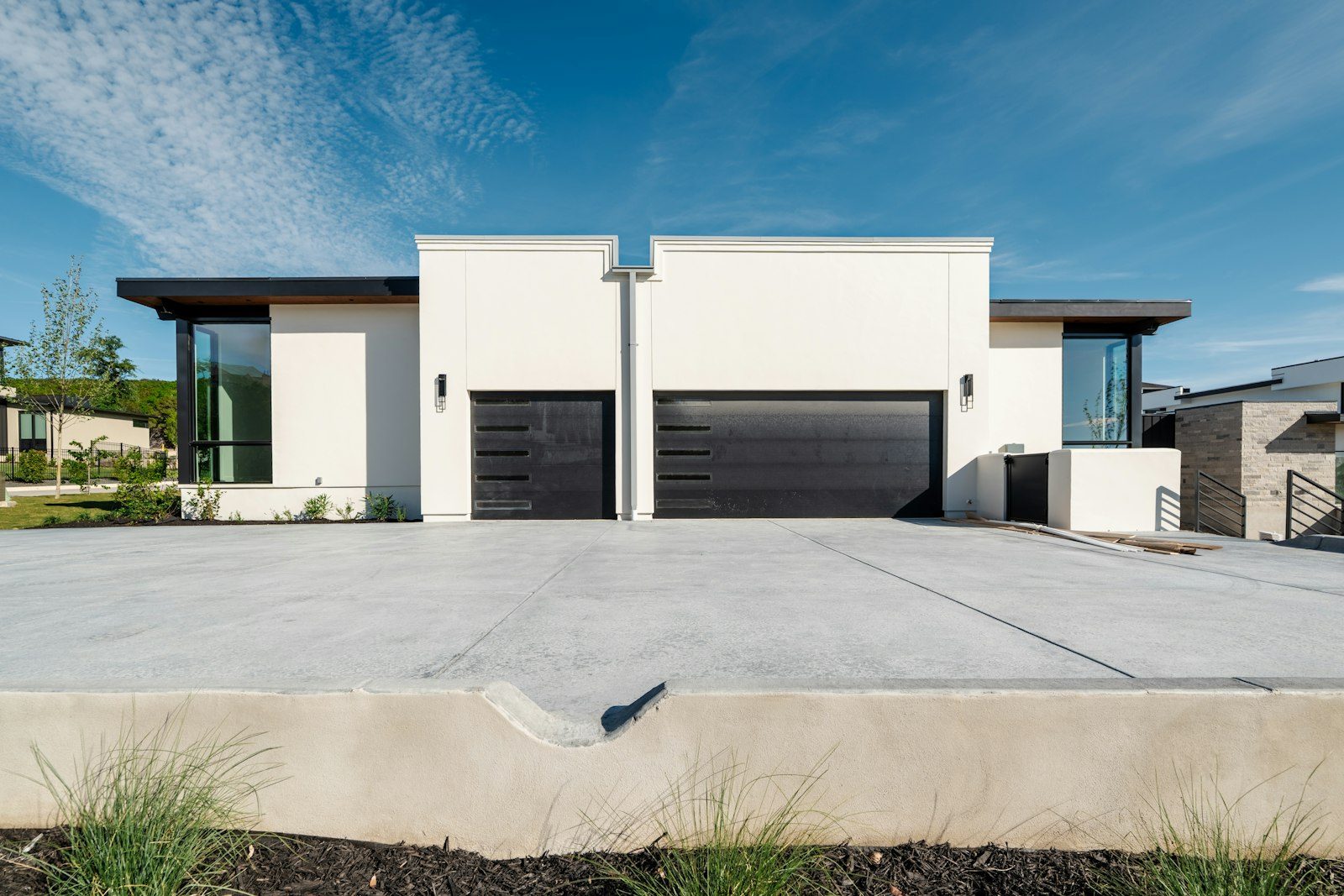
The smallest maintenance line on any property, and the one that keeps getting postponed until it stops being small.
Sealing is the least expensive thing you will ever do to concrete and the item with the best return, which is precisely why it slides to next year. Then the year after. Meanwhile the surface starts letting water into its pores, the winter thaw-and-refreeze cycles begin prying at it from the inside, and a cheap afternoon of maintenance grows into a resurfacing project.
We seal new work, we reseal decorative work on a cycle, and we get called to a lot of slabs in Carriage Club and Montecito where the sealer quit years ago and nobody noticed. That's the trouble. A sealer doing its job is invisible, and the only way to know it's still there is to check on purpose.
Concrete is porous. Not visibly, but at a scale that matters, and everything destructive that happens to a slab in this climate starts with water getting into those pores. It freezes overnight, thaws by mid-morning, freezes again the next evening. Do that a few dozen times a winter and the surface comes apart from the top down. Dissolve road chemicals in that water and it speeds up.
A sealer interrupts the first step. That's all. It doesn't add strength, doesn't fill cracks, doesn't stop soil movement. It keeps liquid out of a place liquid shouldn't be, and on decorative work it also stands between high-altitude ultraviolet and your color.
| What you care about | Penetrating | Film-forming |
|---|---|---|
| Where it ends up | Soaks in and reacts below the surface | Cures into a thin layer riding on top |
| What it looks like | Nothing changes. Concrete stays matte | Wet-look sheen that pulls color and aggregate forward |
| Freeze-thaw | Blocks water at the pore, which is the whole fight | Blocks it too, for as long as the film stays intact |
| How it wears | Can't peel. There's no film to peel | Wears through in the traffic lanes first, starting the reseal clock |
| Traction | Doesn't change the surface | Can get slick. We broadcast grit into it on walks and pool decks |
| Reseal cycle | Long, often many years | Two to three years on decorative work in our sun |
| Best used on | Driveways, garage floors, plain gray flatwork | Stamped, stained, washed stone, anything where color is the point |
Square footage matters least of anything on the list, which surprises people. Rolling or spraying sealer across a clean slab is fast. What costs money is everything that happens before that.
Condition is the big one. A slab that has never been sealed needs a wash. A slab with a failed film needs stripping, and stripping is a real project: chemicals, agitation, and a lot of rinse water to collect. Access comes second, since a backyard patio behind a gate takes longer to set up than a driveway. Then product, then extras like traction additive and detailing at edges and steps. When two bids sit far apart, the gap is almost always stripping, and one of them plans to seal straight over a failed coat.
If it beads, you're fine. If it darkens the concrete and soaks in, call us before winter does the arithmetic for you.
Moisture ruins more sealing jobs than anything else. Coat a slab that's still damp inside and the trapped water turns the film white and cloudy. A new pour holds a great deal of its mix water for weeks, which is why no film-forming product goes on fresh concrete. Even on an old slab we want a dry day beforehand, and we check shaded areas separately, since a north-side patio stays damp long after the sunny half looks ready.
Late spring through early fall carries most of this work, and September is close to ideal: warm enough to cure a film, cool enough that the sealer isn't flashing off the roller before it levels. High summer means early starts. Once nights drop below freezing we stop. If your reseal is overdue in November, shovel carefully through one more winter and let us get to it in May.
The white cloudy patio is the call we get every spring, and it's almost always the same story. Somebody sealed it themselves after a rainy week, or they sealed a slab that was only three days old. The product wasn't the problem. The water underneath it was.From the crew lead on these jobs
Still unsure about something?
Call the crew at (303) 569-4046 and we will talk it through.
Get a free, no-obligation estimate from a crew that knows Colorado soil, Colorado weather, and how to finish concrete that lasts.
Accessibility
Adjust the site to fit how you read and browse. Your choices are saved on this device.