
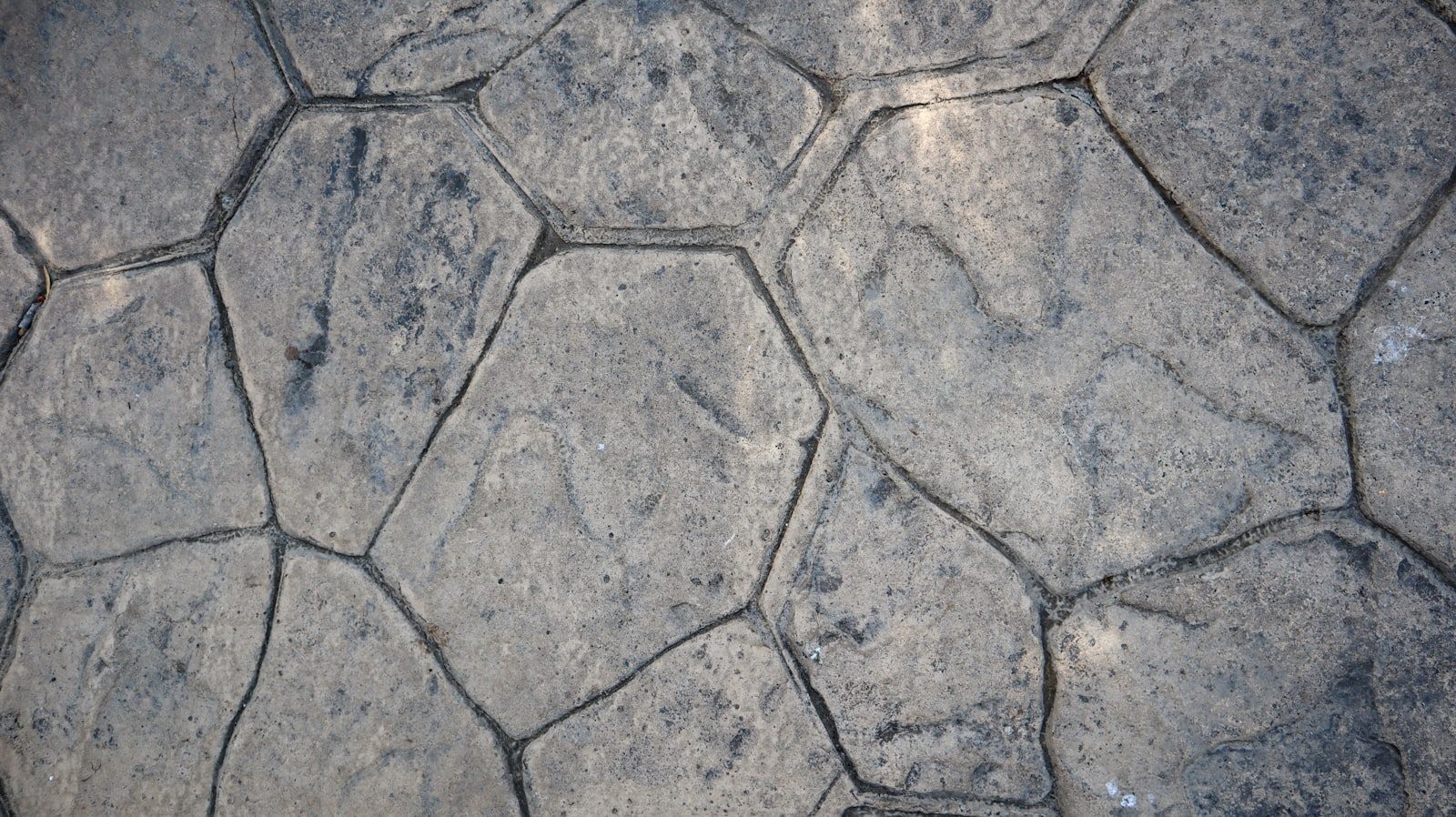
The pattern is the last two hours of the job. The first two days decide whether it lasts.
Most people shop for stamped concrete by scrolling photos. Ashlar slate, flagstone, wood plank, a color pulled from the stone on the house. Fair enough; that's the fun part, and the results around Heritage Hills and Carriage Club show what the medium can do. But here's the thing the photos never show: a stamped slab is still a slab. Under the texture sits the same base, steel, and mix that a plain gray driveway needs, and skipping any of it costs double on decorative work.
Why double? Because when plain concrete cracks or scales, you patch it and move on. When a stamped surface fails, there's no invisible repair. The pattern, the color, the years of sun on the sealer, none of it can be perfectly matched after the fact. So we build the boring part like it matters. It does.
Strip away the texture mats and a stamped project is a structural pour: excavated subgrade, compacted road base, bar on chairs, an air-entrained 4,000 PSI mix. The clay under Lone Tree doesn't care that your patio looks like quarried stone. It swells and shrinks exactly the same, and a decorative slab without real support cracks exactly the same, just more expensively.
Then comes the choreography. Color goes in, either through the whole mix or worked into the surface. Release agent, mats, and a crew moving fast, because texture has to be pressed while the slab sits in a narrow window of set. Miss the window and the pattern goes shallow and smeared. There are no second chances on stamping day, which is why it's not a job for whoever's cheapest on Thursday.
Stamping up here is a race. The dry air and the altitude sun pull moisture off the surface faster than people expect, so the window between too wet and too late is tight. We staff heavy on stamp days for exactly that reason. The crews that get burned treat a stamp pour like a broom pour with mats. It isn't.What our crew lead tells homeowners
| Question | Stamped concrete | Pavers |
|---|---|---|
| The look | Continuous pattern, custom color, borders poured into the same slab | Modular units with visible repeats and joints everywhere |
| Weeds and ants | Nothing to grow through | Joint sand is an open invitation to both |
| Snow shoveling | One smooth plane; a shovel glides | Blade catches edges wherever a paver has heaved |
| Life on clay soil | Moves as one reinforced piece over a compacted base | Individual units tilt and wander as the clay cycles |
| Upkeep | New sealer every 2 to 3 years | Re-sanding joints and re-leveling settled sections |
| Repairs | Difficult to patch without a visible mismatch | Single units swap out easily |
UV at 5,817 feet is the quiet enemy of decorative concrete. It doesn't crack anything. It just bleaches. Pigment that's protected by sealer keeps its depth for years; pigment left bare goes chalky and flat, and hail peppers an unsealed surface with light spots that read like scars. The sealer is the sacrificial layer, and treating it that way is the whole maintenance story.
So plan on a reseal every couple of seasons, three at the outside. It's an afternoon of work on a clean, dry slab, and it's the difference between a ten-year-old patio that still looks poured-last-fall and one that looks tired at five. We tell every stamped customer this before contract, not after. Earth tones hold up best in our sun; the deep charcoals show fade first. Pick accordingly.
Bring a photo you love and we'll tell you exactly how that look holds up at altitude, and what it takes to keep the color.
Stamping wants moderation. Spring and fall give the most forgiving set times and the most even color, so May, June, September, and October are prime. High summer works when we pour at first light and chase the texture before the heat compresses the window. Late fall, the sealer becomes the constraint; it wants dry days and mild temperatures to cure right.
Deep winter stamping? We'll be straight with you: it's rarely worth forcing. Cold stretches the set unpredictably and blankets can mottle fresh color. If your project lands in January, we'd rather lock your spot for the first spring window than hand you a compromised pattern. Some jobs reward patience, and this is one.
Still unsure about something?
Call the crew at (303) 569-4046 and we will talk it through.
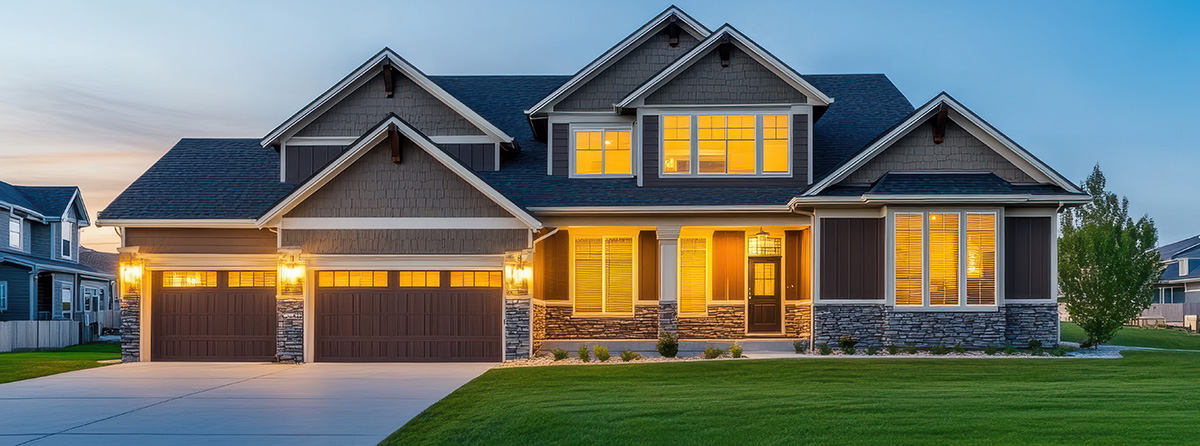
Get a free, no-obligation estimate from a crew that knows Colorado soil, Colorado weather, and how to finish concrete that lasts.
Accessibility
Adjust the site to fit how you read and browse. Your choices are saved on this device.