
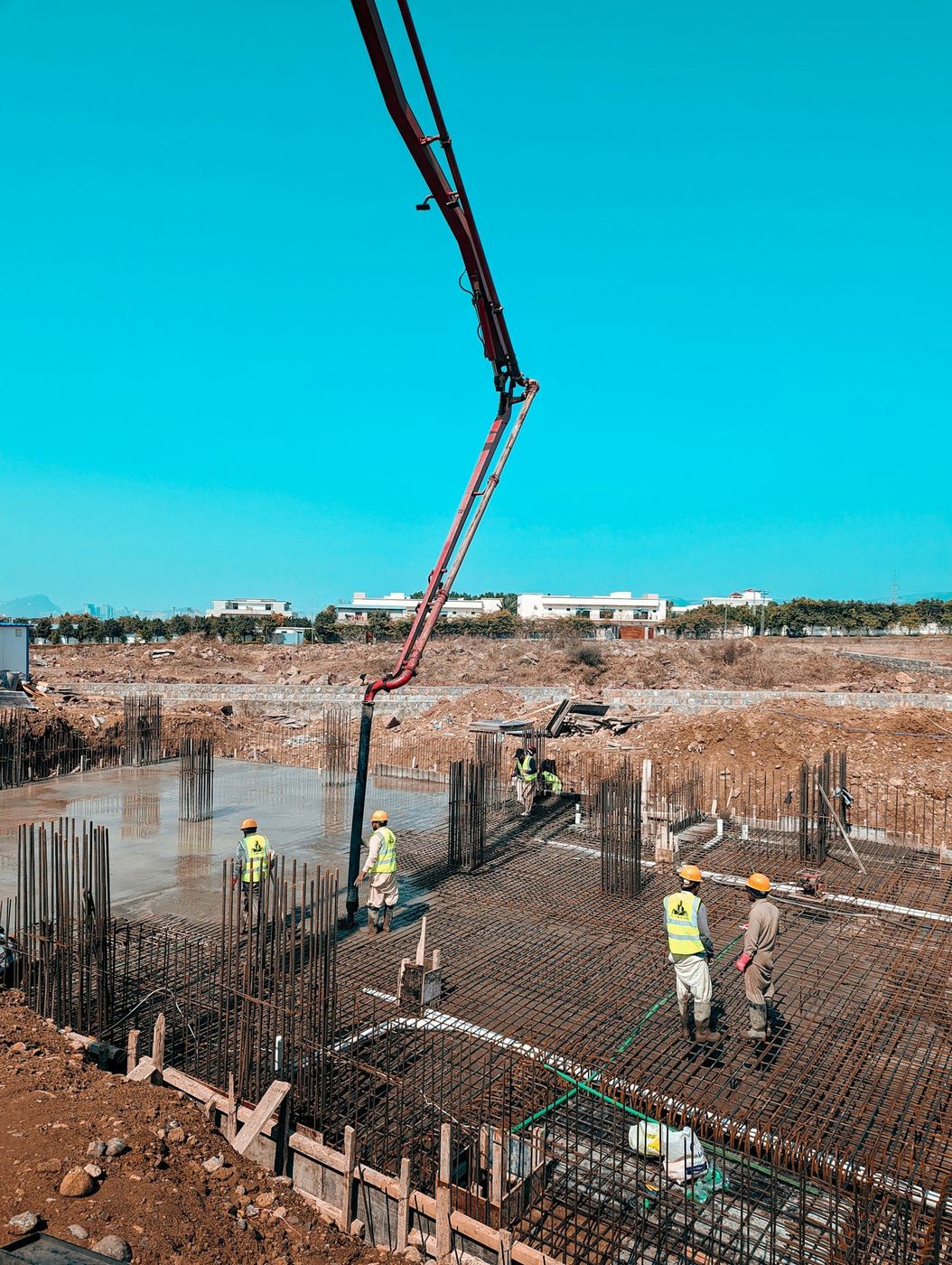
Small slab, four real decisions. Get them in the right order and the rest is easy.
Nobody agonizes over a shed pad until they start pricing one. Then the forks in the road arrive all at once. Concrete or packed gravel. Match the building footprint or run wider. Bolt the walls down or let the thing sit there. Pour before you buy or buy before you pour. None of those are trick questions, but the answers lean on each other, which is what makes a simple pour feel complicated.
Our job at the estimate is to sort them for your yard. Go Denver Concrete works across the Front Range, we carry license, bond, and insurance, and there's a structural engineer in house for the outbuildings that turn out to be more building than shed. Most don't. Most are one morning of concrete and a decision list you can knock out in ten minutes.
A compacted gravel bed under a small resin storage box is fine. Nothing rolls in and out, nothing heavy sits in one spot, and if it shifts a little nobody cares. The line gets crossed the moment the building has a wooden floor, a door you use weekly, or contents worth protecting. Gravel lets moisture up, gives mice a way in, and wanders under point loads.
Concrete answers all three, and it does one thing gravel never will: it gives you an anchor. A slab holds bolts, and bolts hold a building through the wind that comes off the foothills. That matters more on exposed lots out toward Ken Caryl than in a sheltered yard in Columbine, though we've seen walls racked in both. If the building will still be there in ten years, pour it.
Pour the slab to the wall line, not past it. A margin of exposed concrete around the outside catches every drop of roof runoff and holds it against the bottom of the siding, and that's how a shed rots from the ground up. The exception is out front. Add a real apron at the doors, pitched away, wide enough to swing a mower through without dropping a wheel off the edge.
Then look uphill. On sloped ground west of town, whatever crosses that yard will meet your new slab, so we cut a shallow diversion above it or set the pad a touch high and feather the grade back. On the flats it's the opposite problem: water arrives and has nowhere to go. Both get solved with dirt work before concrete shows up.
| Your situation | What tends to go wrong | How we sequence it |
|---|---|---|
| Building ordered, delivery already scheduled | Concrete cures on the manufacturer's timeline, not yours | We need the anchor layout and about two weeks of runway before the truck comes |
| Pad poured, building picked later | The kit you fall in love with is four inches wider than the slab | Pour to a size you've confirmed, and hold the anchors for wedge bolts after |
| Both landing the same week | A delivery crew standing on green concrete | Pad goes in first with days to spare, or the building gets staged on the driveway |
| Existing shed, failing base underneath | Nobody wants to move a full building twice | Empty it, lift or dismantle, rebuild the base, then set it back |
| Kit in boxes in the garage | This is the easy one | Measure the actual plate dimensions off the sheets and cast bolts to match |
Send us the footprint and the anchor plan. We'll size the pad, check the spot, and quote it free.
An unheated shed puts no warmth into the ground, so the soil below freezes the same way the open yard does. A light garden building rides that out on a thickened-edge slab over good compacted base, and the base does the real work by draining instead of holding water where it can freeze. Heavier structures, or anything with equipment and swinging doors, get frost-depth footings and an engineer's eyes first.
Booking comes down to workable ground. April through October runs easy, and late summer is the sweet spot: the pad is cured and waiting before delivery season slows. Winter pours are possible with warm mix and blankets, though a small slab sheds heat fast and we'd rather put you on the spring calendar. Give it seven days before the building goes on, and skip ice melt the first winter.
Still unsure about something?
Call the crew at (303) 569-4046 and we will talk it through.
Get a free, no-obligation estimate from a crew that knows Colorado soil, Colorado weather, and how to finish concrete that lasts.
Accessibility
Adjust the site to fit how you read and browse. Your choices are saved on this device.