
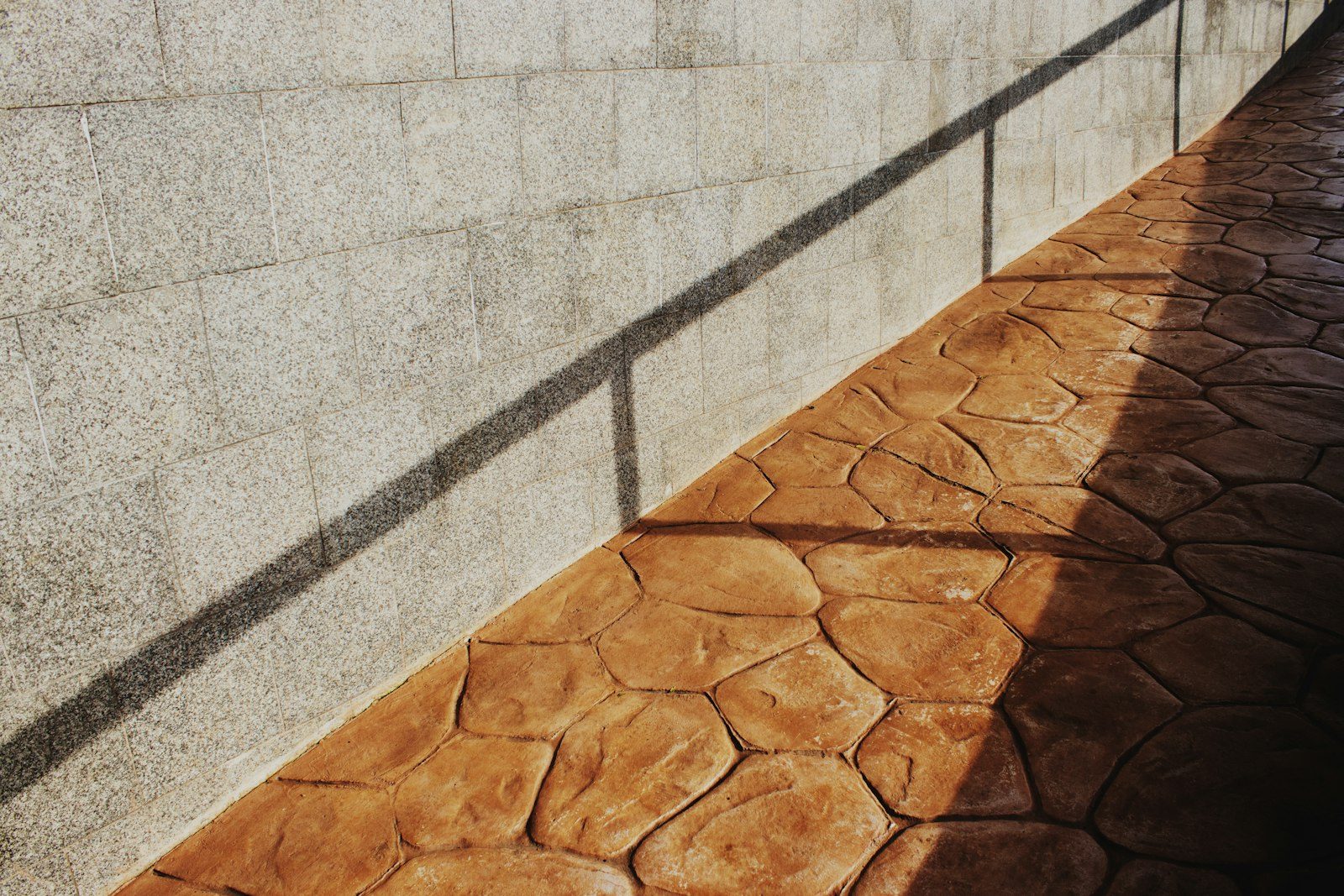
A front walk stays flat only if the eight inches under it were built right.
Most failed front walks around here never cracked from traffic. They tilted. A panel dropped a half inch over a wet winter, the joint pulled open, water got in, and the next February pried it wider. That story happens below the concrete, in six or eight inches of dirt, and it starts with water somebody pointed at the walk years ago. A downspout. A sprinkler head. A yard falling the wrong way.
So the trench gets our attention. Go Denver Concrete is licensed, bonded, and insured, with a structural engineer on staff. On a path job the most valuable hour comes before anyone orders concrete: the one with a shovel, a compactor, and a hard look at where your water ends up. Handle the ground and the walk stays boring for twenty years. Boring is the objective.
We strip topsoil, roots, and anything spongy until the shovel stops sinking. What shows up next depends on your side of town. On the flats near the historic core and through Columbine it's tight clay that holds water like a bowl. Push west into Ken Caryl and the ground turns coarse and rocky, with cobble big enough to argue with. Southbridge hands us both in one trench.
The recipe barely changes. Soft pockets get dug deeper and filled with road base instead of hope. Then four to six inches of aggregate, damp, placed in two lifts, each one run over with a plate compactor. Two lifts, not one. Dump it all at once and the gravel packs on top while the bottom stays fluffy, and that fluffy layer is what drops a panel three winters later.
| Source | What it does below the slab | Our fix |
|---|---|---|
| Downspout beside the path | Soaks one strip of subgrade every storm, so that panel settles alone | Carry the water past the concrete, or sleeve a line under while the trench is open |
| Sprinklers throwing on the surface | Base stays wet all summer, and clay that never dries never sits still | Flag the heads at layout, then move or swap them |
| Snowmelt off higher ground | Runs the uphill edge and undercuts the base sideways | Shallow swale above, and pitch across the width, not down the length |
| Roof valley dumping in one spot | Trenches the mulch, then the gravel, then the dirt holding a panel up | Splash block plus a graded route away from the house |
| Grade falling back toward the house | Water parks in the joints and freezes there, over and over | Regrade the strip and set the walk at the corrected height |
Thirty-six inches is the narrowest walk we'll build, and we don't recommend it. Forty-eight lets two people reach the door side by side and lets you carry a basket without walking the edge. Wide also fights heave. A ribbon that skinny carries almost no mass and a lot of edge, so it lifts in a winter that leaves the driveway beside it untouched.
Fall matters as much as width. About a quarter inch of drop per foot, running across the walk toward the lawn, moves water off before it freezes in place. Joints go in tight, spaced near the width of the slab, sawed the same day. Through a curve they run out from the center of the radius so the crack has an honest place to go. Four inches thick, 4,000 PSI air-entrained mix, steel where the walk ties into a porch. Builder paths in Highland Walk and The Hills at Piney Creek often came in thin and jointed wide, which is why those crack mid-panel.
We'll walk the line with you, check the downspouts and the fall, and put a number in writing. Free.
Digging toward the foothills is slower work. The trench hits rock, the crew changes tools, and now and then the right answer is to raise the walk a little and bring base up to it instead of fighting a stone that's been winning since before the subdivision. On slope we also watch what a new ribbon does to water that used to cross that ground freely. Concrete is a dam if you let it be one.
September is our favorite stretch for path work: warm days, cool nights, no afternoon storm racing the finishers. April through October all works, and summer pours start early. Winter walks happen too, with warmed mix water, accelerators that carry no chloride, and blankets over the fresh slab. Frozen subgrade is a hard no. It thaws, it drops, and your walk goes with it.
We pulled a front walk last spring that had an inch of loose sand under it and nothing else. Somebody screeded the sand flat and poured. Held up fine until the first wet fall, then every panel went its own direction.Our crew lead, after the walkthrough
Still unsure about something?
Call the crew at (303) 569-4046 and we will talk it through.
Get a free, no-obligation estimate from a crew that knows Colorado soil, Colorado weather, and how to finish concrete that lasts.
Accessibility
Adjust the site to fit how you read and browse. Your choices are saved on this device.