
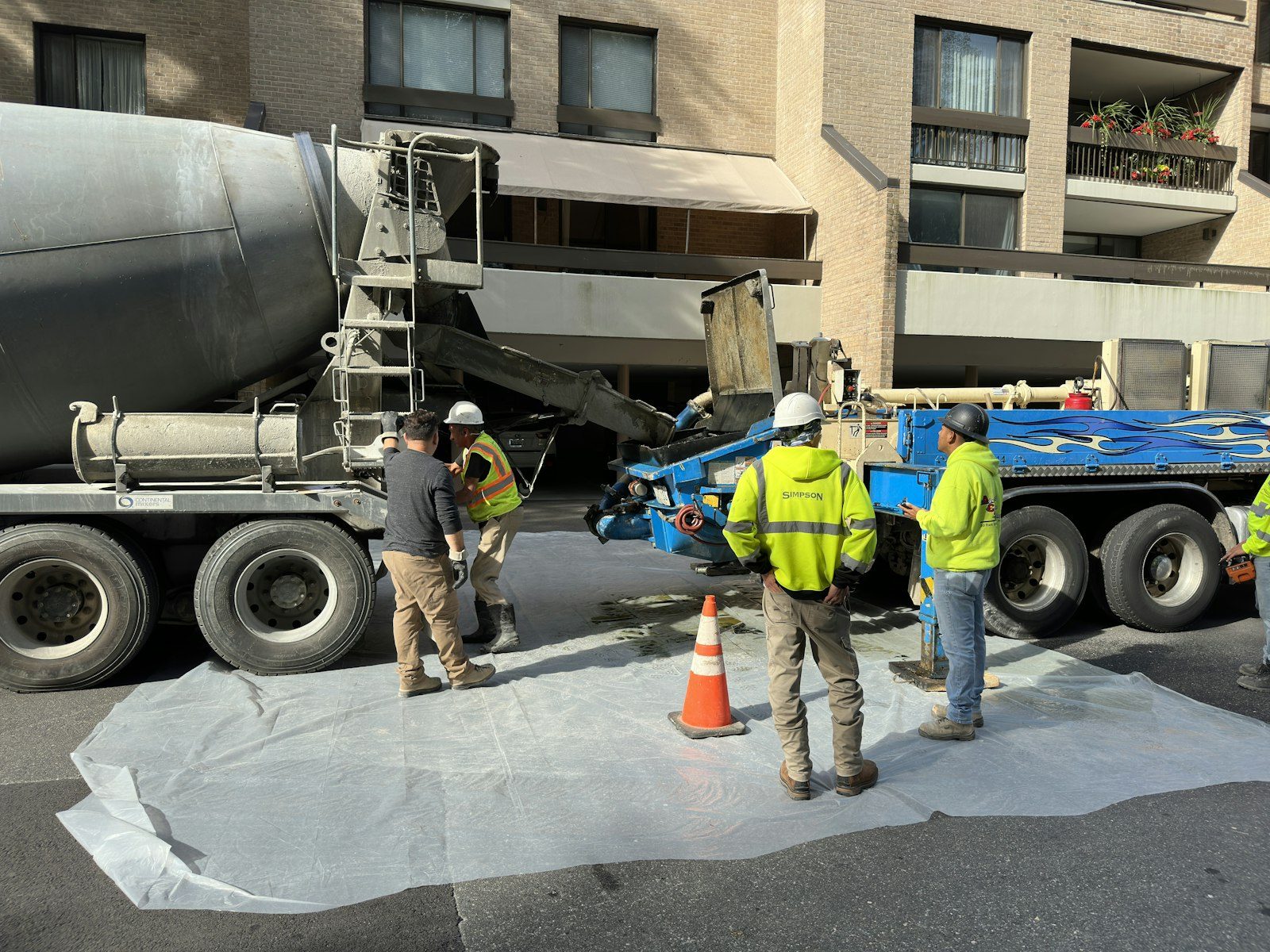
The rig sits still eight months a year. That's the load case nobody plans for.
Mid-January thaw is when a bad parking spot gives itself away. A week in the teens, then a Chinook shows up and it's in the fifties by noon. Snowpack around the rig turns to running water, the top few inches of ground go soft while everything below stays locked, and fourteen thousand pounds of trailer starts pressing into mud that has nowhere to drain. By nine that night it's all frozen again, with the tires an inch deeper than they were at breakfast.
Do that four or five times a winter and the rig sits crooked on ground that never recovers. That's the whole argument for a real pad, and it's why we build them thicker than a driveway, with steel on chairs and grading that sends melt somewhere other than under your axles. Licensed, bonded, insured, and there's a structural engineer on the payroll when a slab needs one.
A car spreads its weight across four contact patches and then drives away. A trailer parks. Tandem axles put a stack of weight onto a narrow band of slab and hold it there through every freeze the winter has, and the leveling jacks concentrate even more into four spots the size of a dinner plate. Add the tongue jack. That's where we see gravel pads dish first.
So the spec climbs. Six inches where the tires and jacks land, 4,000 PSI with air entrainment, and number four bar tied on a two-foot grid, up on chairs where it belongs. Not mesh. Mesh ends up in the dirt half the time, and even placed right it isn't what a fifth wheel deserves. Under all of it goes compacted road base, deeper than a car needs, because the job is spreading that load before it reaches soil that moves.
| Location | What it changes | What we watch |
|---|---|---|
| Flat side yard beside the drive | Simplest build, easy tie to the existing apron | Gate width and whether the truck can reach it |
| Cross-slope side yard on a foothills lot | Cut and fill, sometimes a low retaining edge on the downhill side | Compacting fill properly so the low half doesn't settle later |
| Uphill of the house | Everything the pad sheds runs toward the foundation unless we redirect it | Swale or drain on the low edge before any concrete gets ordered |
| Back of the property down a grade | Access road matters as much as the pad itself | Whether a loaded rig can climb back out in wet weather |
| Along a fence line | Long and narrow, with the swing happening off the pad | Room to jackknife without a wheel dropping off the edge |
Measure the rig, then add the truck if it stays hitched, then add a few feet at the tail so the bumper isn't hanging over dirt. Width should let you open the awning side and still walk around. The mistake we get called back for isn't the main slab, though. It's the apron.
The apron is the piece between the driveway and the pad where a rig turns while it's still under power. Tires scrub, weight shifts sideways, and the corner takes a beating no straight run ever does. Build that transition thin and it spalls in three seasons. We pour it at pad thickness, tie the steel through, and set the elevation so there's no lip to climb. On the sloped lots out toward Ken Caryl the apron does double duty as the grade change, which is exactly why it needs the extra concrete.
Length, weight, and where you want it. We'll walk the access, check the fall, and quote it in writing at no cost.
Summer is the easy season. May through early October is our window, and a September slab gets a long cool cure with no monsoon cell racing the crew. Spring works once frost is fully out, which on shaded north-facing ground near the foothills runs later than people expect. Cold-weather pours happen when a schedule demands one: warm batch water, an accelerator with no chloride in it, blankets over the slab overnight. Frozen subgrade is where we stop.
Once it's yours, go easy the first winter. Shovel, sand, and leave the deicer bag closed. Magnesium chloride is rough on young surfaces and it collects wherever water stands. Snow sliding off the rig roof piles along one edge and lingers, so knock that pile off the slab on a warm afternoon. And put blocks under the jack feet no matter how good the concrete is. Spreading a point load is free.
Still unsure about something?
Call the crew at (303) 569-4046 and we will talk it through.
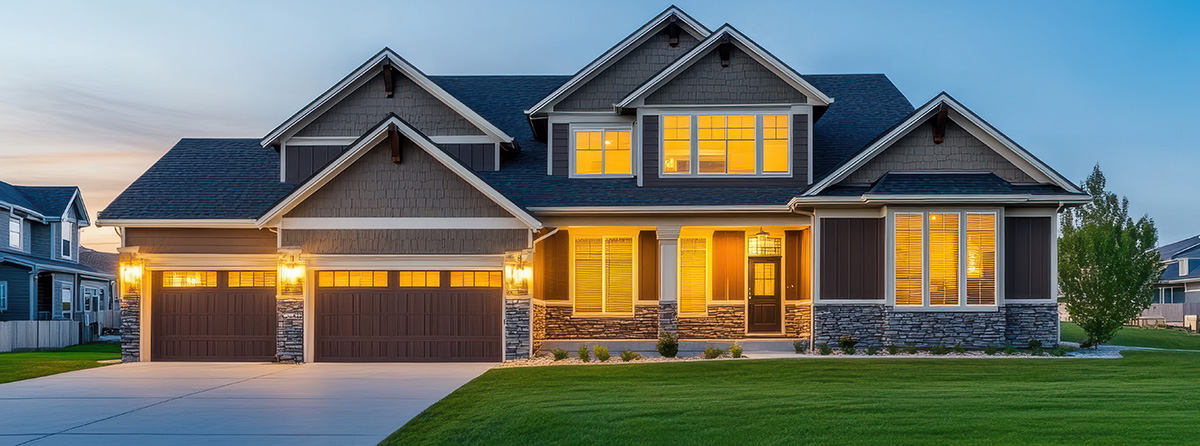
Get a free, no-obligation estimate from a crew that knows Colorado soil, Colorado weather, and how to finish concrete that lasts.
Accessibility
Adjust the site to fit how you read and browse. Your choices are saved on this device.