
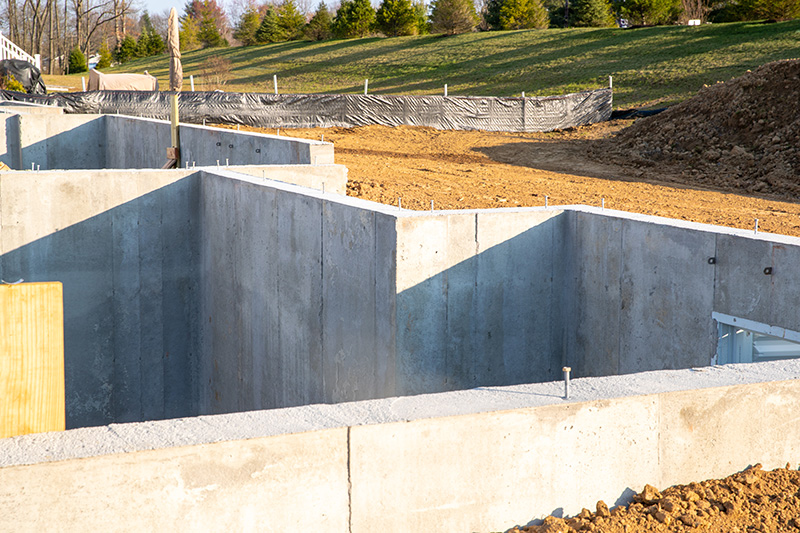
You already bought this floor once. Polishing is the second payment, and it's the smaller one.
There's a floor under your carpet that you already paid for. It came with the house, it went in before the walls did, and it will outlast every covering anybody ever puts on top of it. Polishing is the decision to stop hiding it. What you're buying isn't material, it's labor and diamonds, and that changes how the whole estimate reads.
Which is worth understanding before you compare quotes. With plank or tile, most of what you're paying for arrives on a truck in boxes. With polished concrete, almost nothing arrives in boxes. You're paying for passes across the floor, for the hardener that soaks in partway through those passes, and for however much prep it takes to get the slab ready to accept any of it. Two rooms of the same size can land far apart, and every one of the reasons is visible before we start.
A polish is a sequence, not a product. We start with metal-bonded diamonds coarse enough to cut concrete, flatten the floor, and take off whatever's stuck to it. Then we step finer, and finer again, each pass erasing the scratch pattern the last one left. Partway through, a liquid densifier goes down and reacts with the slab chemistry to harden the surface from the inside. That reaction is why a polished floor can't peel: there is nothing on top of it to let go.
Stop the sequence early and you get a satin floor that still looks and cleans beautifully. Run it all the way out and you get a mirror. The difference between those two is entirely labor, which is the honest reason a high-gloss floor costs what it costs. Nobody is charging you for a fancier chemical. They're charging you for three or four more trips across every square foot with a machine that moves at walking pace.
| The space | What makes it easy or expensive here | What you get back |
|---|---|---|
| Walkout lower level | Wide open, few obstructions, but often carpet adhesive to remove first | Flooring that never needs replacing, and daylight that bounces instead of getting absorbed |
| Attached garage or home gym | Oil and sealer have to come off, and the floor is sloped, which slows the machine | A surface that takes dropped weights and tool carts without chipping or peeling |
| Entry and mudroom | Small square footage, lots of edge work, so the per-foot labor runs high | The one part of the house that meets snowmelt daily and stops caring about it |
| Detached shop | Usually the roughest slab, sometimes patched, occasionally out of flat | Dust control, since a densified floor stops shedding gray onto everything |
| Small commercial suite | Night and weekend work adds hours, and fixtures have to be worked around | A floor that survives cart traffic and never closes you for a replacement week |
Ten minutes with the carpet pulled back in one corner tells us most of what the job will take. We'll give you an honest read and a free estimate.
Aggregate exposure is the biggest lever, and most people have never heard of it. Grind lightly and you polish the cream at the very top, which gives a soft, cloudy look with almost no stone showing. Go deeper and you cut into the sand layer, so the floor reads like fine salt and pepper. Go deeper still and you open the rock, which is dramatic and takes far longer to reach. Deeper exposure means coarse diamonds running longer before the fine work starts.
After that it's what's on the floor and what's in the way. Adhesive, thinset, paint, or an old coating all come off first, and some fight harder than others. Rooms chopped up by walls cost more per foot than one open basement, since the machine handles the middle fast and a person on hands and knees handles every edge. Cracks and old patches need attention too. We fill them, and they stay visible as part of the floor's history rather than vanishing.
What doesn't move the number much: the color of the concrete, the age of the house, or whether you want satin instead of gloss at the same exposure level.
We keep the diamonds inside, and we say no to a polished patio every time. A polished exterior slab holds water on a surface with nowhere to send it, then freezes it dozens of times a winter. It gives up in a few seasons, and it's dangerous wet. Outdoors we'd rather seal a broom or washed finish and let you keep your footing.
Inside, the calendar is wide open all year, which is the quiet advantage of this work. Lower-level finishes around Highland Walk and The Hills at Piney Creek tend to happen over the winter, and the floor slots neatly into that schedule after framing and drywall are done but before trim and doors. Older homes in Columbine and Southbridge are a different job: those slabs have carried three generations of flooring, so prep runs long and the payoff is character. Ken Caryl walkouts excite us most, since a hardened floor in a room with that much glass throws light through the entire lower level.
Still unsure about something?
Call the crew at (303) 569-4046 and we will talk it through.
Get a free, no-obligation estimate from a crew that knows Colorado soil, Colorado weather, and how to finish concrete that lasts.
Accessibility
Adjust the site to fit how you read and browse. Your choices are saved on this device.