
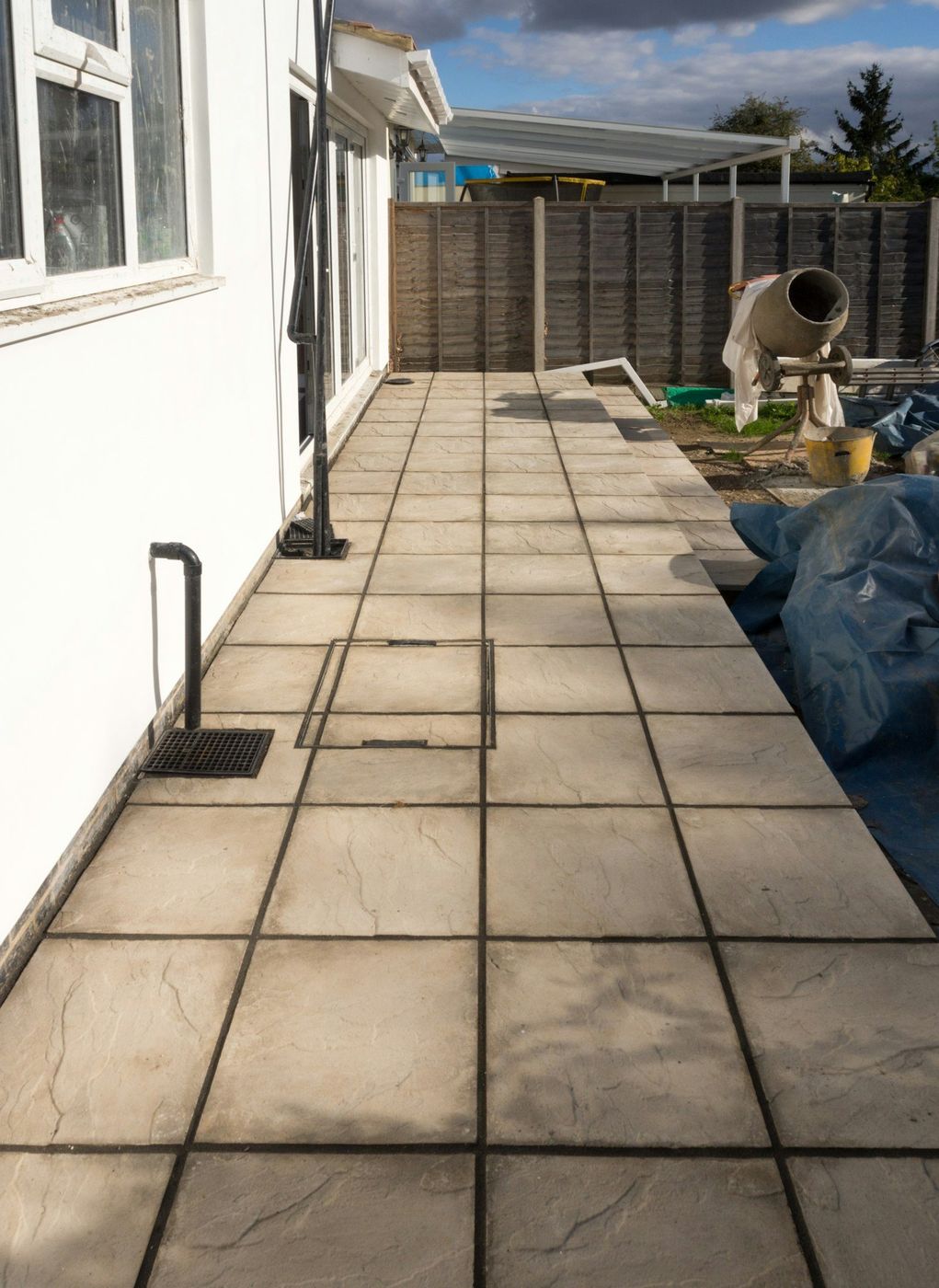
Ask us what an overlay is and we'll tell you what happens to one during its first twelve months.
An overlay is a thin layer of polymer-modified cement bonded onto concrete you already own. True, and almost useless. The answer that matters is what the surface does once the crew leaves: whether the dog's nails mark it, whether a chair drags cleanly, whether it still looks right after a winter of boots and a summer of grilling.
We've been back to enough of these at the one-year mark to know how it goes. A topping on a sound slab, prepped properly and used like a normal patio, holds up fine. One placed over a slab that's still moving, or sealed too soon, or scrubbed with the wrong thing in month two, tells on all of it. Here's how one lives around a Littleton house.
Week one is the fragile stretch. The topping has set but hasn't reached strength, so furniture stays off, the dog stays in, and the hose points elsewhere. Months two through five are when the surface learns what your household is. Chairs dragged out for dinner, a planter that goes down and stays, a spill nobody notices until Sunday. None of that hurts a sealed topping. All of it marks a bare one.
Then the first winter, which is the real exam. Snow gets shoveled, water sits along the north edge where sun never quite reaches, and freeze-thaw works the surface dozens of times between December and March. A topping bonded to a stable slab takes it. One bridging a slab that lifts and drops with the seasons cracks along whatever line the concrete underneath picked years ago.
Thickness is a use question, not a looks question. A skim coat measured in sixteenths suits cosmetic wear and light foot traffic: a covered porch, a courtyard, a patio you look at more than you live on. Push one under a grill cart and hard chair legs and it shows wear in a season.
Most of what we install runs a quarter inch, which handles patio life and shoveling. Stampable toppings go three-quarters when we want a pattern in them. Past roughly an inch it stops acting like a bonded topping and starts acting like a thin unattached slab, which cracks. When somebody needs more than that to fix grade or drainage, the honest answer is that the old concrete comes out.
Driveways get their own conversation. Turning tires and hot rubber ask more of a bonded surface than any patio does, so we spec heavier there or steer you toward replacement.
| What happens | How the surface takes it | What we tell you |
|---|---|---|
| Chairs dragged out nightly | Sealed, it shrugs. Bare, the feet burnish shiny paths | Pads on metal legs, and keep the sealer current |
| Wet dog through the door | No issue. Nails don't score a cured topping | Rinse muddy paw traffic so grit isn't grinding underfoot |
| Grill drips and grease | Fine if caught, permanent if it sits for weeks | A mat under the grill beats the alternative |
| Planters that never move | A pale ring under anything sitting all summer | Pot feet, and shift them a few inches now and then |
| Shoveling in January | Plastic edge fine, steel edge chips high spots and joints | Push, don't chop, and no deicer on colored work |
| Sprinkler overspray each morning | Mineral haze, not damage | Adjust the heads, and plan on cleaning that band each spring |
A hollow sound means the surface is already coming loose, and a topping won't help. Call and we'll sound it out properly. Free estimate.
A thin topping has no mass to hide behind. Where a four inch slab can lose a little surface and carry on, a quarter inch of material is the whole thing, so every rule about protecting new concrete matters more here. No deicer the first winter and preferably never, sand for traction, and a shovel without a metal edge.
Placement runs late April into early October, and the middle of that stretch needs managing. Dry air up here takes water out of a thin topping quicker than the material can spare it, so we work early, shade what we can, and keep the surface damp through cure. Overnight lows set the back end: we want several days above freezing after placement, which means outdoor work stops in October and starts again in spring. Interior floors run all winter.
Where these jobs come from says something too. Sound but boring builder concrete in The Hills at Piney Creek and Highland Walk gets topped purely for looks. Older properties around Columbine and Southbridge are a coin flip, which is where the sounding hammer earns its keep. Ken Caryl adds slope, so we talk about where the water goes before we talk about color.
Still unsure about something?
Call the crew at (303) 569-4046 and we will talk it through.
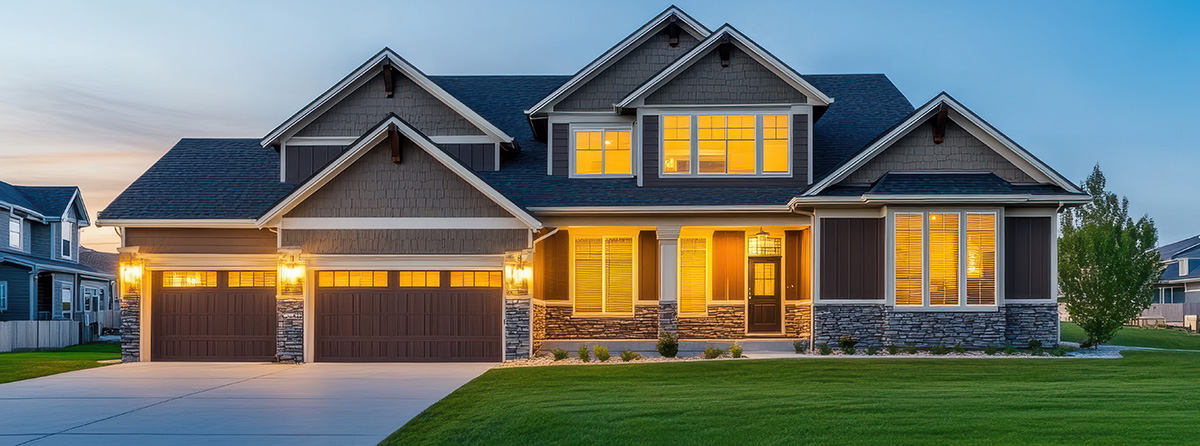
Get a free, no-obligation estimate from a crew that knows Colorado soil, Colorado weather, and how to finish concrete that lasts.
Accessibility
Adjust the site to fit how you read and browse. Your choices are saved on this device.