
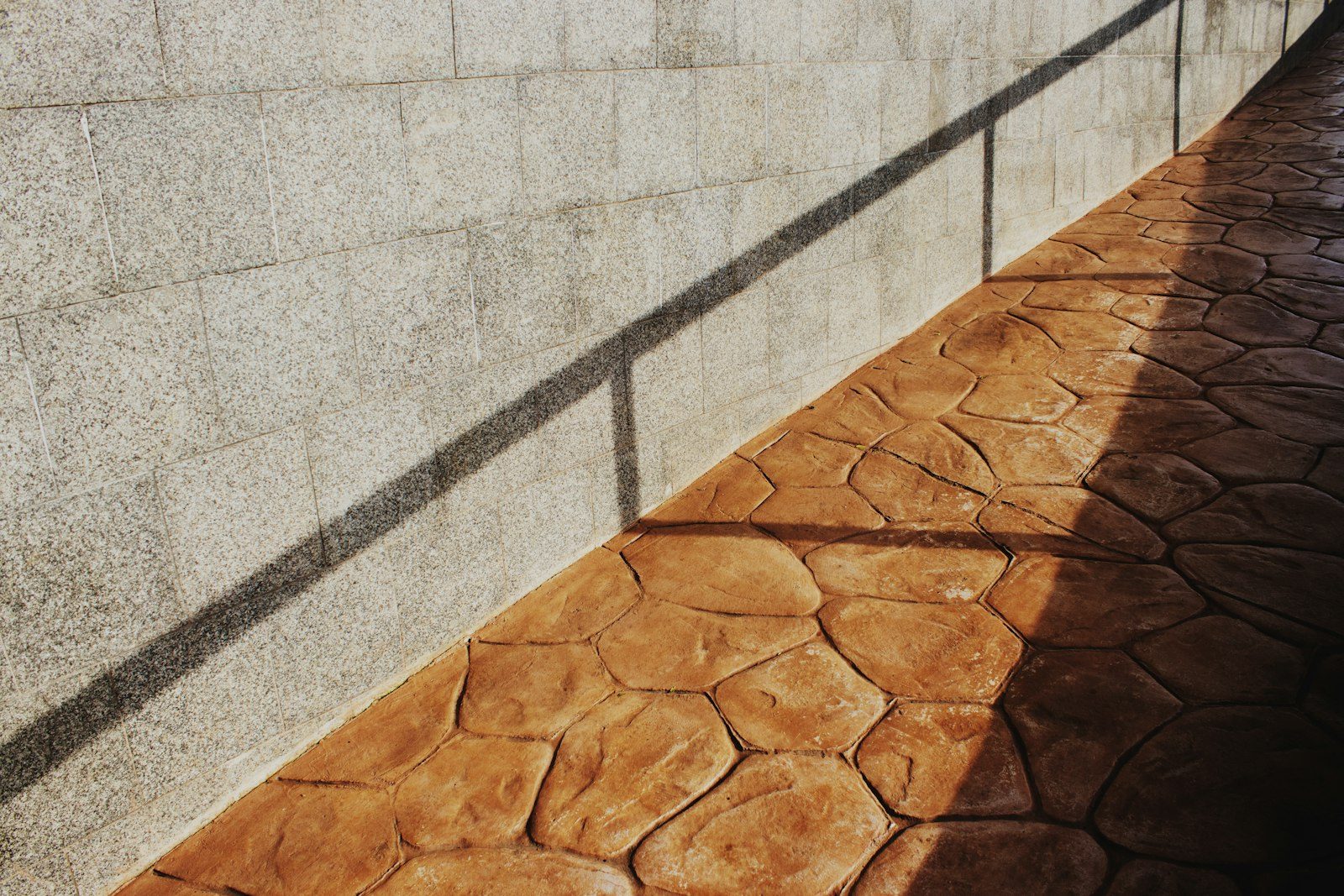
The finish we talk people out of more often than any other, and defend hardest when it fits.
We turn down more exposed aggregate work than any other decorative finish we offer. Not because it's difficult, though it is, and not because we don't like it. We love it. But it's a finish with strong opinions about where it lives, and homeowners usually arrive having seen one gorgeous example without hearing anything about the spots where it disappoints.
So this page is a decision, not a brochure. Washed stone is the right answer for a shaded north-side walk in Ken Caryl that ices over at dusk. It's a questionable answer for a covered porch where you'll be dragging chairs twice a day. Between those two sits every other property in town: older lots around Columbine and Southbridge, newer yards in Highland Walk. The call always comes down to what that specific spot puts up with after we've gone home.
Every other decision gets easier once you answer four questions about the area. Sun, or shade half the day? Do bare feet use it? Does a shovel go across it in January? And is anything with hard casters or thin metal legs going to live on it?
A washed surface wins big on grip. Cement paste gets rinsed off the top while the concrete is young, so you're standing on rock, and rock holds when the surface is wet or when snowmelt refreezes after the sun drops behind the foothills. It also hides a working yard: dust, dog tracks, the drip zone under a grill. And it never pretends to be something else. The stone is real.
Where it loses is comfort and furniture. Bare feet notice it. Chair legs catch. A rolling cooler is a chore.
| The spot | Our call | The reasoning |
|---|---|---|
| Sloped drive on a foothill lot | Use it | Grip where a smooth apron would be a skating rink November through March |
| Shaded side walkway | Use it | The north side stays wet longest, and texture is worth more there than anywhere |
| Pool surround or tub deck | Use it, smaller stone | Wet feet need grip, and pea-size is kinder than a river rock blend |
| Covered patio with a dining set | Something else | Chairs catch and slide, and you feel every meal in the chair legs |
| Courtyard you'll cross barefoot | Something else | A light broom or float finish is friendlier and costs less |
| Anything a plow truck services | Something else | A steel blade catches high stone and takes it out in strips |
Two honest ways exist to uncover the stone. The first is waiting for the slab to firm up and washing the top paste off with water and a soft brush. Traditional, cheap, and it hands the crew a window that opens and closes on the concrete's schedule rather than ours. Warm afternoon with a dry wind moving and that window shrinks to almost nothing.
The second is a surface retarder sprayed on right after finishing, which holds the top paste soft while the concrete below sets normally. That buys hours instead of minutes and gives a deeper, more even exposure, and it costs more. On a big pour, or anything placed in July, it's what we reach for. When the exposure has to match concrete you already own, retarder is the only way to hit a depth on purpose.
Show us where it's going and which way it faces, and we'll tell you straight whether this finish belongs there. Estimates are free either way.
The wash is the only part of this job you can't redo. Everything else gets a second chance. Start thirty minutes late and the stone stays buried; start early and you rinse it out of the slab and into the grass.What the crew sees on site
Stone choice is the whole look, so we bring samples instead of describing them. Rounded river blends read soft and warm. Crushed granite reads sharp. Gray blends disappear into a Ken Caryl hillside the way people out there tend to want. Size is what matters underfoot: smaller stone gives more contact points and a friendlier surface.
Washing season runs May through early October and we won't stretch it. The wash needs water that won't freeze in the slab overnight, air warm enough for a predictable set, and no hail cell arriving during the two hours that matter. Early fall is our pick: dry, mild, storms mostly finished. Winter is a hard no, and a December call gets booked for spring rather than gambling a patio on one warm week.
One more thing about year one. No deicer at all, ever if you can manage it. Sand only, and rinse the surface in late winter so road chemical isn't sitting in the texture all spring.
Still unsure about something?
Call the crew at (303) 569-4046 and we will talk it through.
Get a free, no-obligation estimate from a crew that knows Colorado soil, Colorado weather, and how to finish concrete that lasts.
Accessibility
Adjust the site to fit how you read and browse. Your choices are saved on this device.