
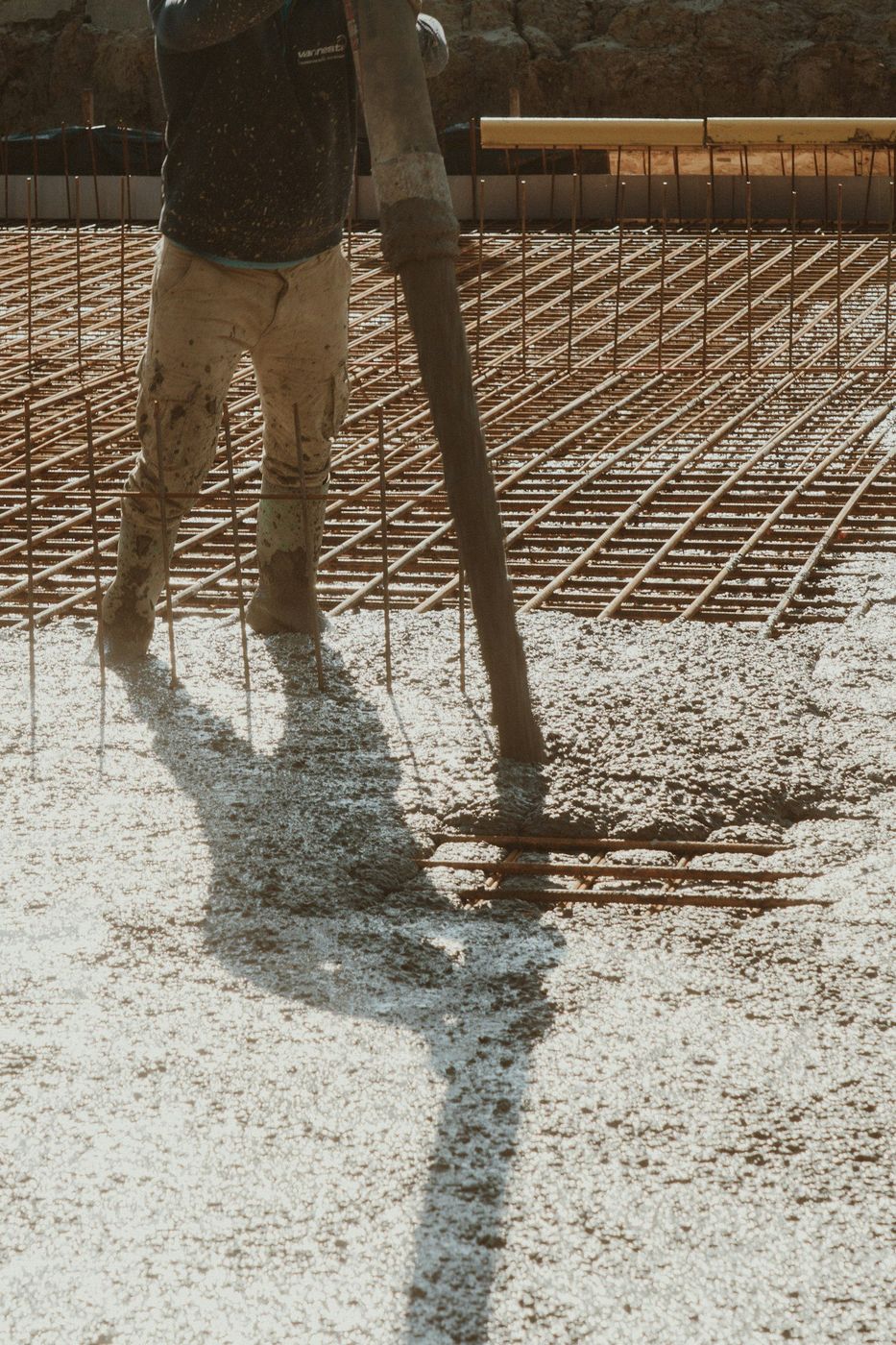
The best polished floors are decided on pour day, hours before anybody thinks about diamonds.
A polished floor is settled long before a grinder rolls through the door. It's settled at seven in the morning on pour day, when a truck backs up to a walkout and the crew has one shift to place a slab that has to still look right after diamonds run across it. Grind a slab somebody placed carelessly and you spend the whole job fixing a problem you didn't create.
So here's what pour day looks like when polishing is the plan. Different mix ticket. Different placement discipline. Different finishing, different cure, different joint layout. None of it exotic. All of it decided in advance instead of discovered later.
You can tell in the first pass with the metal-bond diamonds whether anybody was thinking about polish on pour day. The floor either opens up even across the room, or it's high here and low there and you're grinding half of it down into the rock just to catch the rest.What the crew sees on site
We set the vapor barrier and the base, then we place the whole floor in one continuous run. That's not a preference, it's the only way to keep color and hardness matched corner to corner, because a cold joint in a floor you intend to polish is a line you'll see forever. Screeding gets more attention than a normal slab gets. Every high spot is aggregate you didn't ask to see, and every low spot is cream that never gets touched.
Then the timing game. We wait out the bleed water instead of troweling it back in, take even passes at even intervals, and stop before the surface gets burned. Overworked patches turn dark later, and no amount of grinding brings them all the way back. Joints get laid out on a drawing rather than wherever is convenient, cut on time, and filled later with a semi-rigid filler so the finished floor reads as one surface.
| Pour-day step | Standard interior slab | Slab we intend to polish |
|---|---|---|
| Mix | Whatever meets the strength call | Consistent aggregate and controlled water, one mix for the whole floor |
| Placement | Place it and move on | One continuous pour so hardness and color match across the room |
| Screeding | Flat enough for carpet and pad | As flat as we can hold it, since flatness sets how deep we grind |
| Troweling | Burn it tight and call it done | Even passes at even timing, stopping short of a burnished surface |
| Curing | Spray a compound and walk away | Wet cure, or a cure that won't have to be ground off before densifier |
| Joints | Cut where it's convenient | Drawn on a plan, cut on schedule, filled so the pattern looks intentional |
This is the choice that changes everything else. Leave the surface as poured and you get a cream finish: no rock, just the smooth top layer, the softest look and the least grinding. Take a little off and you get the speckled salt-and-pepper most people picture. Go deeper and the full aggregate shows, and the floor turns into something closer to terrazzo.
Depth is the honest constraint. We can only expose what the slab has, evenly, if the slab is flat. On a floor that rolls, chasing full aggregate means grinding the high areas down until the low ones catch up, and now you're removing a lot of concrete to satisfy a look. That's why we push the flatness conversation to pour day. After that the floor votes and we listen.
The grit sequence itself is routine once those calls are made. Metal-bond diamonds first to open the surface, densifier applied mid-sequence to harden the paste, then resin diamonds stepping finer until the sheen you picked shows up. Skipping a step doesn't save time. It just leaves scratches that the next grit can't remove, and they show under a low sun.
Call (303) 569-4046 before the slab is scheduled, not after. It costs nothing to pour one correctly.
Polishing belongs inside, and we'll say that plainly even when somebody wants a shined patio. A polished exterior slab at this elevation gets slick when wet, loses its refinement to freeze-thaw within a few winters, and gives up its densified surface to the same ultraviolet that eats sealers. Outside, we'd rather give you a washed or broom finish that works in January.
Inside is a different story, and Larkspur has plenty of it. Walkout lower levels around Perry Park where the slab has been under carpet for decades. Detached shops and barns at Sage Port where a floor takes tools, trucks, and firewood dust. New builds at Bear Dance where we can get involved early enough to pour the floor the right way the first time. Interior work runs all twelve months, which makes it the thing we schedule when the ground outside is frozen solid.
Still unsure about something?
Call the crew at (303) 569-4046 and we will talk it through.
Get a free, no-obligation estimate from a crew that knows Colorado soil, Colorado weather, and how to finish concrete that lasts.
Accessibility
Adjust the site to fit how you read and browse. Your choices are saved on this device.