
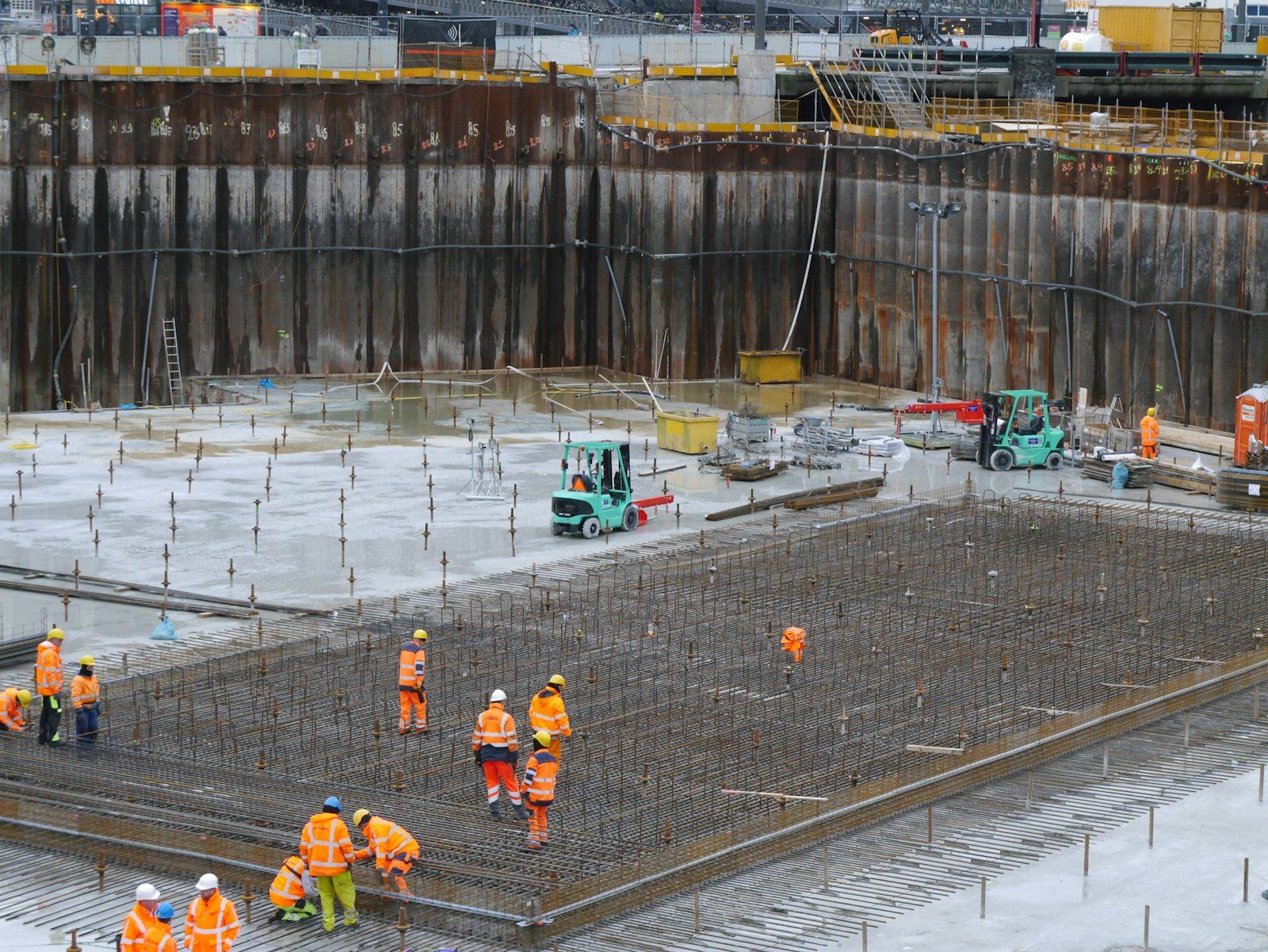
The stone gets all the attention. The twelve inches under it decide how long the stone stays flat.
Everybody shops this finish by the rock. Which stone, what blend, how much of it shows. Fair enough, that's the part you look at. But a washed surface is the least forgiving finish we install, because when the ground below it moves, the crack has nowhere to hide. No broom line to lose it in, no stamped groove to swallow it. It runs straight across a field of stone where every eye already is.
So on a Larkspur lot we start with a shovel, not a sample board. Hillside water, roots, whatever got pushed around when the house was built: those decide whether your patio still reads flat in fifteen years. Get the dirt right and the stone takes care of itself.
The first hole answers most of it. We want to know whether we're on ground nobody has ever disturbed or on material somebody pushed around to make the building pad level, because those two behave nothing alike over a decade. Undisturbed ground is about as settled as it's going to get. Moved material is still on its way down.
We're also reading water. On sloped, treed ground, water rarely soaks straight down. It travels sideways along whatever layer resists it and turns up under your slab at the low corner. That corner heaves in February and settles in April, and it's the one people point at three winters later. Finding it during excavation costs an hour. Finding it afterward costs a slab. Sage Port and Perry Park give us the most of this, since the older lots were cut into grade with whatever was on site that year.
A washed surface carries more surface area than any other flatwork finish. Every exposed stone has a shoulder, and beside every shoulder is a small void where water can sit. That's the texture doing its job of giving you grip. It also means the slab has to shed water rather than hold it, and the paste locking those stones down has to be air-entrained so freezing water has somewhere to expand.
Downspouts matter more than people expect. One of them dumping onto the low end of a washed patio will undermine the base, saturate it going into winter, and pop stone loose in a patch you can see from the house. We route discharge away before we pour.
| What's under there | Why a washed slab cares | What we do |
|---|---|---|
| Firm undisturbed ground, dry | Best case. Little left to settle once it's compacted. | Standard base, compacted in lifts, pour on schedule |
| Loose material left from grading | Keeps compressing for years and drops a corner out of plane | Dig to firm ground, or overexcavate and rebuild in lifts |
| A springy low spot that stays damp | Saturated ground heaves in winter and lets the slab rock in spring | Intercept the water first, then a free-draining base over it |
| Rock close to the surface | Water runs along it instead of soaking away and collects underneath | Grade the base so water daylights, thicken at the transition |
| Large roots crossing the pour | Roots keep growing and lift. Cutting the wrong one costs you a tree. | Move the layout, bridge with steel, or shift the walk |
Twenty minutes with a shovel beats an hour of talking. Call (303) 569-4046.
Once the slab is down, the job comes down to one timing call. We're waiting for the paste to set just enough that washing it back leaves the stone locked in but proud. Too early and the stones roll out. Too late and you're fighting cured concrete with pressure and acid, and the result looks scrubbed instead of washed.
Up here that window moves fast and it moves unevenly. Dry air and wind pull moisture off quicker than most crews expect, and on a treed lot half the slab sits in shade while the other half bakes. Those halves are ready at different minutes. We stage retarder, read the slab in sections, and bring enough people that the wash runs end to end without a pause.
Season works the same way. Late May into early October is our window, and September is the pick of the year: warm afternoons, cool nights, a long stretch before the first hard freeze. Bear Dance pours tend to be new construction we schedule around the builder. We won't wash on frozen ground, and we don't book these for a day the forecast calls windy and hot at once.
Still unsure about something?
Call the crew at (303) 569-4046 and we will talk it through.

Get a free, no-obligation estimate from a crew that knows Colorado soil, Colorado weather, and how to finish concrete that lasts.
Accessibility
Adjust the site to fit how you read and browse. Your choices are saved on this device.