
Two quotes for the same run can be a world apart. Here's every line that explains the gap.
Sidewalk pricing confuses people because a walk looks like the simplest thing we build. Flat gray rectangle, four inches thick, how different can two bids be? Very. The concrete is a small slice of what you pay for. The rest hides below grade, or in the hours a crew spends chasing a slope tolerance measured in fractions.
Larkspur widens that gap compared to a subdivision full of identical frontage. Some of what we replace up here is genuine right-of-way walk near the road. More is shared pedestrian concrete inside a community: connecting runs in Sage Port, common-area paths around Perry Park, walks between buildings that take winter foot traffic and a plow. Each has its own rules, its own access, and its own reason the last slab failed.
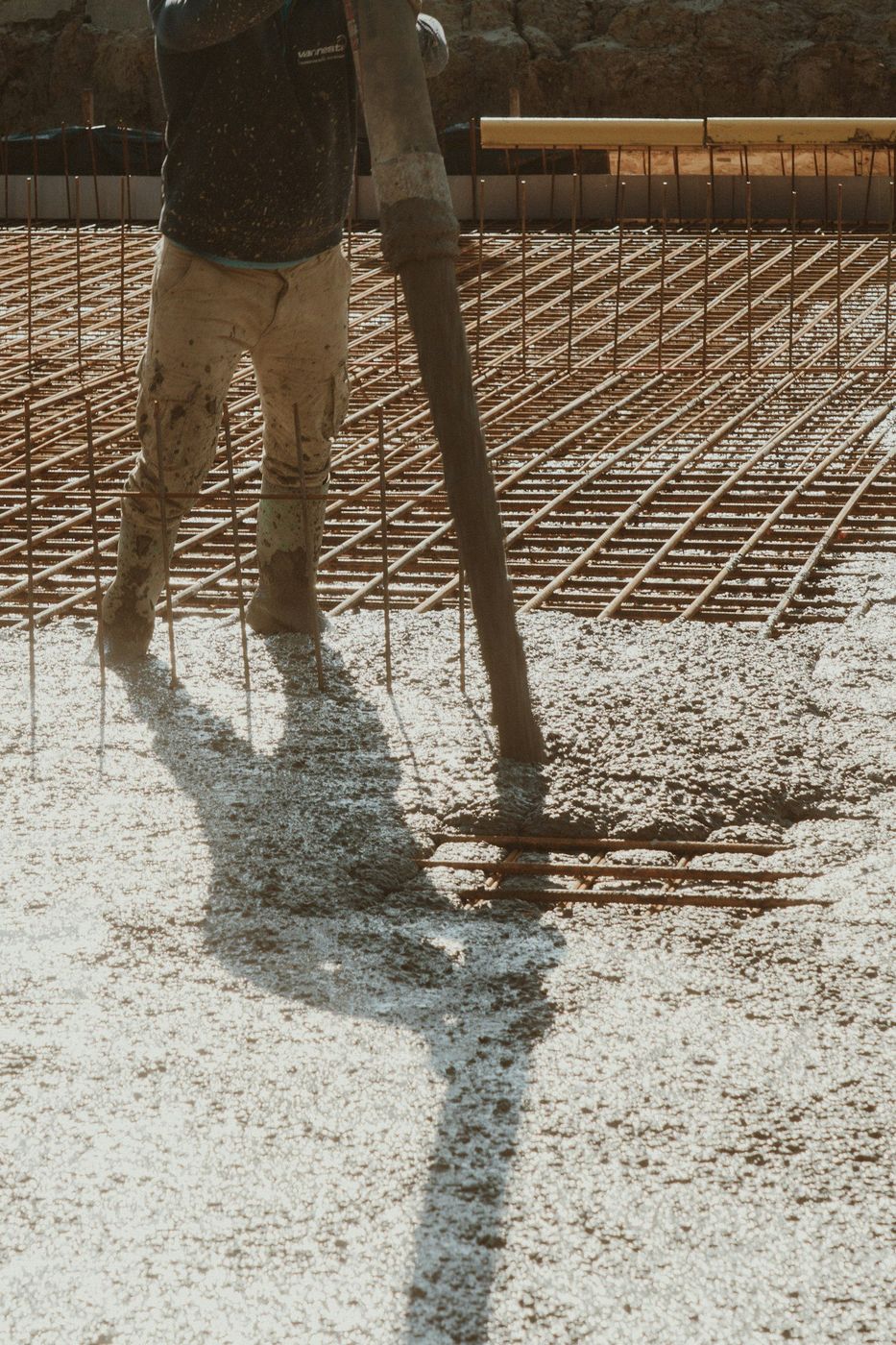
Take a four-foot walk. The visible product is a broom finish you'll stop noticing in a week. Underneath sits six inches of road base compacted in lifts, a subgrade with the soft organic material stripped out, and steel that stays in the middle third of the slab because it's chaired instead of raked up during the pour. That's where the durable money goes.
The rest goes to precision. A pedestrian walk isn't poured by feel. Cross slope has a ceiling of two percent, running slope wants to stay under five, and clear width has to hold across the whole run. Hitting those numbers on rolling ground means more grade stakes, more string, more time on a level. A crew that skips that is cheaper right up until an inspection proves them wrong.
Where a walk sits inside a public right-of-way, the spec and the inspection belong to whoever owns that right-of-way. We confirm what applies to your stretch before forms go down, and we don't let a homeowner guess at it either.
| Line item | What makes it swing | How much say you have |
|---|---|---|
| Base repair | How badly the old section settled and how much soft material comes out | None. The ground decides, and skipping it guarantees a repeat. |
| Thickness at crossings | Whether cars or a delivery truck drive over the panel | Some. Tell us the real traffic and we spec once instead of twice. |
| Tree roots | How large the roots are and whether the tree stays | Yes. Removing, rerouting, or root-pruning are all different numbers. |
| Radius and forming | Curves, ramps, and transitions need built forms, not straight boards | Yes, at design time. Straight runs beat sweeping ones on cost. |
| Job size | Fixed setup spread across more square footage | Yes. Four panels at once beats one panel four times. |
Trees are the number one reason we get called about a lifted panel around here. A root doesn't push straight up all at once. It thickens over years under one edge, tilts the panel a degree at a time, and eventually you've got a half-inch lip that catches a boot and standing water behind it that freezes solid by November. Grinding the lip flat is a band-aid; the root keeps growing.
What works: pull the panel, cut the offending roots cleanly at a depth an arborist would sign off on, set a root barrier along the tree side, and pour back a thicker section. Sometimes the honest answer is moving the walk a couple of feet. We say so out loud even though rerouting is more work for us, because a straight line that fights a sixty-foot ponderosa loses eventually.
The other common failure is plow and deicer damage on north-facing runs that never see sun. Chloride products, magnesium chloride worst of all, pull moisture into the surface and pop the top layer off in flakes. New work gets one full winter with no ice melt at all, and sparing use after that.
We'll measure the run, check the slopes, and hand you a written breakdown at no cost, so you can see which items drive the number.
Our season starts later and runs later than it does down in the flats. May through October is comfortable. Late September and early October give the best mix of workable days and cool nights, which suits a big flat pour better than a July afternoon when the surface skins over before the crew can finish it. Summer work is routine. We start at first light and watch the storms that build over the ridge.
Winter panel replacement happens when a walk has turned into a liability that can't wait. Warm mix water, an accelerator without chloride in it, insulated blankets down for days, and a schedule that bends around fronts. Placing concrete on frozen subgrade is the line we hold. For an association planning a phased program, booking over winter for summer work is the smart play, since the whole Front Range fights for the same crews once the ground opens up.
Still unsure about something?
Call the crew at (303) 569-4046 and we will talk it through.

Get a free, no-obligation estimate from a crew that knows Colorado soil, Colorado weather, and how to finish concrete that lasts.
Accessibility
Adjust the site to fit how you read and browse. Your choices are saved on this device.